




























In order to strengthen the development of new drugs, smooth collaboration between the pharmaceutical industry, academia (universities, etc.), and the national government is essential.
Therefore, in April 2015, AMED (Japan Agency for Medical Research and Development) was established to strengthen cooperation among industry, academia, and government, and to provide consistent support from basic research to practical application.
AMED is an unprecedented new system that brings together the power of industry, academia, and government. AMED is expected to be one of the ways to create innovative drugs.
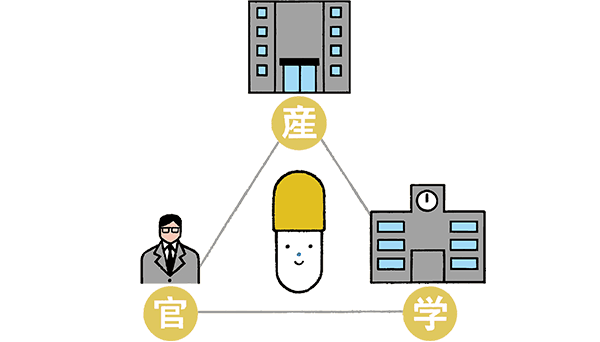
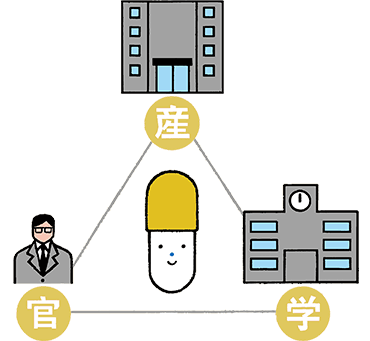


With the establishment of AMED, the budget for research and development in the medical field has been consolidated, enabling consistent management from the discovery of compounds in what is called the basic stage, through clinical trials, to practical applications that are delivered to patients. Various projects have been launched in nine fields, including "regenerative medicine," "cancer," "infectious diseases," "genome medicine," and "intractable diseases," with the main goal of realizing a healthy society with longevity, and the creation of pharmaceuticals and development of medical equipment is being promoted through an all-Japan approach that unites industry, academia, and government.



Currently, more than half of all new drugs produced in the United States originate from academia or bio-venture companies. In Japan, however, there is still a lack of such experience. Therefore, one of the most important issues for future drug discovery in Japan is to build cooperative relationships with academia and bio-venture companies. Collaboration with academia and bio-venture companies will create new possibilities for further drug discovery.