


Top News The 13th Asian Pharmaceutical Association Conference (APAC) held -Mission: To rapidly deliver innovative medicines to the people of Asia
The Asia Partnership Conference of Pharmaceutical Associations (APAC), which has been held since 2012, will celebrate its 13th anniversary in 2024. This year's conference was held in a hybrid format on April 23 under the theme "We reaffirm the APAC's mission and fulfill it for patients in Asia. Of the more than 600 participants at the conference, approximately 60% were from overseas. The conference consisted of five sessions and one special lecture on drug discovery in the drug lifecycle, regulations related to drug application and licensing, and solutions to issues related to improving access to medicines.
 All APAC officials
Introduction
Presentation materials for the APAC conference are available on the APAC website. Please refer to this page as well.
APAC: https: //apac-asia.com/achievements/13th_apac.html
The following is a report on the day's program.
Opening Remarks
In his opening remarks, Hiroaki Ueno, Chairman of the JPMA, stated, “We have learned a great deal from the experience of the COVID-19 pandemic. One key lesson is that it is difficult for any single country to resolve such global issues on its own, and that we have entered an era that calls for even greater international cooperation and collaboration.In particular, I believe that APAC’s activities will become increasingly important in the future for contributing to the health of people in Asian countries.Since the COVID-19 pandemic, the environment surrounding the healthcare and pharmaceutical industries has been changing significantly and rapidly—including increased awareness of the importance of pandemic preparedness during normal times, the progression of aging populations in some countries, the practical application of new modalities, the rapid development of IT and digital technologies including artificial intelligence, and the challenging situation facing health insurance.In this environment, the JPMA continues to strive toward realizing APAC’s mission: “to promptly deliver innovative medicines to the people of Asia.”“The theme for APAC in 2024 is ‘Reaffirming APAC’s Mission and Fulfilling It for Patients in Asia.’ We will reaffirm our shared goals for achieving this mission and discuss relevant topics within each working group,” he said in his opening remarks.
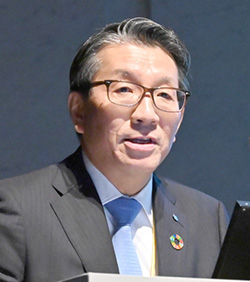
Hiroaki Ueno, Chairman, JPMA
 Mr. David Reddy, Secretary General, IFPMA
Congratulatory Addresses and Keynote Speeches
Mr. David Reddy, CEO of Medicines for Malaria Venture and newly appointed Secretary General of IFPMA from April 2024, gave a congratulatory speech. developments in Japan," "Industry as a trusted partner and key enablers," and "Working together for faster access. Working together for faster access" were the key words of Mr. Reddy's speech.
 Mr. Yasuhiro Fujiwara, PMDA Chief Executive
This was followed by a keynote speech by Mr. Yasuhiro Fujiwara, PMDA Chief Executive.Titled “Promoting Access to Better Innovative Drugs,” his speech covered PMDA’s Fifth Medium-Term Plan (FY2024–FY2028), the agency’s initiatives to improve access to innovative medicines, and PMDA’s international cooperation in Asia.Regarding initiatives to improve access to pharmaceuticals, he explained the current state of drug loss in Japan and discussed the efforts of the Ministry of Health, Labor and Welfare’s “Study Group on the Future of Pharmaceutical Regulations for Strengthening Drug Discovery Capabilities and Ensuring Stable Supply,” as well as the PMDA’s concept for a “Pharmaceutical Consultation Center for Pediatric and Orphan Drugs,”“Consultations on Regenerative Medicine Products,” and “Dissemination of Information on the Pharmaceutical Regulatory System Overseas.” Regarding international cooperation in Asia, he introduced the activities of the Asian Center for Training in Pharmaceuticals and Medical Devices and the establishment of an Asian hub in Bangkok, Thailand, and highlighted the importance of international coordination and reliance.
RA (Regulatory Affairs and Licensing) Session
 Speakers of the RA Session
In the RA session dealing with regulations and licensing, Mr. Naoyuki Yasuda, Executive Officer of PMDA, and Mr. Janis Bernat of IFPMA were invited as session chairs, and the theme of the session was "Promoting Further Reliance Schemes through International Cooperation". Reliance, introduced here, refers to the efficient and expeditious promotion of drug approval review through mutual trust and cooperation among drug regulatory authorities of different countries, which is expected to lead to the prompt delivery of medicines to people around the world.
In the RA session, we have promoted discussions including case studies such as bilateral Reliance, in which Asian countries refer to Japanese drug approvals, since we adopted the introduction of the Reliance concept recommended by the World Health Organization (WHO) in the 8th session in 2019. Therefore, in 2024, in order to further develop the Reliance Concept, we adopted as a session topic the importance of efforts to promote drug approval review jointly by multiple countries under international cooperation. As for the joint review of medicines across multiple countries in Asia, the ASEAN Joint Review promoted by WHO and the Association of Southeast Asian Nations (ASEAN) countries has accumulated experience in multiple drug reviews since 2017, and shared its efforts with drug regulatory authorities and the pharmaceutical industry in Asian countries participating in APAC This was a good opportunity.
Ms. Marie Valentin of WHO, who plays a central role in promoting ASEAN Joint Review, and Ms. Azuana Ramli, Head of ASEAN Joint Review Coordination Group and Malaysian authority, presented a broad perspective on the background, achievements, and future prospects of ASEAN Joint Review. In addition, Ms. Ria Christine Siagian of the Indonesian authorities and Ms. Jesusa Joyce N. Cirunay of the Philippine authorities shared specific examples of new drug review and approval in their countries using the ASEAN Joint Review.
In the panel discussion that followed, Mr. KC Wong of the Singapore Pharmaceutical Association was invited to participate as a representative of the pharmaceutical industry, and all speakers facilitated a meaningful discussion. The outcome of the lively panel discussion was that the review and approval of drugs under the ASEAN Joint Review clearly demonstrated the efficiency of multilateral cooperation in drug review, and that the pharmaceutical industry can expect the benefits of efficient multi-country review by submitting its products to the ASEAN Joint Review. The session participants were able to confirm with the session participants as a whole that It was also widely known that WHO has made a significant contribution to the establishment and promotion of the ASEAN Joint Review. Once again, this was a very important session, which was a reminder of the significance of our efforts to promote Reliance in Asia.
DA (Drug Discovery Alliance) Session
DA-EWG is promoting (1) information sharing of drug discovery seeds, (2) establishment of a drug discovery platform, and (3) fostering researchers who will lead the next generation, with the goal of promoting drug discovery collaboration in Asia to "create innovative drugs originating from Asia through cooperation among Asian countries for the benefit of the people of Asian countries.
Until 2023, we will continue to promote information sharing of drug discovery seeds mainly in Asia (Drug Seeds Alliance Network in Asia, DSANA) and the utilization of natural products for drug discovery and human resource development (Natural Product Drug Discovery Consortium (APAC), Natural Product Drug Discovery Consortium (NPDC)). Although the ANPDC completed its five-year activities in FY2023, two Japanese pharmaceutical companies participated in this project, which aims to develop young human resources and transfer screening technologies in collaboration with research institutions in Thailand, as well as to promote the use of natural products in drug discovery and human resource development. DSANA will continue to promote information sharing and bi-directional drug discovery collaboration between Taiwan and Japan, targeting academia, start-ups, and pharmaceutical companies.
DA-EWG has decided to take up microbiome research starting in 2024. The microbiome is being actively studied in Asia, with consortia being established in Japan and Taiwan. In particular, it has become clear that the microbiome in the gut has an impact on health and disease, and is expected to contribute to healthcare by elucidating the mechanisms of disease onset and developing prevention and treatment methods.
During the DA-EWG session at the APAC conference, Mr. Jun Terauchi, Chairperson of the Japan Microbiome Consortium (JMBC) and Mr. Chang Chang, President of the Taiwan Microbiota Consortium (TMC), who are the leaders of the microbiome consortiums in Japan and Taiwan, respectively, will discuss the microbiome in the gut and the microbiome in the microbiome in Japan. Despite the short 30-minute session, many questions were asked by the audience after the presentations, showing the high level of attention paid to microbiome research. The audience was impressed by the high level of attention paid to microbiome research.
 Mr. Jun Terauchi, Chairperson of JMBC Steering Committee
 Mr. Chun-Ying Wu, President, TMC
DA-EWG will continue to focus on the microbiome's potential and challenges in drug discovery research and contribute to the promotion of microbiome research and its drug discovery applications in academia, start-ups, and pharmaceutical companies in Asian countries.
E-Labeling Session
 Speakers of e-labeling session
The e-labeling session, titled "Asian e-labeling strategy for digital health - what we should do now and what we should do in the future," discussed the current and future e-labeling initiatives in the Asian region.
At first, the following three points were reported as progress against the commitment of activities in 2023 agreed upon in 2023.
| 1) | The APAC e-labeling EWG has contributed to e-labeling initiatives in the Asia region, with e-labeling guidance issued in eight markets by 2023. |
| 2) | The 2nd APAC e-labeling Regulators' Workshop was held in October 2023 with over 140 participants from 11 regulators to share e-labeling progress, best practices and challenges. |
| 3) | That a consortium established in Japan has developed a pilot study plan for the use of e-labeling in a format compliant with HL7 FHIR, an international standard for the electronic exchange of medical information, and is working to make it a reality. |
Then, Mr. Takayuki Okubo, Director, Office of Safe Use Promotion, Drug Safety Division, Pharmaceuticals and Lifestyle Health Bureau, Ministry of Health, Labour and Welfare, Japan, shared Japan's efforts in medical digital transformation (DX) and the provision of drug information to patients. Ms. Azuana Ramli of the Malaysian authorities explained that they will issue guidance on e-labeling in April 2023, and will continue to implement e-labeling on a voluntary basis until December 31, 2026, after which they will consider implementing e-labeling again. Mr. Po-Wen Yang of the Taiwanese authorities explained that they are promoting the digitization, standardization, and paperless implementation of e-labeling, and that the XML implementation of e-labeling has been completed on the Taiwanese authorities' platform by the end of 2023; the status of the paperless pilot that started in 2022 He also stated the status of the paperless pilot that started in 2022, and that HL7 FHIR is scheduled to be implemented for e-labeling in 2024. Rita Endang of the Indonesian Authority explained that guidance for the pilot will be issued in September 2023 and that the 2D barcodes will be scanned with the Indonesian Authority's Track and Trace app and available as a PDF from the Indonesian Authority's website. Yeonhae Han from the Korean authorities reported that the Pharmaceutical Affairs Law was amended in January 2024 to allow electronic labeling to be provided for designated drugs, and that e-labeling guidance was issued in December 2022 and a pilot study is underway.
In addition to the above five panelists, Jesusa Joyce Cirunay from the Philippine authorities, Worasuda Yoongthong from the Thai authorities, and Luong Thu Vinh from the Vietnamese authorities joined the panel to discuss which areas of e-labeling to address in the next three to five years. The panelists discussed which areas of e-labeling will be addressed in the next three to five years. The Philippines has experience in implementing smart labeling equivalent to e-labeling as a response to the corona disaster, and expressed a desire to issue implementation guidelines by early 2025. In Vietnam, they would like to create a roadmap, conduct pilot tests, and use the results for implementation to revise the law. In Taiwan, it was mentioned that the Ministry of Health and Welfare recommends HL7 FHIR and plans to introduce HL7 FHIR for e-labeling from the viewpoint of interoperability. On the other hand, Thailand is planning to migrate to XML by the end of FY2024, but it is important to introduce international standards similar to those of healthcare systems in the future and to promote international collaboration, he explained. In addition, Malaysia commented that patients are the most important stakeholders in the e-labeling initiative.
The session concluded with the following four summary points.
| 1) | Many of the e-labeling initiatives in the Asian region are being implemented by pharmaceutical companies on a voluntary basis, and the company intends to promote the adoption of e-labeling by more pharmaceutical companies and for more products in the future. |
| 2) | To promote discussion on structured e-labeling using the international standard HL7 FHIR, with a view to its introduction. |
| 3) | To discuss the importance of promoting the introduction of e-labeling for patients in the future, since only about 30% of the market has created patient-oriented labeling. |
| 4) | To continue to conduct the e-labeling survey and check the trend of e-labeling diffusion. |
MQS Session
 Speakers of MQS Session
The MQS session discusses topics related to manufacturing, quality, and supply in order to achieve APAC's goal of Access To Innovative Medicines (ATIM).
The COVID-19 outbreak in 2019 has had a significant impact on the pharmaceutical supply chain. While a stable supply of medicines is the responsibility of pharmaceutical companies to patients in need of medicines, events that disrupt the functioning of the supply chain, such as the spread of infectious diseases or natural disasters caused by climate change, are expected to occur in the future. A survey of APAC members and JPMA member companies regarding the challenges of maintaining supply chains in the event of an emergency revealed that securing a second supplier was the most important issue. Therefore, MQS held a discussion on the topic of expediting the process of adding a second supplier.
As speakers/panelists, we invited Mr. Nur'Ain Shuhaila from the Malaysian authorities, Mr. Chaiporn Pumkam from the Thai authorities, and Mr. Shinichi Okudaira from PMDA in Japan, who presented useful case studies from Malaysia and Thailand to maintain drug supply under the COVID-19 epidemic. The panelists introduced useful case studies from Malaysia and Thailand, and from PMDA, the PQ KMS initiative of the International Coalition of Medicines Regulatory Authorities (ICMRA).
Following the case studies, the panel discussion focused on (1) measures that can be considered by regulators to expedite the regulatory process in emergency situations when changes in raw material manufacturing sites may affect the quality of drug products, (2) ICMRA's efforts, and (3) the most significant challenges to ensuring a stable supply in emergency situations and their The panelists provided valuable input on the challenges and effective regulatory and industry measures. It was suggested that determining the data needed for adding a second supplier based on risk could speed up the process.
Finally, Mr. Shinichi Okuhira of PMDA reported the following three points in summary and the session was closed.
| 1) | Useful case studies were shared to secure drug supply during the COVID-19 pandemic |
| 2) | To prepare for emergencies, the process of adding a second supplier needs to be expedited to ensure safety and quality |
| 3) | Continued consideration is needed to achieve a stable supply chain for pharmaceuticals, while linking the recommended measures with international harmonization efforts |
aUHC (Asian UHC) Session
 Speakers for aUHC Session
This session is planned as a series of three sessions starting in 2022 under the theme of aUHC (Asia Universal Health Coverage), with the aim of improving access to innovative medicines in Asian countries by sharing knowledge on how to build social security systems and UHC in each country. The first meeting will be held in 2022.
In the first session in 2022, the importance of the resilience and sustainability of UHC, the importance of which was reaffirmed by the Corona disaster, was discussed, and it was concluded that the investment of necessary financial resources (Financing) is important to realize this.
In the second session in 2023, under the theme of Financing, the participants discussed the gap between the current state of UHC and the ideal state of UHC based on the different circumstances in each country and region, and measures to fill this gap.
In 2024, the final session of the three-part series, the discussion theme was "Should or can all drugs be covered by public insurance?
Mr. Toshihiko Takeda, Senior Advisor, Boston Consulting Group and Policy Counselor, Health and Medical Strategy Office, Cabinet Secretariat, gave an opening presentation on the importance of public health care services covered by public insurance and the "drug lag/loss" problem in Japan, which is being considered as a problem to be solved. He also introduced the efforts of the "Conceptual Council for Prompt Delivery of the Latest Medicines to the Public through Enhanced Drug Discovery", which is a study to solve the drug lag/loss problem in Japan.
Following that, Mr. Muhammed Anis Bin Abd Wahab, ProtectHealth Corporation, Malaysia, and Mr. Cheng-Hua Lee, Deputy Director General, National Health Insurance Administration (NHIA), Taiwan, gave presentations. Cheng-Hua Lee, Deputy Director General of the National Health Insurance Administration (NHIA) in Taiwan, shared the status of UHC achievement in their respective regions, as well as the current situation and problems in health insurance financing.
Afterwards, three speakers discussed the need for public insurance, what options are available when public insurance does not cover the costs, and the possibility of using private insurance. They talked about the challenges of the current situation where most health care services are covered by taxes from the public, but not all medicines are covered by public insurance. They also concluded that there are many issues regarding the use of private insurance as an option when public insurance does not cover the cost, such as premiums, and problems with enrollment in low-income groups, which make it difficult to consider private insurance as an effective option. In addition, there are concerns that government cost containment will lead to a decrease in investment from the pharmaceutical and healthcare industries, which will result in the inability to provide better medical care to the general public. In this context, there was also a discussion on the need for deregulation to encourage investment from the pharmaceutical and healthcare industries.
At the end of the session, it was noted that financial resources are necessary to provide better medical care to the public, including pharmaceuticals, and that Japan's efforts in public insurance can serve as a reference for other Asian countries and regions.
Special Lecture
Mr. Keizo Takemi, Minister of Health, Labour and Welfare, who has been a regular speaker at previous aUHC sessions, gave a special lecture on "Japan's global health commitment: Domestic health reform & UHC knowledge hub Mr. Keizo Takemi, Minister of Health, Labour and Welfare, who is a familiar speaker at aUHC sessions, gave a special lecture titled "Japan's global health commitment: Domestic health reform & UHC knowledge hub.
Four new initiatives in the field of insurance, (1) promotion of medical DX and its management and governing body, (2) creation of the Japan Institute for Health Security (JIHS), (3) development of advanced drugs through a public-private joint drug discovery complex, and (4) health in developing countries. (4) the establishment in Japan of a "UHC Knowledge Hub" to support health and medical policies in developing countries. Since the presentation included content that had not been made public at the time of the conference, there was a great deal of interest from the audience, and several people requested materials that had not been made available to the public.
(In (1), he presented a roadmap for the introduction of electronic prescriptions, a nationwide patient data utilization platform, unification of various programs by medical institution by prefecture, and upgrading of the insurance reimbursement system, in addition to unification of insurance cards to the My Number Card.
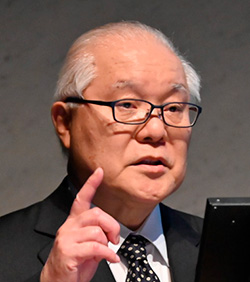
Mr. Keizo Takemi, Minister of Health, Labor and Welfare
(In the second part of his presentation, he explained the organizational and operational plan to establish five divisions (General Crisis Management Bureau, General Research and Development Support Bureau, Medical Care Provision Support Bureau, Human Resource Development Bureau, and System Infrastructure Development Bureau) in April 2025, centering on the General Crisis Management Bureau.
He explained that collaboration among academia, start-ups, and pharmaceutical companies is essential for innovative new drug development, and that (3) will be promoted in light of the current insufficient introduction of cluster campuses in Japan at a time when the horizontal division of labor is observed worldwide, and finally (4) will be implemented in collaboration with the World Bank and WHO to promote the Finally, he explained that (4) a "UHC Knowledge Hub" is planned to be established in Japan in 2025 to support knowledge and experience of UHC and human resource development of financial and health authorities in low- and middle-income countries in collaboration with the World Bank and WHO.
 Mr. Nobuo Murakami, Chairperson, International Affairs Committee, JPMA
Closing Remarks
Mr. Nobuo Murakami, Chairperson of the JPMA International Affairs Committee and responsible for APAC operations, gave a wrap-up of the conference.
 Sunao Manabe, Vice Chairman, JPMA
In his closing remarks, Sunao Manabe, Vice Chairman of the JPMA, summarized the proceedings, stating, “Having experienced the COVID-19 pandemic, the world has come to recognize that ‘health’ is the very foundation of society and the economy.Furthermore, there remain unmet medical needs worldwide—not only regarding infectious diseases but also in other areas where we must deliver medicines and vaccines. To address these challenges, I am once again strongly conscious that while industry, academia, and government must each leverage their respective strengths, the pharmaceutical industry must fulfill its responsibility by driving innovation in drug discovery.Let us all work together to ensure that APAC lives up to global expectations and evolves into a platform for advancing even more valuable proposals and building relationships of trust,” he said, bringing the 13th APAC Conference to a close.
( Yuji Yahiro, Director, International Cooperation Department)