


Top News The 35th JPMA Policy Seminar Held Toward a Nation Driven by Innovation: Strengthening Japan's Drug Discovery Capabilities and Universal Health Coverage
The 35th JPMA Policy Seminar" was held on March 4, 2024. While drug prices are under intense scrutiny in order to curb rising social security costs, healthcare policy is being challenged by the introduction of a succession of highly effective but expensive biopharmaceuticals. At the same time, there is a growing need for a mechanism to efficiently produce such innovative drugs in Japan. At this policy seminar, through lectures and panel discussions by experts from various fields, many proposals were made on how to balance the maintenance of the universal health insurance system and the enhancement of drug discovery in order to provide sustainable health care to the people. The following is a transcript of the seminar.
 The venue
Keynote Speech
NHI drug prices and the healthcare system
Mr. Norihisa Tamura, Member of the House of Representatives, Acting Chairman of the Policy Research Council of the Liberal Democratic Party of Japan / Former Minister of Health, Labor and Welfare
Reform of the NHI drug price system to promote a stable supply of pharmaceuticals
Japan is in a very difficult situation, with drug prices being lowered in order to reduce social security costs, and the deviation from market prices in FY2023 was 6%, the lowest in history. The cost of manufacturing drugs, including generic drugs, will increase, making them unprofitable and potentially leading to a shortage in the supply of medicines. A review of the NHI drug price system is necessary to ensure a stable supply.
The increase in social security costs has been controlled in various ways, such as by holding down drug prices, reforming the medical care system, and introducing the total reimbursement system. 560 billion yen of natural increase was expected in 2011, but this amount fell to 410 billion yen, within the range of growth due to the aging of society.
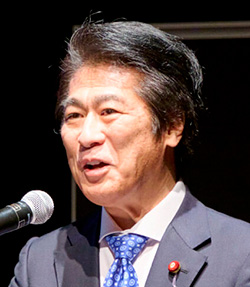
Japan's public finances are becoming healthier, with national tax revenues increasing to about 71 trillion yen last year. However, the initial budget for the current fiscal year contains only about 69.4 trillion yen in tax revenues. Unlike public works projects, the social security sector is subject to all decisions made in the initial budget alone, including revisions to NHI drug prices and medical service fees, so even if tax revenues exceed expectations, a supplementary budget cannot be prepared. The Ministry of Finance must be made to understand these matters and the national fiscal frame must be changed. The Cabinet is scheduled to approve a policy on the frame around June of this year, and the issue is how to write it down toward that time.
It was declared in 2004 as a four-minister agreement that the mid-year revision would target "items with large price deviations. Based on this agreement, NHI drug prices were to be revised for items with average price deviations of more than 0.625 times the average deviation. This is not a large price deviation, and the figure of 0.625 times cannot be used any more. We think it is not logical.
What was very shocking was that, as of March 2011, 86 of the 143 drugs approved in Europe and the U.S. but not yet approved in Japan had not yet been developed in Japan. Many of these items include drugs for rare diseases and pediatric use, and the trend is to "stop launching drugs in Japan if they cannot be sold in large quantities. The fact that these drugs cannot be used in Japan means that they cannot be used in combination therapies that are not covered by insurance and must be treated completely freely. This will be very difficult for patients with rare cancers.
In FY2012, the Japan Agency for Medical Research and Development (AMED) will begin a research project to subsidize the use of expensive drugs through the Patient-designated Treatment (PDPT) system. In the future, it will be important to actively disseminate information to drug discovery ventures in Europe and the United States in order to encourage foreign drugs to be launched in Japan.
Japan's drug discovery capabilities are weaker than before. Recently, many of the polymer drugs created by venture companies are ultimately marketed by major pharmaceutical manufacturers, and we must consider what to do with these ventures. The Ministry of Economy, Trade and Industry has allocated 300 billion yen for the "Drug Discovery Venture Ecosystem Enhancement Project" in the second supplementary budget proposal for FY2010, but it is currently not that useful. This is because the project will be bought out cheaply by foreign pharmaceutical companies unless they spend a huge amount of money, several billion yen of which will not be enough, and go as far as Phase II clinical trials.
Fig. 1 A virtuous circle

One way to create an ecosystem is to consider establishing a base in Japan and inviting overseas venture capitalists to come to Japan. It is important for university-launched ventures to create drugs there and for Japanese pharmaceutical companies to make a commitment from early on. It is also necessary to develop accelerators (organizations for fostering entrepreneurs) and create an under-one-roof R&D center where various types of manpower can be concentrated.
The FY2012 reform of the NHI drug price system aims to revise the "common companion" rule for market expansion reimbursement. The cost-effectiveness evaluation system will provide special measures for newly developed dementia drugs. In addition, the additional fee for the lack of pediatric drugs will be reviewed to ensure the availability of pediatric drugs. Those items that are approved overseas and become a priority review item within 6 months of approval are being reviewed to be included in the new drug creation and other additions with an additional fee for expedited introduction.
For "long-listed drugs" whose patents have expired or for which generic versions have already been launched, those that have been replaced to some extent by generics will be considered for inclusion in the Selective Care Program. Unprofitable drugs will be made profitable, and the 25-year listing standard for basic drugs will be revised to 15 years, creating a pathway for these drugs to become basic drugs as soon as possible.
Japan's debt currently exceeds 1,000 trillion yen, but this debt will decrease as the economy grows and the gross domestic product (GDP) increases without increasing the principal, and I believe that the primary balance will be balanced by 2025. The most important issue for us is how to protect medical insurance, including the pharmaceutical administration. I would like to receive a variety of opinions as we move forward with our policies.
Lecture 1
Medical Technology Innovation and Drug Discovery Innovation to Support Universal Health Coverage
Teruyuki Katori, President, Future Research Institute Garyu
Specially Appointed Professor, Graduate School of Social Sciences, University of Hyogo
Reexamination of severe measures to control medical costs from a broad perspective
Japan's medical security system has an extremely high international reputation. However, as Japan faces a society with a declining population, the fiscal authorities are taking extremely strict measures to curb healthcare costs. However, the quality and quantity of medical care for the nation will surely be sacrificed if the government continues to try to keep the growth of medical expenses within the range of the gross domestic product (GDP).
The main reasons for the increase in medical costs are the aging of the population and technological innovations in medicine. Technological innovations such as molecular biology, new bio-drugs, organ transplantation, and in vitro fertilization have brought great gospel to our lives. What the level of medical costs should be and what the level of burden should be should not be determined solely by fiscal logic.
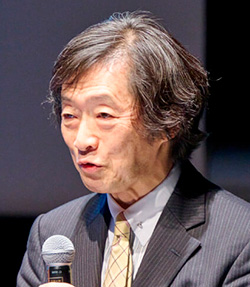
The pharmaceutical industry is one of the few high-value-added industries that Japan has, but repeated price cuts have sapped the basic strength of original drug manufacturers, and Japan is falling behind in drug development. Furthermore, the domestic pharmaceutical market has become less attractive, and new drugs approved overseas are increasingly not being launched in Japan. The stable supply of pharmaceuticals has also been hampered, with more than 3,000 products in short supply.
Fig. 2 Policy changes over the past few years have had a negative impact on biopharmaceutical investment in Japan

Today, medicine is a biotech age, and it is extremely important to secure financial and R&D capabilities. In addition, drug discovery is no longer an era of in-house production from scratch, but an international division of labor. Unless there is a proper foundation for research and development and a pharmaceutical company capable of leading the pipeline, it is impossible for a domestic initiative to produce groundbreaking new drugs. However, Japanese pharmaceutical companies are small compared to those in other countries, and their R&D expenditures are only one-sixth of those in Europe and the United States. In addition, Japan's extremely aggressive healthcare cost-containment measures have led to a continued decline in investment in biopharmaceuticals by pharmaceutical companies, making it impossible for them to lead the pipeline. The challenge for the future is to create the conditions that will allow new drugs to be launched domestically and to manage the gap in know-how and funding at the early research stage.
Pharmaceuticals and the pharmaceutical industry should take a broader perspective. The fiscal authorities are trying to keep pharmaceutical industry sales themselves within the GDP growth rate or to control even the insurance coverage of new drugs with the budget, but these goals cannot be achieved without sacrificing the level and quality of healthcare we enjoy. It is time for us to consider what it would be like to continue with the current policies, including the possibility of hollowing out universal health insurance.
Lecture 2
Expectations for Drug Discovery from the Standpoint of Cancer Patients
Mr. Shinsuke Amano, President, National Federation of Cancer Patients' Associations
Medical research and clinical trials should be conducted with the participation of patients and the general public.
In 2000, at the age of 27, I developed malignant lymphoma, a blood cancer, and experienced drug therapy, radiation therapy, and hematopoietic stem cell transplantation. I have had two relapses, but I am currently in a position where my life has been saved by pharmaceuticals and other treatments, as I am currently on treatment follow-up.
Looking back on my treatment in 2000, I think I was on the edge of innovation. At the time, while in the transplant ward of the hematology department, a leukemia patient said to me, "I wish I could cure my leukemia with a drink. A few years later, through innovation, a drinking drug for leukemia was realized, but unfortunately she passed away and did not make it. Another patient said, "I wish the time would come when people would say, 'The treatment I am receiving was such a barbaric thing called treatment in the past. The anticancer drugs of those days almost certainly caused repeated vomiting, but now, although there are individual differences, vomiting is almost non-existent.
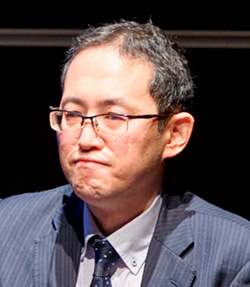
The antibody therapy drug developed in 1997 was a very significant therapeutic breakthrough for malignant lymphomas such as the one I had, but it was still unapproved in Japan at the time of my onset of disease. Fortunately, I survived. However, there were many patients who developed the disease at the same time as me who died because they could not use the drug, which means there was a four- to six-year drug lag.
In light of this situation, there was a huge outcry for the approval of drugs that are used as standard in other countries and for the elimination of medical disparities in Japan, and in 2006 the Basic Law on Cancer Control was enacted. Article 19, paragraph 2 ("In taking the measures set forth in the preceding paragraph, necessary consideration shall be given to the promotion of research related to cancers that affect few people and cancers that are particularly difficult to treat. As a result, the Japan Agency for Medical Research and Development (AMED) has established specialized areas for research on pediatric cancer, cancer in the elderly, intractable cancer, and rare cancer, and research is being conducted in these areas.
Fig. 3 Research flow and Patient and Public Involvement (PPI)

In terms of medical advances, innovative immune checkpoint inhibitors and cell therapies have emerged in recent years, including CAR-T cell therapy, in which T cells are extracted from patients, genetically modified, and returned to the body. Although the therapy is now approved and has saved many patients, it is an extremely expensive drug that has caused a lot of controversy. Opinions are divided among cancer patients on the issue of high drug prices, but many patients want to continue using these drugs as long as possible.
A look at the transition of oncology drugs in Japan shows that the number of unapproved drugs in Japan has been increasing rapidly since the late 2010s. Internal radioisotope (RI) therapy for thyroid cancer is still dependent on imports from overseas, but our organization submitted a request for the domestic production of medical RIs. In response to this request, a question was raised in the Diet, and the government formulated an action plan for domestic production. We hope that Western drugs will be approved in Japan as soon as possible, but when it comes to cancer types that are common in the Japanese population, research in the West may not be sufficiently advanced, so we have high hopes for drug discovery originating in Japan.
The "Fourth Basic Plan for the Promotion of Cancer Control" approved by the Cabinet in 2011 clearly states that the promotion of patient and public involvement (PPI) is necessary not only in the field of research but in all fields. The AMED also defines PPI as "the process by which researchers refer to the findings of patients and citizens as part of the medical research and clinical trial process. I believe that patient involvement broadly speaking includes not only participation by patients as subjects in clinical trials, but also support and encouragement of research by participating in meetings to discuss how to proceed with the research.
There have been cases in which physician-led clinical trials have been initiated after patient groups came up with the idea of conducting such trials. In addition, clinical trials in which patient groups raise part of the research funds through crowdfunding and collaborate with each other have started in Japan. Clinical trials are now entering a phase in which they should be conducted not only by medical professionals and researchers, but also with the cooperation of patients and the public at large.
Lecture 3
The Value of Innovative New Drugs
Ms. Chizuko Furuseki, President, Tagusix Bio Inc.
Accelerate venture support to develop innovative drugs
The production and analysis of small molecule drugs is like building a bicycle, but antibody drugs are as difficult as building a jet plane. Furthermore, when it comes to antibody-drug conjugates (ADCs), the cost and difficulty are as enormous as sending a rocket into space. The research and development of innovative drugs requires tens to hundreds of billions of yen with a probability of success of several tens of thousands.
The role of bio-venture companies is to implement innovative technologies that emerge from academia into society. The most common pattern is to take the technology to the Phase 2 clinical trial stage and out-license it to pharmaceutical companies. In the U.S., investors have large amounts of money to invest, so bio-ventures are sometimes involved in the process of submitting a drug for approval.
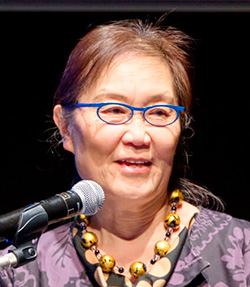
However, when trying to advance a technology that has emerged from academia from R&D to commercialization, such difficult spots as the "Devil's River," "Valley of Death," and "Darwin's Sea" appear. It takes time until profits are generated, and innovative technologies cannot be turned into pharmaceuticals unless they can get out of the "valley of death," where further funding runs out. Compared to the total amount of venture capital investment in countries around the world, Japan's total amount of venture capital investment is very low, but recently the government has managed to support ventures to take off as businesses.
Fig. 4 Comparison of the complexity of manufacturing and analyzing drug molecules

In Japan, there are more than 50 listed biotech ventures and several times that number of unlisted companies, and AMED is supporting 25 world-leading Japanese drug discovery technologies, including glycotechnology, mid-molecular weight, and antibody drugs, all of which have financial difficulties, and even if listed, most companies remain in the red. If we can support this area, Japan has the ability to create innovative drugs. Japan's academia is excellent, and innovative drugs create value in the form of "helping patients" and "economic power of the venture industry. Japan should resolve its current situation and return to the days when it was once the second largest pharmaceutical market in the world to create value.
Our company is a venture company that originated from the University of Tokyo and is developing pharmaceuticals using artificial nucleic acid DNA aptamers. It is a unique artificial base pair technology that is said to be the best in the world. It is a mid-molecular nucleic acid drug that works in a similar way to antibody drugs, but overcomes their weaknesses. There is a movement to create a drug discovery ecosystem in Japan, and I hope that you will support our venture, which is developing pharmaceuticals despite the difficulties.
Lecture 4
What is a country where innovation is dynamic?
Mr. Hiroaki Ueno, Chairman, Japan Pharmaceutical Manufacturers Association
Establish a drug discovery ecosystem suited to Japan
The birth of innovative new drugs has made it possible to treat diseases that were previously difficult to treat and has contributed to extending the average life expectancy of the human race. However, there are still many diseases in the world for which there is no cure. In response to this, new drug discovery modalities such as gene therapy, nucleic acid medicine, and cell therapy have emerged.
The change in modalities is also evident in the pharmaceutical market. In 2001, nine of the top ten pharmaceutical products in terms of global sales were conventional synthetic drugs, while in 2009, six of them were biopharmaceuticals, a new modality.
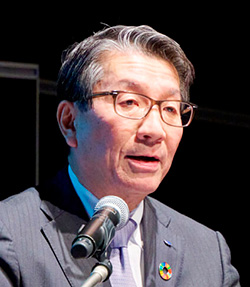
In recent years, there have been calls for a decline in Japan's position in new drug creation, and a major reason for this is the slow response to new modalities. Japan should urgently develop its drug discovery capabilities in new modalities while maintaining its strength in synthetic chemical drug discovery. To do so, it is essential to "build a drug discovery ecosystem suited to Japan.
Fig. 5 Changing drug discovery styles with changing modalities Change

In the conventional development of chemically synthesized drugs, each pharmaceutical company has been responsible for everything from basic research to clinical trials, manufacturing, and marketing on its own. However, it is difficult for a single company to complete this process alone for new modalities that have become increasingly complex and sophisticated. The key to success is collaboration among pharmaceutical companies, academia, and bio ventures. The foundation of this collaboration is the drug discovery ecosystem. There are already many drug discovery clusters in Japan, such as the Greater Tokyo Biocommunity (GTB), each of which is active in its own right. However, we believe that further collaboration among these clusters to deepen the connection among the three elements of people, goods, and money will be highly effective. The JPMA would like to work actively toward achieving this goal.
On the other hand, we also feel the need for a new system to evaluate new drugs. Under the current drug price system, prices are determined by comparison with similar drugs or by a cost accounting method. However, drugs based on new modalities are different from conventional drugs in the way they are made and used. Shouldn't new drugs be evaluated individually according to their characteristics and innovativeness?
A virtuous cycle of "strengthening drug discovery capabilities" and "appropriate evaluation of innovation" will lead to the creation of innovative new drugs, which will then be delivered to patients promptly. This will extend healthy life expectancy, improve labor productivity, and stimulate further economic growth. It is my sincere hope that such a virtuous cycle will be created in society as a whole.
Panel Discussion
Reflecting the value of innovation to protect the health of the people
Moderator: Mr. Jun Ando, Editorial Writer, Nikkei Inc.
 Panel discussion
Reinforcement of new modalities Opportunity for a comeback
Ando: With the diversification of drug discovery modalities, there is concern about the relative decline in Japan's drug discovery capabilities.
Ueno: Unfortunately, it is true that drug discovery capabilities are declining. However, awareness of this crisis has spread throughout Japan, and the government has made a national effort to strengthen drug discovery capabilities as one of its growth strategies. In addition, innovative anti-cancer and dementia drugs based on new modalities have recently been developed in Japan. The development pipelines of pharmaceutical companies based on new modalities are also increasing. I believe that now is the perfect time for Japanese drug discovery to make a comeback.
Amano: From the patient's point of view, it does not matter where in the world the drug is developed, as long as it is usable. However, there are some types of cancers that are common among Japanese and some diseases for which treatment results for Japanese are not good. Such drugs are unlikely to be developed overseas. In addition, if the drug is developed domestically, patients in Japan will be able to access the new drug more quickly. I have high expectations for drug discovery originating in Japan.
Koseki: People talk about the decline in drug discovery capabilities, but Japan actually has a lot of basic research that could lead to drug discovery. However, there is a lack of funds. The size of Japanese funds is one-thirtieth that of the U.S., and competition for development in this environment is extremely fierce. Drug discovery ventures are hoping for partnerships with Japanese pharmaceutical companies at an early stage of development and the provision of funds through such partnerships. If there are many successful cases in Japan, the tide should turn.
Katori: Product pricing is an important factor in the success or failure of a business. In Japan, however, the price of pharmaceuticals is set by the government. Under these restrictions, pharmaceutical companies must spend huge amounts of money and more than 10 years to develop drugs and make a profit. Furthermore, competition for development is fierce on a global scale. This is no easy task, and the current drug price policy is one of the major factors weakening Japan's drug discovery capabilities.
Putting the patient's interest first A system to determine appropriate drug prices
Ando: Japan has a world-class universal health insurance system that allows everyone to receive the same medical care anytime, anywhere. However, in order to maintain this system, the country's total medical expenses must be kept within certain limits. What is needed is a drug price system, which is the official price of drugs. However, suppression of drug prices leads to a decrease in profits for pharmaceutical companies, which in turn makes it difficult for them to conduct research and development of new drugs. What measures can be taken to break out of this dilemma?
Ueno: There are two types of drugs: those for a large number of patients and those for a very limited number of patients. How about allowing more flexibility in the calculation of new drug prices in accordance with the characteristics of such drugs? Each drug should be priced to reflect the value of its innovation while balancing overall healthcare costs. I believe that appropriate pricing will provide an incentive for drug discovery.
Katori: Currently, Japan's national healthcare expenditure is about 8% of GDP, which is about the average of OECD countries. In a country with an aging population of 30%, it is ultimately up to the people to decide what they think about this, but if they shop cheap, they will only get cheap products. Even if a new drug is introduced, it will not be available. I do not believe that universal health care is the limit. Technological innovations, such as the evolution of precision medicine (precision medicine), will make it possible to provide cost-effective medical care.
Ueno: I would like you to go back to the starting point of the universal health insurance system. Some drugs are used by only a few patients, but for those patients, it is a matter of life and death. Why did we create a medical insurance system in which everyone pays together? Why have we maintained it until now? If we think about that, I think we can see what is important.
Amano: You are right. When one suffers from a serious illness as I do, one is deeply grateful for the universal health insurance. The range of treatments covered by Japan's universal health insurance is wide. For example, the price of "CAR-T cell therapy," which strengthens immune cells and is administered to cancer patients, exceeds 30 million yen. However, if one uses the universal health insurance system and the high-cost medical care reimbursement system, one can receive the therapy for less than 1 million yen. There is no other country like this. I would like you to think about its value once again.
Koseki: As a consumer, I think the universal health insurance system is wonderful. However, as a manager of a drug discovery venture, I cannot help but think about drug prices. How much a new drug under development will cost is a major issue for drug discovery ventures. Sometimes, they even think of ......, even though it would be profitable if the price were free. However, if that is the case, some people will not be able to use the new drug. What is the purpose of drug development if that is the case?
Make Japan an integral part of the global drug discovery ecosystem
ANDO: The issues surrounding the universal health insurance system and the drug pricing system are very difficult and serious. In addition, considering the aging of the population and the financial situation, there is not much time left to resolve these issues.
Amano: Many people share the common understanding that the universal health insurance system must be maintained. However, if we stop thinking and take no measures, the universal health insurance system will eventually collapse, and the medical care we currently take for granted will no longer be available. Maintain universal health insurance only for serious illnesses, as in France. Some people argue for a two-tiered system, with public insurance and private insurance. Various methods should be considered. Instead of rushing to take countermeasures after the collapse of the system, we should start discussing the revision of the system immediately.
Koseki: It is said that the universal health insurance system will collapse, but what is the biggest cause of this collapse? We should carefully analyze where the greatest burden is being placed. The diversity of drug discovery modalities and the sophistication of technology are making pharmaceuticals more expensive. When you hear it this way, you may think that is true. However, if we can reduce manufacturing costs through technological advancement, it may be possible to produce breakthrough new drugs that are profitable even at low drug prices. I may be asking for something I don't have, but I would like to have such an idea.
Katori: Currently, new drugs from overseas are not available in Japan. The reason is that the Japanese market is not attractive. Foreign pharmaceutical companies invest in Japan and do not make a profit even if they sell their drugs in Japan. If a drug is priced low in Japan, it will become a benchmark for other Asian countries, which will also lower drug prices. Discussing the medical insurance system and drug pricing system only in terms of the situation in Japan will not solve the problem. Conversely, if the Japanese market and system were functioning soundly, foreign pharmaceutical companies would launch their products in Japan. We should look for clues to solve the problem, taking into consideration the position of Japanese pharmaceutical companies in the world and how the Japanese drug price system is viewed by foreign countries.
Ueno: Even if a new drug is created through innovative innovation, if it is not adequately evaluated, investment in the next round of research and development will not be possible. This leads to a slowdown in new drug development. In order to break the vicious cycle, the entire country should create a system in which "innovation" and "its appropriate evaluation" are linked. This is not a story limited to Japan. I hope that the global drug discovery ecosystem will link to Japan, and that Japan will become an indispensable player in global drug discovery.
(Reprinted from an article in the Nikkei Electronic Edition)