


Topics 2024 Life Science Intellectual Property Forum Now is the time to strengthen Japan's drug discovery capabilities! ~Toward Building a Robust Drug Discovery Ecosystem for New Modalities
On February 7, 2024, the JPMA hosted the "2024 Life Science Intellectual Property Forum" at the Ochanomizu Sola City Conference Center (Chiyoda-ku, Tokyo). This year's forum was entitled "Now is the Time to Strengthen Japan's Drug Discovery Capability! ~The forum was held as a hybrid of on-site and online format, as in 2023, and was very successful with more than 300 participants including visitors. The event was a great success. This report provides an overview of the lectures and panel discussion.
Introduction
The "Intellectual Property Promotion Plan 2023," released in June 2023, calls for open innovation (OI), which actively incorporates external knowledge and technologies, to be indispensable for sustainable value creation in the corporate sector. The formation of an ecosystem in which new technologies are implemented in society and new added value is continuously created through collaboration with diverse players, not limited to specific industrial sectors, is becoming increasingly important. In particular, it will be increasingly important to create new products and services by combining intellectual assets created in the ecosystem, and to maximize the value of intellectual property within the ecosystem.
In his inaugural address, JPMA Chairman Hiroaki Ueno stated, "In order to strengthen Japan's drug discovery capabilities, it is important to shift to a "drug discovery ecosystem" in which multiple players collaborate, and to this end, we must promote (1) practical application of fundamental drug discovery technologies, (2) sustainable start-up and development of start-ups, (3) enhancement of manufacturing capabilities for new modalities, and (4) development of infrastructure for data utilization. The Forum will consider and address the "missing piece" to promote the development of a virtuous circle in the drug discovery ecosystem.
In this forum, lectures were given on the current status and future prospects of the drug discovery ecosystem from the standpoints of industry, academia, and government, and a panel discussion was held to find the "missing piece" and to engage in lively debate.
Lectures
Current Status of the Drug Discovery Ecosystem
Hiroya Okumura, Chairperson, Intellectual Property Committee, JPMA
A drug discovery ecosystem generally refers to a system in which pharmaceutical companies and various other players organically collaborate with each other to continuously generate innovations from seeds created by universities and venture companies. While there are many excellent drug discovery ecosystems in other countries, especially those with Top 10 pharmas, Japan unfortunately does not have a drug discovery system that ranks among the top in the world at this time. The most pressing issue for the Japanese pharmaceutical industry is whether a drug discovery ecosystem can be established to put the seeds created in Japanese academia to practical use and create a virtuous cycle of people, goods, and money. In light of this current situation, this forum will discuss how we can create innovation in the pharmaceutical ecosystem and continue to draw out a virtuous circle that enables the delivery of new medicines and treatments to patients.
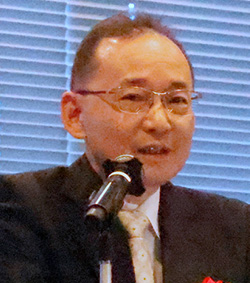
Progress and future prospects of CAR-T cell therapy for cancer
Professor, Graduate School of Medicine, Yamaguchi University
Koji Tamada, President, Noil Immune Biotech, Inc.
In the treatment of cancer, antibody drugs, immune checkpoint inhibitors, and CAR-T cell therapy, which I will talk about today, are now being used. And furthermore, the creation of new treatment options has become an important issue.
CAR-T cells are genetically engineered T cells that have enhanced the ability of the patient's T cells to sense and attack cancer, and have shown very high therapeutic efficacy in the area of blood cancers, making a major breakthrough.
On the other hand, the efficacy against solid tumors, which account for about 93% of cancer patients, is not sufficient, and none of them have been approved yet. One of the reasons for this is access to cancer cells. Solid tumors grow in clusters in various organs, so only a portion of the CAR-T cells administered intravenously can reach the cancer cells. In addition, solid tumors are a heterogeneous mass of cells, which requires diversity in the attacking CAR-T cells.
To solve this problem, we have incorporated multiple genes, CCL19 and IL-7, into CAR-T cells. The former corresponds to the navigation system of immune cells and allows the accumulation of immune cells in the body in the cancer tissue to which the CAR-T cells have reached. The latter is responsible for proliferation and activation of immune cells as cytokines. In fact, accumulation of various immune cells in cancer tissues was confirmed in animal models of cancer, and therapeutic effects against multiple types of solid tumors and long-term acquisition of cancer immunity were observed. We named this system PRIME CAR-T.
Furthermore, we are pursuing a patent strategy based on the finding that CCL19 and IL-7 are expected to be effective not only in CAR-T cells but also in various other modalities.
In 2015, we established Noil Immune Biotech with the aim of commercializing these technologies, and in June 2023, we achieved an initial public offering (IPO) on the Tokyo Stock Exchange. The origin of our company name is "No illness" and "No immunity, no life. We are currently conducting research and development through collaborations with several pharmaceutical companies and bio-venture companies.
Yamaguchi University also established the Institute for Cell Design and Medical Science in October 2023. At the institute, research is being conducted not only on CAR-T cells, but also on genome editing and mRNA technologies that use cells as a source of therapy and design genes. Another feature of this institute is its ability to work with medium-sized animals such as dogs and cats in collaboration with the joint veterinary school.
As for intellectual property strategy, the institute has applied for many patents in order to obtain strong patents and secure a long term of rights. Important patents have been filed in about 50 countries, and basic patents have been registered in most countries.
In addition, since the supply chain is very important and complicated for the autologous CAR-T cell therapy, we are currently working on the automation of CAR-T cell manufacturing in collaboration with a machine manufacturer, since it is necessary to set up the supply chain efficiently and firmly. We are currently working with a machine manufacturer to automate the production of CAR-T cells. We are now able to produce cells on a prototype machine with the same quality as those produced manually, and we plan to move forward so that we can bring this technology to clinical trials.
Development of Japanese biotechnology policy
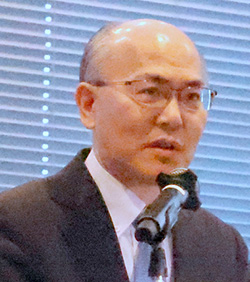
Mr. Takeya Sho, Assistant Director, Biological and Chemical Industry Division, Commerce and Service Group, Ministry of Economy, Trade and Industry
Today, I would like to introduce the current policies and their background from the government's perspective as "Development of Japan's Biotechnology Policy.
The Biochemical Industry Division of the Ministry of Economy, Trade and Industry (METI) is in charge of all industries, including biotechnology. Today, I will explain two of the three support measures for the drug discovery industry: support for start-ups and support for the development of pharmaceutical manufacturing bases.
The difficulty for drug discovery start-ups lies in the low success rate of drug development and the need to raise huge amounts of money for development from non-clinical to clinical stages. Simplistically comparing Japan and the U.S., we believe that there is a major shortage of human and financial resources. In addition to these two factors, the more advanced the modality, the more important it is to have manufacturing facilities accessible, all of which are in short supply in Japan. Another issue that is unique to start-ups is the issue of exit (exit of shareholders). Comparing Japan and the U.S., a large number of Japanese companies choose to go through an IPO, but I believe it is necessary to create an M&A option where a major company buys out the company.
In light of these current conditions, I would like to introduce some of the projects that the government has launched.
One is a measure to encourage the supply of risk money, in which venture capitalists accredited by the Japan Agency for Medical Research and Development (AMED) will provide subsidies to the venture companies in which they invest. This is in anticipation of the participation of those who can invest specifically in the field of drug discovery, and we have made it possible for investors not only from Japan but also from overseas to participate in this program. As a result, we are seeing an increase in investments from overseas.
In addition, we are considering measures to strengthen our global human network, and are considering a system that would allow people from Japan to enter the U.S. and other countries, and eventually return to Japan to play an active role. Japan Innovation Night, the establishment of a business base (Silicon Valley) to support startups, and J-StarX (a program to dispatch human resources) are some of the initiatives underway. In addition, tax support measures (open innovation taxation, stock option taxation, etc.) are being expanded year by year.
As I have mentioned above, we are taking measures to address both the uniqueness of drug development and the difficulty of managing a drug discovery startup. As a result, we aim to build a drug discovery venture ecosystem in which drugs originating in Japan are launched not only in the domestic market but also in markets overseas, have high market value, are returned to investors, and human resources are returned.
Next, I would like to explain our project to establish biopharmaceutical manufacturing bases in Japan: when the new coronavirus pandemic broke out in 2020, imports of materials needed to manufacture biopharmaceuticals temporarily stopped. In light of this, we believe it is important from a security perspective to have a system in place to enable the production of biopharmaceuticals in Japan.
As a countermeasure, we are working to establish a base that can produce a variety of biopharmaceuticals in times of peace, but will produce vaccines in times of emergency. We are also promoting the domestic production of the materials (culture media, etc.) necessary for vaccine production, and we are pushing forward with measures that focus on the entire supply chain.
Finally, I would like to introduce some overseas trends. Currently, large-scale investments in biotechnology are being made by the private sector in the U.S. and by the state in China. Furthermore, the U.S. government has announced a policy of intensive investment in the bio-industry in a presidential decree in 2022, and has also released a policy report in 2023 to strengthen the bio-industry. Thus, even in the U.S., where the private sector is already growing, the biotech sector is considered extremely important as a growth industry.
Formation of University IP Innovation Ecosystem and Challenges - Perspectives from Academia
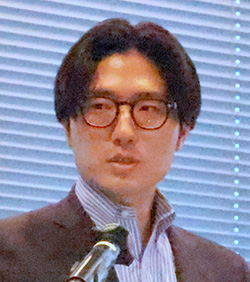
Director of Intellectual Property Contracts and Administration, Industry-Academia Collaboration Promotion Division, The University of Tokyo
Ms. Mieko Mio, Attorney at Law, Kioicho Law Offices
Today, I would like to introduce the University of Tokyo's initiatives for industry-academia collaboration (industry-academia co-creation) from the perspective of the academia field.
First, I would like to talk about the organization. Under the Industry-University Collaboration Promotion Division, there is the Intellectual Property Contracts and Management Department to which I belong, which is responsible for proactively handling intellectual property owned by the University. Other organizations include the Startup Promotion Department, the International Open Innovation Organization of the Industry-Academia Innovation Promotion Department, and the Industry-Academia Collaboration Promotion Council, an organization under the direct control of the President that promotes industry-academia collaborative projects conducted by the university to solve social issues. These organizations support industry-academia collaboration (industry-academia co-creation) activities together with approved technology transfer organizations (TLOs).

Regarding contract processing, the decision-making authority for joint research contracts rests with the department, and the department makes the decision in the first instance. However, if the content of the contract deviates from the model, the department requests consultation with the Intellectual Property Contracts and Management Department, which responds to and supports the request. On the other hand, the Industry-University Collaboration Promotion Division has the authority to approve joint application and license agreements, so the division confirms the final terms of the agreement and concludes it, subject to negotiations by the approved TLO. Thus, joint research contracts and application/licensing contracts are treated separately.
Regarding intellectual property management, at the University of Tokyo, inventions are attributed to the inventor in principle, and the Intellectual Property Contracts and Management Department determines whether or not the University can succeed to the invention after receiving notification of the invention from the inventor and evaluation of the technology and market value by TLO. TLO conducts marketing activities for patents, etc. that have been applied for, leading to licensing agreements.
On the other hand, large organization-to-organization research themes are handled as industry-academia collaborative projects, and the International Open Innovation Organization provides a one-stop service for handling complex contracts and other matters. We also engage in "ecosystem-type joint research" in which multiple companies are networked together.
As an example, we will introduce a case of joint research in different fields. In the commercialization of basic technologies such as materials technology, we are developing an open-close strategy by dividing the research into competitive areas where individual companies contribute to business and profit generation and areas where multiple companies cooperate and collaborate, with individual contracts for the former and consortium-type contracts for the latter. Unfortunately, in the life science field, there are few initiatives here.
In the field of pharmaceuticals and biotechnology, the University of Tokyo's Translational Research Initiative (TR Organization), which is under the direct control of the President, is a cross-departmental organization that involves the entire university. The University of Tokyo is also participating in the IP Consultation Meeting.
The University of Tokyo publishes an "Intellectual Property Report" to promote "visualization" of university IP activities. The report provides an overview of the contents of the University of Tokyo's intellectual property. In addition, when we look at the licensees of patents owned solely by TUAT, more than half of them are start-ups, and the largest number of them are in the life science field.
Looking at the challenges in the life science field, we believe that the weak access network of Japanese start-ups to the U.S. market and venture capitalists (VCs) is a problem, given the overwhelmingly large U.S. market in this field. It is also important to create intellectual property with an eye on the U.S. and other target markets from the initial stages of research.
Finally, I would like to mention three things that I think are important for biotech start-ups to succeed. First, the relationship and communication between inventors (academia) and management must be good, and the continuity of research must be smooth. Second, and this is very important, from the very beginning, patents should be obtained with an eye toward exit and business, and the surrounding intellectual property should be solidified as a group of intellectual property. Third, be very careful not to deplete research funds, and skillfully connect funds from VCs and other sources until the final goal that the startup is aiming for.
IP Strategy in Corporate Alliances
-For the realization of open innovation in building a business ecosystem
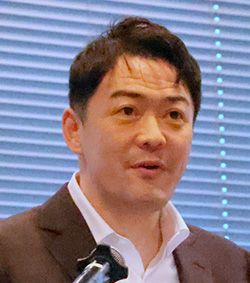
Representative Director and CEO, Cyclo-Hygeia
Makoto Kobayashi, Specially Appointed Professor, Open Innovation Organization, Osaka University
In the medical field, one of the life science areas, the emphasis has traditionally been on the therapeutic effect of the product alone, but in the future there is a shift from quantity to quality, such as the need to effectively and efficiently support individuals, from prevention to prognosis. In line with this shift, the modality of pharmaceuticals is shifting from small molecules to biotechnology and digital, increasing uncertainty and complexity from a technical and intellectual property perspective. In response to these changes in the environment, not only life science companies but also IT companies and other companies from different fields are entering the pharmaceutical industry, leveraging their own technologies, products, service platforms, and customer bases to create a new business ecosystem in the life science field. In today's presentation, I would like to talk about the current status and case studies of "development of infrastructure for data utilization," "promotion of open innovation," and "market formation from the ecosystem formation".
One example of the use of digital technology is the growing development and investment in digital therapeutics (DTx), which are digital products that provide evidence-based therapeutic interventions for the prevention, management, and treatment of medical and other diseases. Since many DTx require a medical device program, SaMD (Software as Medical Device), the International Medical Device Regulators Forum took the lead in announcing the Key Definitions for SaMD, and participating countries, including Japan, are promoting international harmonization based on these definitions and the development of a foundation for data utilization, Participating countries, including Japan, are promoting international harmonization based on these definitions and the establishment of a foundation for data utilization. In addition, multiple players with various specialties are participating in this area, and especially in the U.S., a market based on alliances has been formed and an ecosystem is developing.
With the development of digital technology, open innovation is becoming increasingly important. One of the latest trends is the separation of the innovation creation entity (small and medium-sized companies/start-ups/universities) and the commercialization entity (large companies), in other words, a clarification of the division of roles. This is a model that complements each other's strengths and weaknesses, and realizes the essence of open innovation, i.e., increasing business speed and building win-win relationships. In these collaborations and alliances, it is important to negotiate contracts not only from a financial perspective, but also to clarify the division of roles for commercialization, and to be aware of the attribution of rights and profit sharing during and after the collaboration or alliance.
In the past, the pharmaceutical industry has focused on IP strategies based on IP rights (monopoly), but from now on, IP rights should be utilized as mid- to long-term strategies and information strategies from a business (collaboration with others) perspective. In particular, in complex markets (product x thing creation), strategies are required to utilize IP rights as market entry tickets and collaboration tools, resulting in the creation, growth, and expansion of new businesses.
The Importance of the Drug Discovery Ecosystem in the Pharmaceutical Industry and Key Factors for Creating a Virtuous Circle
Hiroya Okumura, Chairperson, Intellectual Property Committee, JPMA
I will discuss the importance of IP in the drug discovery ecosystem. We cannot think of ecosystem revitalization without IP, and we believe that the "goods" of "people, goods, and money" that are important to the ecosystem include the IP that covers these goods. It is said that IP strategy is an important point to turn the drug discovery ecosystem around, and in fact, no one should start a business without an IP portfolio. While IP plays an important role in the virtuous circle of the ecosystem, how it is managed is also a key point for the ecosystem to function. Innovation is promoted by the accumulation of many players, including companies and academia, human resources, capital, technology, and intellectual property, but innovation is more likely to be created through collaboration involving multiple institutions, not just the traditional one-on-one collaboration between companies and academia. In such situations, it is necessary to establish clear ground rules for the handling of background intellectual property (IP) held by members and foreground IP created through collaborative research, so that members can participate in consortiums and other communities with peace of mind. We believe it is necessary to establish clear ground rules for the handling of background intellectual property (IP) owned by members and foreground IP created through joint research. In cases where many players participate in a consortium, etc., joint research often proceeds without sufficient clarification on the handling of IP. We think it is necessary to consider appropriate IP management with reference to the model contract of the MEXT's "Sakura Tool" and others.
One is IMEC, an international semiconductor research institute in Belgium, which in principle allows the participants to use background IP and foreground IP of collaborative project results on a non-exclusive basis, while at the same time granting monopoly management to specific companies in certain fields. IMEC has adopted a management model in which background IP and foreground IP resulting from collaborative projects are, in principle, non-exclusive for use by participants. This mechanism enables IMEC to obtain new foreground IP, which encourages further participation, and as a result, IMEC is known as a consortium that has succeeded in attracting funds and achieving growth.
Another example is intellectual property management at Tohoku University. This is a program started mainly at Tohoku University to conduct research and development of microsystems that transcends the boundaries between fields and companies. The program employs a "patent basket" system in which the university bears the cost of basic technology and the participating companies are free to implement the results of their research. This is a model that offers significant advantages to both universities and participating companies.
To reiterate, as new modalities emerge in the pharmaceutical field, it is necessary for various players to collaborate to create innovations through the successful operation of a drug discovery ecosystem, which will lead to the delivery of new treatments to patients. In such a drug discovery ecosystem, the management of intellectual property has an important role to play. Innovation through collaboration among multiple institutions is expected in the future, and it is necessary for the parties concerned to find a flexible approach to operating the implementation conditions so that the original objectives can be achieved even in such an ecosystem. At the same time, I would like to emphasize that the formulation of clear IP ground rules is also an important point for revitalizing the drug discovery ecosystem in the future.
Panel Discussion
Moderator: Hiroya Okumura, Chairperson
Panelists: Koji Tamada, Tsuyoya Sho, Mieko Mio, Makoto Kobayashi

Today, I would like to discuss key factors that will bring about a virtuous circle in the drug discovery ecosystem, or issues that will lead to such a virtuous circle. Specifically, I would like to focus on three issues: 1) start-up support, 2) human resources, and 3) ecosystem community. Finally, I would also like to discuss the "missing piece" pointed out by JPMA Chairman Ueno.
Start-up support
In order to create a virtuous circle in the drug discovery ecosystem, it is essential for start-ups to launch, succeed, and expand the virtuous circle of people, goods, and money. Compared to IT startups, biotech startups do not have a high probability of success. We would like to ask your opinion on whether biotech startups are currently receiving the support they need to succeed, and what challenges, if any, they face.
| • | IPO is one of the EXIT of a successful startup, but to achieve IPO, you need different human resources and support from the previous stage. Also, patents are important in terms of goods. Patents that lead to the final business model need to be obtained from an early stage with an eye toward commercialization and IPO, so support for this is important. |
| • | Yamaguchi University focuses on IP education, and all students in all faculties must take IP education. And if an idea comes up, they can immediately communicate with the university's IP department and apply for a patent with an eye to the future. In industry-academia collaboration, we also have an environment where we can talk to potential licensees. |
| • | At the University of Tokyo, researchers and VCs are close, and TLOs are also close to researchers on a daily basis, making it easy to link research seeds to social implementation. However, in order for a start-up to succeed, it is necessary to acquire intellectual property from the very beginning without omission, with a view to eventual commercialization. There are not many researchers who are well versed in both research and business, and we need to improve the quality of our support in this regard. |
| • | As far as EXIT is concerned, we think that either IPO or M&A is fine, as long as the company is bought at a high price. The biggest problem with IPOs in Japan is that the value of the company is not properly evaluated at the time of listing or after listing, so the company cannot raise enough funds to continue developing drugs, and therefore cannot bring them to market. The reasons for the lack of M&A in Japan can be broken down into three categories: (1) problems on the investor side, (2) problems on the startup side, and (3) problems on the acquiring side. (Regarding (1), I believe that VCs need to increase their experience in leading negotiations in order to make M&A successful. (Regarding (2), if there is a sense of rejection on the part of the entrepreneur to be acquired, it would be necessary to make them understand that there is an option to proceed with development after the M&A. (Regarding (3), while there are many trillion yen M&A deals in the U.S., there are no such successful cases in Japan yet, so it is necessary to support the emergence of many deal-worthy startups. |
| • | M&A and IPO are management tools, but in both cases, IP is evaluated; in the case of IPO, IP is checked in the listing examination of the Tokyo Stock Exchange, and in M&A, IP is evaluated in due diligence and other processes. IP needs to be considered together with business strategy, but there is a lack of human resources who can advise startups considering their funding and time horizon. Supporting only IP matters will diverge from the business strategy. Collaboration among experts with diverse backgrounds, external or internal, is needed. |
2. about human resources
| • | The biotechnology field is special and requires specialized knowledge. Universities can support researchers by obtaining comments on their inventions from outside patent attorneys, etc. However, when it comes to taking the next step and out-licensing to pharmaceutical companies, there is a lack of human resources at universities to promote this process. We hope to see the creation of a system that can utilize the knowledge of people with experience from pharmaceutical companies, contract research organizations (CROs), contract manufacturing organizations (CMOs), etc., such as the SPARK system at Stanford University. |
| • | SPARK is an organization at Stanford University where experts with backgrounds in intellectual property, regulatory affairs, and investment in the pharmaceutical industry are registered, and these experts support startups free of charge. SPARK also plays the role of connecting people to people, and through SPARK, human resources may flow from companies to universities and from universities to companies. |
| • | I have never heard of an organization like SPARK in Japan. Even if there are good seeds, they may be buried because university researchers do not have the know-how to commercialize them. Support from an organization such as SPARK would be helpful. |
| • | Human resources are the most important, and there are two major government support measures for this: one is to help people who want to start their own businesses to succeed, and in this regard, we are implementing measures that can be learned from the U.S., where a virtuous cycle of startups can be seen. The second is to help increase the number of people who want to start their own businesses, which is a very difficult challenge that cannot be solved in the short term. Although the government is making efforts to increase the number of people who want to start a business by implementing measures such as funding and taxation systems in its 5-year startup plan, we believe that this needs to be a long-term initiative, lasting 10 years or so. |
| • | Even though we have a diverse group of experts individually, including those with VC experience and those with IP experience, I believe that in many cases we can only offer advice from the perspective of our own field of expertise. It is necessary for experts to enhance each other's literacy, for example, by having VCs educate IP professionals and IP professionals learn about finance. Also, even if individual human resources are available, it is necessary to discuss whether the startups and companies themselves can act as the driving force or whether they should procure human resources from outside to act as the driving force for the collaboration. |
3. about ecosystem community
| • | In the West, as in the case of SPARK, there are many cases where professionals engage in pro bono activities, or where non-professionals find value in working on a voluntary basis. In contrast, in the Japanese way of community, spontaneous pro bono activities are not seen. In addition, even if the Japanese community has the right people, it will not move without someone stepping forward, and there is a passive attitude in the community. |
| • | In the case of U.S. universities, discussions with the university's intellectual property department begin as soon as an invention is discovered, and once a patent application is filed, TLO will come to the university and select potential licensees and set up interviews. The researcher does not need to take action himself. On the other hand, in Japan, I think the current situation is that researchers themselves have to be proactive. |
4. looking for the missing piece
Mr. Ueno, chairman of the JPMA, has pointed out that even if you focus on the issues, the drug discovery ecosystem may not be working properly, and that there may be a "missing piece" in the puzzle. What is your opinion on this point?
| • | I think it comes down to risk-taking. In drug discovery, there can be no investment without allowing failure. It is important to "visualize" risk and to have a good eye for assessing risk. |
| • | When considering commercialization, the Japanese market alone is too small, and it is necessary to consider the global market. I think it is necessary to consider what kind of market exists in the world. |
| • | The financial aspect is improving. The next challenge will be patience and time. We need to have the patience to continue taking on challenges and the time to take on challenges until we succeed. I feel it is important to provide that support. |
| • | Success is not easy. We need to extract the challenges from what did not work out and take on the next challenge. For this, funds, systems, and time are necessary, but I believe that enthusiasm is also important. I think it is important to have the enthusiasm to finish the project, something intangible like that. |
(Intellectual Property Forum Preparatory Committee)