


Top News JPMA Rare Disease Day 2024 Symposium" was held
On February 4, 2024, JPMA and the RDD Japan Secretariat*1 co-hosted the "JPMA Rare Disease Day 2024 Symposium" at the Nomura Conference Plaza Nihonbashi (Chuo-ku, Tokyo). The following is a summary of the lectures, free discussions, and Q&A sessions held on the day.
-
1Rare Disease Day (RDD): World Rare and Intractable Disease Day
The JPMA's Pharmaceutical Industrial Policy Committee launched the Intractable and Rare Diseases Task Force in October 2021 to create a society in which people living with intractable and rare diseases and their families can live comfortably. In February 2023, the Task Force conducted a "Survey on Challenges of Patients with Rare Diseases" and identified three issues that pharmaceutical companies should address: "Lack of information and difficulties in obtaining necessary information," "Lack of understanding and knowledge of diseases by society," and "Limited treatment options and lack of fundamental treatment. This symposium focused on the above three issues, "Lack of information and difficulty in obtaining necessary information" and "Lack of understanding and knowledge of the disease by society." Pharmaceutical companies, patient support groups, patient groups, and government officials shared their perspectives on these issues and discussed future measures.
Opening Remarks
Kazuhiko Mori, Executive Director, JPMA
JPMA is an industry organization of 71 research and development-oriented companies, and has established the Task Force on Intractable and Rare Diseases in the belief that it is important to understand the wishes and problems of patients and to work toward solutions.
This symposium is being held for the first time as a JPMA activity related to Rare Disease Day, and through these specific efforts, we would like to take the wishes of various stakeholders, especially patients and their families, to heart.

Lecture 1
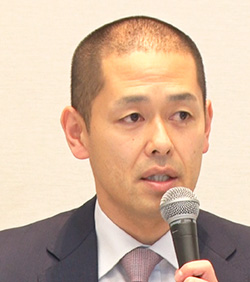
Efforts of the Task Force on Intractable and Rare Diseases
Masahiro Ishida, Leader, Task Force on Intractable and Rare Diseases, JPMA Industrial Policy Committee
In order to understand the issues faced by patients with intractable and rare diseases, we conducted a "Survey on the Problems of Patients with Rare Diseases". From the various issues identified in the survey, we focused on three issues of particular importance and compiled "Recommendations on Intractable and Rare Diseases.
To address the issue of "little information and difficulties in obtaining necessary information," it is necessary to discuss countermeasures in cooperation with the government and related parties, and we are studying a new mechanism for patients to easily obtain clinical trial information in cooperation with the Intractable Disease Control Section of the Ministry of Health, Labour and Welfare.
For the issue of "Lack of understanding and knowledge of diseases by society," we believe that it is necessary to conduct activities to make people who are not involved in intractable and rare diseases aware of the issues.
To address the issue of "limited treatment options and lack of fundamental treatment," it is necessary to promote research and development and improve the pharmaceutical affairs system so that necessary drugs can be delivered to patients in a timely manner. We also believe that a review of the NHI drug pricing system is necessary for companies to secure profits and continue their business in the area of rare diseases.
Lecture 2
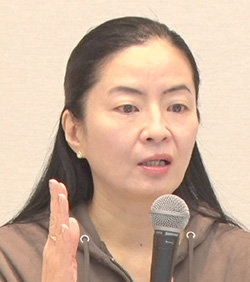
For" and "with" patients
(Ms. Yukiko Nishimura, President, ASrid, a non-profit organization / Association for the creation of a society where everyone has easy access to clinical trials)
ASrid, a non-profit organization (NPO), acts as an intermediary in the field of rare and intractable diseases, connecting related parties in response to issues and conducting surveys and research to build the necessary evidence.
The mission of the "Society for Creating a Society in which Clinical Trials are Accessible to All" is to "make proposals and disseminate information aimed at improving access to clinical trial information for patients/families/medical professionals and reflect them in medical practice and policy," and its vision is to "make clinical trial information 'visible' to all and create an environment in which clinical trials are accessible to patients/families/medical professionals/researchers. Our vision is to "visualize clinical trial information for everyone and create an environment where patients/families/medical professionals/researchers can easily access clinical trials. We discuss with all concerned parties whether the vast amount of specialized information is being delivered properly, correctly, and in an easy-to-understand manner, and work to communicate requests appropriately. In January 2024, the jRCT was actually revised, and the screens and search methods were made easier to understand. We believe that conveying requests from different angles to the measures being implemented by the government will lead to appropriate renovations, and it will be necessary for all parties involved to continue exchanging opinions. We would like to continue the cycle of thinking together with patients and conveying information together with everyone (concerned parties) for the benefit of patients.
Lecture 3
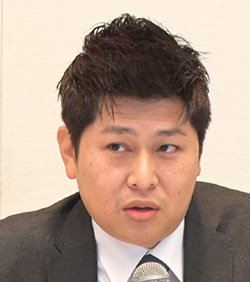
Challenges and Efforts Concerning Intractable and Rare Diseases - From the Standpoint of Family Associations
Mr. Kenta Nanri, Potocki-Lupski Syndrome Family Association
Potocki-Lupski syndrome is a rare disease with 10 patients in Japan (1.5 to 17 years old), and its main symptoms include developmental delays such as lack of speech and growth failure. Some of the issues that we feel are related to this rare disease are "lack of treatment methods (therapeutic drugs and data on medical treatment and education)," "lack of information," "lack of awareness in the surrounding community," and "difficulty in managing family associations (lack of manpower and funds).
Thinking about what we as parents can do for our children, we consulted with Dr. Toshiyuki Yamamoto, Professor of the Department of Genome Medicine at the Center for Gene Medicine, Tokyo Women's Medical University, who is conducting research on Potocki-Lupski syndrome, and established a family group for the purpose of sharing information and adding the disease to the list of designated incurable diseases. Currently, we are engaged in activities such as group lines, online social gatherings, and website development. In addition, based on the experience that there were no vacancies when we looked for after-school day care services when our child entered elementary school, I worked with my wife to raise funds and start "Child Development Support After School Day Care Service HITONOWA Minami-Oizumi Classroom".
As proposals for improving the environment related to rare diseases, we would like to propose the use of digital data, such as "an environment where patients and their families can quickly access necessary information," "verification of the effectiveness of measures and initiatives for rehabilitation and education," "cooperation among educational institutions, families, and facilities to accumulate necessary data and utilize them for rehabilitation and education," and "measures for dealing with future financial and personal concerns. We also hope that the government will pay attention to measures to deal with future financial and personal insecurity.
Lecture 4
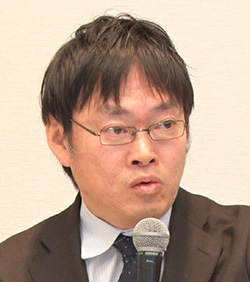
Challenges surrounding rare diseases -MHLW's efforts
Mr. Shohei Yamada, Director, Intractable Disease Control Division, Health and Welfare Bureau, Ministry of Health, Labour and Welfare
The government's decision to promote measures against intractable diseases was triggered by the outbreak of SMON that began in 1964, and the 1972 Outline of Measures against Intractable Diseases stipulated the following measures: 1) promotion of research and investigation, 2) development of medical facilities, and 3) elimination of the co-payment of medical expenses. In 1974 (Showa 49), the number of beneficiaries was approximately 17,000, but in recent years the number has increased to approximately 1 million.
In the past, the program was implemented within the scope of the budget, but in the 2008's, the budget for measures against intractable diseases was increased using the consumption tax as a source of funding, and now stands at about 200 billion yen.
Intractable diseases are defined as "rare diseases for which the mechanism of pathogenesis is not clear," "treatment methods have not been established," and "require long-term medical treatment. While simply meeting the definition of an intractable disease alone does not entitle a patient to subsidized medical expenses, if the patient meets the requirements for a designated intractable disease, i.e., "the number of patients does not reach a certain number in Japan" and "objective diagnostic criteria have been established," the patient will be eligible for subsidized medical expenses. The major difference from other administrative fields is that we are trying to tackle diseases that are difficult to be voiced with a small number of patients, rather than those where the needs and voices are loud.
The addition of a designated intractable disease is first discussed by a research group or academic society, and then an application is made to the Ministry of Health, Labor and Welfare's Intractable Disease Designation Review Committee. Recently, we have been receiving consultations about the lack of doctors for research groups and difficulties in accessing researchers. In some cases, we may be able to add diseases to the existing research groups or create new research groups, so we hope you will contact us. The number of designated intractable diseases is being expanded sequentially, and will reach 341 in April 2024.
In October 2023, we will strengthen welfare and employment support, and promote measures to make consultation support services mandatory for local governments, etc. In April 2024, the national "Database of Patients with Designated Intractable Diseases and Database of Children with Chronic Diseases" (database for intractable diseases and chronic childhood diseases) will be provided not only to researchers but also to third parties including pharmaceutical companies. We hope that JPMA member companies will make use of this database as we will be providing it to third parties, including pharmaceutical companies.
Free Discussion and Q&A
 Discussion
In addition to the issues identified in the JPMA's "Survey on the Problems of Patients with Rare Diseases," the speakers discussed the questions received from the audience.
| 1) Issues identified in the "Survey on the problems of patients with rare diseases | |
| • | Regarding the issue of "little information and difficulty in obtaining necessary information |
| • | Regarding the issue of "Lack of understanding and knowledge of the disease by society |
| 2) Questions from the audience | |
| • | What kind of support can be provided to ensure that rare diseases, for which there is only one patient, are not left behind? |
| • | Does the JPMA's Task Force on Intractable and Rare Diseases have an organizational structure and budget that will enable it to continue its activities? |
| • | What measures can be taken to improve the issues of time-consuming diagnosis and information collection at the time of undiagnosed disease? |
| • | In rare diseases, recognition by medical personnel may be insufficient, and there are issues that disadvantage patients, such as delayed diagnosis. What measures can be taken to increase recognition by non-specialist medical professionals? |
Questions that could not be answered on the day of the symposium are answered below.
<Answer Summary Link
https://www.jpma.or.jp/information/industrial_policy/rare_diseases/events/rs40ob0000000wl8-att/shitsugi.pdf
Finally, we hope that this symposium will serve as a forum for dialogue to create a society in which people living with intractable and rare diseases and their families can live comfortably, and that the circle of efforts will expand to include a variety of stakeholders.
*The video of this symposium can be viewed here.
https://www.jpma.or.jp/information/industrial_policy/rare_diseases/events/jpma-rdd240204.html
( Kazumi Koizumi, ST2 Leader, Intractable and Rare Diseases Task Force, Pharmaceutical Industrial Policy Committee)