


Top News
Special Session at the 10th Nikkei-FT Infectious Diseases Conference
Toward the Creation of a Drug Discovery Ecosystem in the Infectious Disease Field: A Year in Review and Future Initiatives
On October 17, 2023, a special session of JPMA was held at the 10th Nikkei-FT Conference on Infectious Diseases. The theme of the session was "Toward the Establishment of a Drug Discovery Ecosystem in the Field of Infectious Diseases: A Year in Review and Future Initiatives," and based on the progress made since 2022, the issues and strategies necessary to make the drug discovery ecosystem in the field of infectious diseases sustainable were discussed from the perspective of industry, academia, and government.
 Special Sessions
Opening Remarks
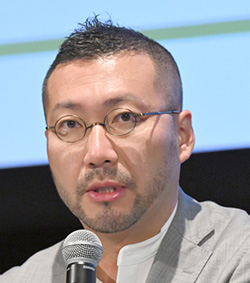
Ryoji Noritake, Director, Secretary General/CEO, Japan Health Policy Organization (JHPO)
The "Drug Discovery Ecosystem in Infectious Diseases" needs to be discussed among industry, academia, and government (private sector). In previous sessions, it has been discussed that the low profitability of the infectious disease area and the importance of establishing a mechanism for the entire drug discovery ecosystem, including human resource development, are important. In its proposal on drug resistance (AMR) issued in 2016, the Japan Health Policy Institute first mentioned the need for "pull-type incentives," and Japan has finally started to introduce a pull-type incentive system for new antimicrobial agents on a trial basis in 2023. In this session, we would like to broaden the scope to include not only pull-type incentives but also the entire range of infectious disease drug discovery, and deepen the discussion on what kind of ecosystem is needed from the perspectives of the government, academia, venture capital, and pharmaceutical companies, by sharing knowledge.
Lecture 1
Toward the Establishment of a Drug Discovery Ecosystem in the Field of Infectious Diseases: The Ministry of Health, Labour and Welfare's Perspective
Dr. Hiroto Araki, Director, Infectious Disease Control Division, Department of Infectious Disease Control, Ministry of Health, Labour and Welfare
The government is promoting a strategy to strengthen the vaccine development and production system as a policy in the area of infectious diseases ( Figure 1 ). This strategy is based on nine policies to address issues such as the lack of human resources, industry-academia collaboration, and strategic allocation of research funds in the field of infectious diseases, and to compensate for these issues. Although this strategy is currently focused on vaccines, it contains important elements and issues for the establishment of a drug discovery ecosystem, and we believe that it can be applied to infectious disease drug discovery as a whole. The strategy includes the formation of world-class R&D centers, improvement of funding, fostering of drug discovery ventures, and enhancement of the clinical trial environment.
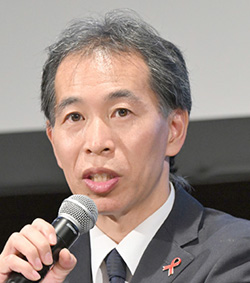
Fig. 1 Strategy to strengthen the vaccine development and production system

The pharmaceutical industry as a whole faces the challenge of strengthening its development and production systems for vaccines and therapeutic drugs for infectious diseases from the perspective of economic security. In the "Pharmaceutical Industry Vision 2021," ensuring profitability and predictability of vaccines and therapeutic drugs (including AMRs) is mentioned, and in response to ensuring predictability, a pull-type incentive program for AMRs was launched in FY2023.
In addition, in order to connect academia and companies, the MHLW has launched a comprehensive portal site for medical venture total support projects (Medical Innovation Support Office, MEDISO), and the Ministry of Economy, Trade and Industry's InnoHub (Healthcare MEDISO functions as a one-stop contact point for general consultation regarding R&D for medical venture companies, in collaboration with the Ministry of Economy, Trade and Industry's InnoHub (Healthcare Innovation Hub), the Pharmaceuticals and Medical Devices Agency (PMDA), the Japan Agency for Medical Research and Development (AMED), and other organizations ( Figure 2 ).
Fig. 2 Medical venture total support business: MEDISO

Regarding the development of a clinical trial environment and networking in the area of infectious diseases, there is the National Repository of Data and Biospecimen of Emerging and Re-emerging Infectious Diseases (REBIND), which is being considered for use. We would like to have designated medical institutions for infectious diseases, where patients are first seen when they contract an infectious disease, join this network to improve the clinical trial environment.
Lecture 2
Current status and expectations for drug discovery in the field of infectious diseases in academia
Yohei Doi, Professor, Department of Microbiology and Infectious Diseases, Fujita Medical University School of Medicine
Since the beginning of the 20th century, the number of drug-resistant bacteria has been increasing, and in particular, infections that are resistant to carbapenems have become a problem. The use of new antimicrobial agents against these resistant organisms has been reported to significantly reduce patient mortality. There are great expectations that "new antimicrobial agents will save lives" as a single drug can have such a lifesaving and impactful effect. On the other hand, the antimicrobial market faces a challenging situation. While the anti-tumor drug market has seen an increase in investment year after year, there has been little movement in the infectious disease market and its market size is extremely small ( Figure 3 ).

Fig. 3 Market transition of antibacterial drugs

Regarding the role of academia in this situation, I would like to introduce two examples of my own involvement in the entrance of drug discovery from the standpoint of microbiology.
Case 1
Fosfomycin is a drug that has been used for a long time. In recent years, the number of bacteria that inactivate the drug and show resistance to it has been increasing. We conducted research on phosphomycin with the idea that it could be utilized again by inhibiting or suppressing this inactivating enzyme. As a result, we discovered a compound that specifically inhibits this enzyme, which is currently under international patent. However, in order to proceed with this research, additional research funds were required for mass synthesis of the compound and optimization of its structure. We consulted with the National Institutes of Health (NIH) and CARB-X, but the hurdles for support, such as the requirement to start a business, were too high for us to make further progress. Later, we were able to receive support from the Small Business Technology Transfer (STTR) program, which promotes the technological capabilities of small and medium-sized businesses, and research is now underway. We realized the breadth of the U.S. base ( Fig. 4 ).
Fig. 4 Case 1

Case 2
In the 1990s, HIV researchers at the University of Pittsburgh in the United States discovered certain antimicrobial peptides. For various reasons, no further development was made at that time. Later, I became interested in the antimicrobial peptide myself and conducted an evaluation against AMR bacteria. As a result, the efficacy against AMR was confirmed, and the AMR drug discovery venture was established by the research team members at that time. Currently, the company has raised nearly 10 billion yen and is advancing to Phase Ib trials for the local administration of the compound for the treatment of artificial joint infections. We are very interested in the future development of this compound ( Fig. 5 ).
Fig. 5 Case 2

Through these experiences, it can be said that the strength of academia lies in its ability to pursue a variety of ideas as research without excessive concern for risk. On the other hand, it is also true that there is a gap between research in academia and practical application. While funding is important, it is also important for academia to receive advice from companies, MEDISO, and others from the pharmaceutical and business perspectives. We would like to discuss how to pass the baton from academia to companies through this opportunity.
Lecture 3
Current status and challenges in launching and fostering drug discovery ventures
Atsushi Usami, Director and Partner, University of Tokyo Edge Capital Partners (UTEC)
From the standpoint of a venture capitalist, I would like to discuss the current status and challenges of launching and nurturing venture companies in terms of (1) requirements for launching, (2) hands-on support, and (3) recognition of challenges.
The key requirements for launching a drug discovery venture are: (a) superior scientific technology, (b) a strong team that can strongly promote product development, and (c) a business that has a global perspective and can provide solutions to large-scale issues facing humanity ( Fig. 6 ). When launching a drug discovery venture, the key issue is how to reduce risk until the results of Phase 2 trials are obtained. ( Figure 7 ).
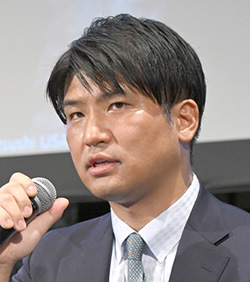
Fig. 6 Three important perspectives for investment

Fig. 7 Important points for start-up

We provide multifaceted support for each phase of technology seeds and have highly specialized members with global experience in management, technology development, and regulatory affairs.
The challenge for drug discovery ventures in the infectious disease field is the difficulty in raising funds and forming business alliances with companies. To address these issues, the following measures should be taken: 1) Seed platform: Build a pipeline of multiple compounds, not a single compound, and develop with an eye to expanding into other disease areas such as cancer; 2) Intervention by experienced personnel with an exit image: Since basic research and product development are two separate things, it is essential to start early in the development process to ensure the development of new drugs that can be used in the future. 3. Secure diverse funding sources: Contact various venture capitalists and investors, and utilize development support systems that offer push/pull incentives. We believe that if these three elements can be implemented, the challenges of drug discovery ventures in the field of infectious diseases can be overcome ( Figure 8 ).
Fig. 8 Issues and three important perspectives in venture support

Lecture 4
Proposals for the Construction of a Drug Discovery Ecosystem in the Infectious Diseases Field
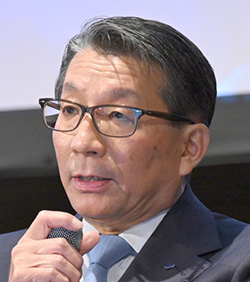
JPMA Chairman, Hiroaki Ueno
Three and a half years have passed since the novel coronavirus infection (COVID-19) pandemic occurred, and several vaccines and therapeutic agents have been put into practical use during this period. Digital technology has also made great progress, enabling new ways of living and working. On the other hand, there is still the spread of mutant strains of COVID-19 and influenza infections and other infections. Once again, it is important to remember the lessons learned from this COVID-19 coronary disaster and to prepare for the next infectious disease so that we can be prepared in times of peace and instantaneous response in case of emergency. It is also important to note that while several vaccines and therapeutics have been commercialized, various modalities are being developed, including those that did not make it to that point, increasing the pool of drug discovery.
The drug discovery ecosystem must be considered from the perspective of what kind of support a company can provide to drug discovery in the field of infectious diseases, where scientific and economic predictability is low. In addition, as the number of players in the field of infectious diseases is decreasing, it is important to form a drug discovery community during normal times in order to prepare for future emergencies.
In the drug discovery community, it is important for academia and start-ups to pool information and technologies in times of peace and to be able to utilize them in times of emergency. For venture capitalists, it is important to be able to identify the seeds of a venture company in order to provide funding and hands-on support.
In the community at the stage of commercialization, partnerships between venture companies and pharmaceutical companies are important, and it is necessary to work together to bring medicines to the world. In order to realize drug discovery in the less predictable field of infectious diseases, push-type incentives for these communities and pull-type incentives for the exits are essential ( Figure 9 ).
Fig. 9 Infectious Figure 9 Important elements of the infectious disease drug discovery ecosystem

The roles of each player in the drug discovery ecosystem are as follows: the government should strengthen its command post function and design a system to promote drug discovery in infectious diseases; academia should acquire new drug seeds; venture capitalists should invest in and provide hands-on support to start-ups; start-ups should conduct bridge research to pharmaceutical companies; and pharmaceutical companies should accelerate collaboration with start-ups for practical application. In addition, we believe that it is necessary for pharmaceutical companies to accelerate collaboration with startups toward the practical application of new drug discovery seeds. Another common role of each player is to develop human resources to support the drug discovery ecosystem ( Figure 10 ).
Figure 10 Roles of each player in the infectious disease drug discovery ecosystem

In order to make "preparedness in peacetime" and "instantaneous power in emergencies" function, we believe it is important to prepare for future infectious diseases by linking the government's command post function, incentives to enhance predictability, and strengthening of the infectious disease drug discovery ecosystem in a triangular manner.
Panel Discussion
Moderator: Mr. Ryoji Noritake
Panelists: Dr. Hiroto Araki, Dr. Yohei Doi, Dr. Atsushi Usami, Dr. Hiroaki Ueno, Chairman
Mr. Noritake: I would like to ask about the issue of how to create a community of infectious disease drug discovery in industry, academia, and government (private sector).
Mr. Doi: There is a lack of mutual understanding even within academia, so self-help efforts are necessary first. Academia can then contribute in terms of increasing the pool of knowledge, which can then be pooled with the infectious disease drug discovery community. Since it is assumed that many studies are stagnant at the entry point of optimization of hit compounds and preclinical studies, we believe that a system is needed to provide companion support toward the exit.
Mr. Usami: It is important to provide R&D support in an appropriate manner from the initial stage with an eye toward the exit of developed products. Regarding the exit side, it is necessary to increase the mobility of human resources. In Japan, there has been an increase in the number of people working at the same time, and it is important to have people with experience in drug discovery to provide support. I believe that one of the important roles of venture capital is to connect people with people and companies with companies.
Mr. Araki: MEDISO is one form of companion support. In terms of human resource mobility, some MEDISO staff members have experience in companies. As for venture capital, there are still some areas where progress has not been made in Japan, so we would like to explore ways to provide accompaniment and support that the government can back up.
Mr. Ueno: One important point is that it is important to strengthen start-ups when considering the enhancement of Japan's drug discovery capabilities, not only in the field of infectious diseases. We believe that it is possible to support human resources by mobilizing experienced personnel from pharmaceutical companies and working together with them. In addition to IPOs and funding, we also believe that it is possible to collaborate in the development of products. In particular, human resource support is an area where the industry can immediately cooperate. It is important to create a community that broadens its base by getting young human resources interested in infectious diseases and accumulating a variety of technologies as well.
Mr. Noritake When discussing the infectious disease ecosystem, we recognize that it is difficult to enhance economic predictability. I would like to receive comments from the perspective of venture capitalists.
Mr. Usami The institutional design of pull-type incentives is very important, and the PASTEUR Act is being discussed in the US. Globally, there is a history of careful discussions in various places about support for startups, and efforts have been made in step with each country. It is also very important to provide support, including input, for M&A, licensing, etc., as a way to exit the venture capital market. In Japan, support for the entry point has been enhanced, but on the exit side, there are only a few IPOs and M&As per year, and the scale is small. It is important to establish a framework to change this exit environment.
Mr. Noritake: It is easier said than done when it comes to cooperation between industry, academia, and government, and to provide support for accompanying companies. As for academia, I believe we were able to discuss very specific aspects of translational research in drug discovery from what perspectives. I hope that the contents of this discussion will be utilized in drug discovery for infectious diseases.
( Shinichiro Awamura, Naoko Iizuka, Toshiaki Sakai, Hideyuki Fukuda, and Keishi Morimoto, Nikkei-FT Infectious Disease Conference Task Force, International Affairs Committee)