


Topics Assembly of the Drug Evaluation Committee for FY 2023 Breakthrough to Drug Loss - Aiming to Realize Safe, Secure, and Well-Being Medicine and Society
The 143rd Assembly of the Drug Evaluation Committee was held on November 25, 2023 at Muromachi Mitsui Hall & Conference (Chuo-ku, Tokyo). The event was held in a hybrid format, with more than 1,000 participants, including JPMA executives and Drug Evaluation Committee members, attending from the venue and others participating online.
 Panel discussion
The Office of Pharmaceutical Industry ResearchThe Assembly began with an opening remarks by JPMA Vice President Isao Teshirogi, including his message that "we must break down preconceived notions and work together to resolve the drug lag/loss problem. The first part introduced the current situation, challenges, and approaches to drug lag/loss from the various perspectives of the government, , contract research organizations (CROs), medical institutions, and patients. In the second part of the Assembly, a panel discussion was held on what we can do to prevent new drug losses in the future, bringing the four-hour meeting to a close.
Part 1
Challenges and Initiatives for Drug Lag/Loss from the Administrative Perspective
Kiyoto Nakai, Director, Drug Evaluation and Control Division, Pharmaceutical Affairs Bureau, Ministry of Health, Labour and Welfare
First, as a response to the drug lag/loss, the following issues are being discussed by the Study Group on the Ideal Pharmaceutical Regulations for Strengthening Drug Discovery and Securing Stable Supply (the Study Group on the Ideal Pharmaceutical Regulations): orphan drug designation, development of pediatric applications, Japanese P1 study for participation in international joint clinical trials, and review of manufacturing methods and other aspects of pharmaceutical products. The participants shared the status of efforts to make Japan an attractive environment, such as the ideal way of He also touched on the importance of utilizing real world data (RWD) and developing drugs with a view to post-marketing, emphasizing the need for discussions to include industry, academia, and patient groups, as well as the need for all parties involved to be the first penguins and take on new challenges together without fear.
Current status of drug lag/drug loss
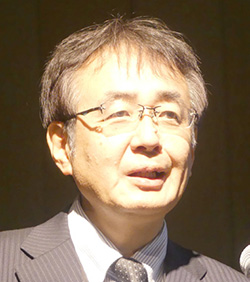
Shinichiro Iida, Senior Researcher, Policy Research Institute
He introduced the results of the analysis of the current drug lag/loss situation, explaining that the drug lag period has been shortening over the past 10 years. In terms of drug loss, the number of "unapproved drugs" with new active ingredients approved in Europe and the U.S. but not approved in Japan increased in the late 2010s, and more than half of these drugs have no development information in Japan. The increase in the number of unapproved drugs is thought to be due to an increase in the number of products from overseas startups and the fact that Japan has not yet been included in international joint clinical trials. He also suggested that many of the drug-loss products are drugs for rare diseases and pediatric applications, and that many of them are highly needed and have high potential for breakthroughs.
Drug Lag/Loss Issues and Initiatives as a CRO Industry
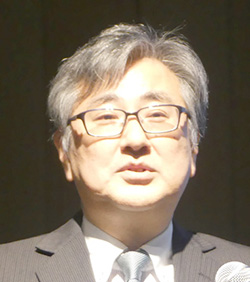
Mr. Toru Fujieda, Vice President, Japan CRO Association
As an impact of the drug lag/loss in Japan on CROs and clinical trial site support organizations (SMOs), the absolute volume of new drug development work in Japan is expected to decline, and to solve this problem, it is necessary to improve the attractiveness of Japan as a pharmaceutical market and as a place to conduct clinical trials. The Japan CRO Association has established three subcommittees to discuss how to make Japan's clinical trials more attractive. The third is "streamlining clinical trials (review of processes)," in which he reported that the Subcommittee is exploring what is hindering the efficiency of clinical trials in terms of speed, cost, etc., and working to improve them. In addition, he shared that the promotion of Decentralized Clinical Trials (DCT) and the use of RWDs are under consideration.
Drug Lag/Loss Issues and Initiatives from the Clinician's Perspective
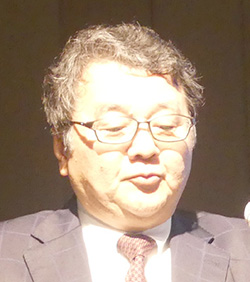
Dr. Noboru Yamamoto, Vice President, Department of Advanced Medical Sciences, National Cancer Center Hospital
He touched on the recognition and discussion of drug loss in the medical field from the current status of drug loss, and introduced activities that have actually been undertaken to eliminate drug loss, such as the strategy to approach Emerging Biopharma (EBP). As a result of these activities, he shared his impression that development in Japan by overseas EBPs, etc., has recently begun to make more progress than expected. As this progress continues, it is expected that new issues will emerge in the Japanese clinical trial implementation environment, such as the inability to contribute to case registration and lack of resources, etc. In order to further eliminate drug loss, we will address issues such as improving physician awareness, developing a clinical trial implementation system, and accurately understanding drug loss. In addition, he stressed the need to accurately understand the situation and take flexible measures without being swayed by the opinions of the media.
Drug Lag/Loss Issues and Requests to the Industry from the Patient's Perspective
Chairman of the Board of Directors, PanCan Japan Inc.
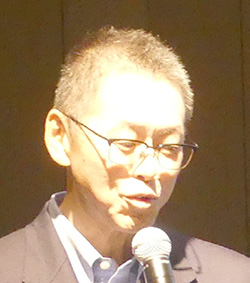
Yoshiyuki Majima, President, Japan Rare Cancer Patients Association Network
Mr. Masajima introduced his efforts as a pancreatic cancer patient to address the drug lag/loss, citing specific examples. It is important for all parties concerned (industry, government, academia, and patients) to unite and raise their voices to resolve the drug lag/loss. Fundamental reform of the Japanese system is also needed, including reform of the orphan drug system, improvement of the system for conducting and promoting clinical trials, and priority use of public funds to provide support. The message was that we would like to work together to resolve the drug lag/loss.

Part 2
In addition to the speakers in the first part, Yuji Matsukura, Assistant Director, Drug Evaluation Management Division, Pharmaceuticals Bureau, Ministry of Health, Labour and Welfare, and Hideharu Yamamoto, Chairperson, Data Science Committee, Drug Evaluation Committee, were invited as panelists to discuss the issue of "how we can prevent new drug losses in the future" under the chairmanship of Kazuhiko Mori, Executive Director of JPMA and Manabu Yanagisawa, Chairperson of Drug Evaluation Committee. The panelists discussed "what we should do to prevent new drug losses in the future".
Chairperson Yanagisawa began the discussion by sharing the current status of drug lag/loss and the Drug Evaluation Committee's efforts to address the issue, and then organized the key points for the panel discussion. During the discussion, the first question raised was, "When the time comes to implement drug development in Japan, will we be able to handle it?" The question was raised: "Can we handle this when we try to develop drugs in Japan?
The current situation is that medical institutions are not able to accept all company clinical trials due to overlapping target diseases and lack of resources. The lack of resources is the same for CROs, and the need to solve operational issues in conducting clinical trials was raised. From the patient's perspective, patients are more likely to be referred to a clinical trial if they are at a core medical institution such as a cancer center, but it is questionable whether other medical institutions are the same way. In the U.S., there is a website called ClinicalTrials.gov, and in Japan, the Japan Registry of Clinical Trials (jRCT) is positioned in a similar way, but jRCT is difficult to use. The discussion focused on the need for more open information on clinical trials by companies and the need to make it easier for patients to utilize this information.
There is a concept of effectively utilizing limited data to obtain approval for rare diseases, etc. However, it was suggested that participation in international joint clinical trials should be a priority and the use of RWD should be considered only when clinical trials cannot be conducted, etc. Since it is not yet an established method, it is also important to collaboratively conduct pilot projects. The opinion was expressed that the use of RWD should be considered in cases where clinical trials cannot be conducted.
It was also suggested that effective use of DCT in conducting clinical trials may change the speed of clinical trials, etc. In order to promote DCT, it is necessary to drastically change clinical trial operations and thinking, but this will require time and money, This will require time and money, as well as institutional measures to address inequities between those in Tokyo and those further away. The participants also agreed that it is important to challenge DCT without giving up so as to take advantage of its merits. However, the participants shared the importance of working together to avoid situations where people cannot utilize DCT when they want to, and to resolve any gray areas through guidelines and other measures.
In terms of information dissemination, it seems that industry and government are widely aware of drug lag/loss, but it is possible that medical institutions are less aware of it. In addition, the Pharmaceuticals and Medical Devices Agency (PMDA) will open an office in Washington, D.C., U.S.A., and will start efforts to make Japan known to overseas EBPs. Some of the companies have experience in disseminating information internally from their Japanese subsidiaries to their overseas subsidiaries, so there will be much to cooperate with them in terms of points to be communicated, etc.
Finally, the panelists agreed on the importance of providing information on clinical trials and the drug development environment in Japan, the necessity of promoting DCT, and the cooperative framework for providing user-friendly information, including improving the operability of jRCTs. The panel discussion was concluded.
( Mitsuhiro Kondo, Vice Chairperson, Drug Evaluation Committee)