


Topics JPMA Aging Group and HGPI Joint Symposium Held Health Challenges Associated with Aging, Dementia and Cancer - Early Initiatives to Extend Healthy Life Expectancy
On September 8, 2023, JPMA and the Japan Health Policy Institute (HGPI) held a joint symposium, "Health Challenges Associated with Aging, Dementia and Cancer: Early Action to Extend Healthy Life Expectancy," at the Nihonbashi Life Science Hub (Chuo-ku, Tokyo). This event also served as a follow-up to the " Proposals from the Pharmaceutical Industry for the G7 Hiroshima Summit Health Agenda:"*1 jointly issued by the JPMA and the International Federation of Pharmaceutical Manufacturers and Associations (IFPMA) in November 2022 in preparation for the "G7 Hiroshima Summit 2023/Nagasaki Health Ministers' Meeting," and focused on dementia and cancer, which are considered common among the elderly. Approximately 150 people from the media and the general public attended the conference. We hope that the keynote speeches, panel discussion, and this report will help to raise awareness and encourage preparedness for extending healthy life expectancy in Japan.
 Group photo
■Opening
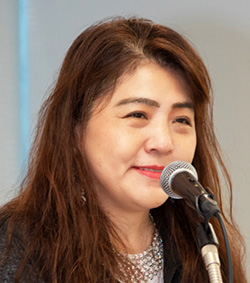
Sachiko Nakagawa, Executive Director, JPMA
Japan has the longest average life expectancy in the world and is also known for its long healthy life expectancy. The increase in non-communicable diseases that accompanies the aging of the population is a common issue worldwide. It is Japan's mission to think about extending healthy life expectancy closer to home and to disseminate its initiatives. In today's symposium, we would like to consider "how to extend healthy life expectancy" through lectures and panel discussions by leading experts in the fields of dementia and cancer. We hope that this symposium will provide an opportunity for early awareness and preparedness, and help to extend healthy life expectancy.
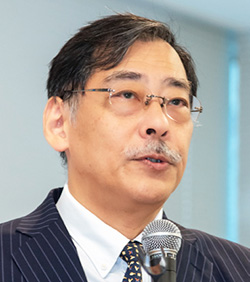
Keynote Speech 1
Toward the realization of disease-modifying treatments for Alzheimer's disease
Professor, Department of Neuropathology, Graduate School of Medicine, The University of Tokyo
Dr. Takeshi Iwatsubo, Director, National Institute of Neurological Research, National Center of Neurology and Psychiatry
Research on dementia has made great progress in recent years. In the field of Alzheimer's disease, which is the core of dementia, an antibody drug (Recanemab) that is based on the pathogenic mechanism of the disease has been approved by the U.S. Food and Drug Administration (FDA). Alzheimer's disease is caused by the accumulation of a protein called amyloid beta (beta) in the brain, which over time leads to the loss of nerve cells and the development of dementia symptoms. Recanemab is intended for patients with mild symptoms and works by binding to and removing amyloid beta aggregates. In clinical trials, it prevented worsening of clinical symptoms by 27%. On the other hand, mild brain edema and other side effects have been observed in some patients. In order to further enhance the inhibitory effect on the progression of dementia, various research facilities are conducting prophylactic clinical trials at an earlier stage, before the onset of symptoms. To realize a symbiotic society and research and development, we would like to further promote the viewpoints of the people concerned and the participation of citizens in research and development.
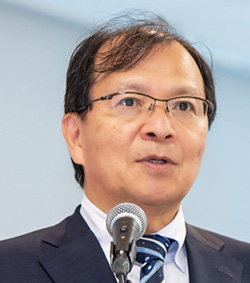
Keynote Speech 2
Challenges in Addressing Health Care and Cancer in an Aging Population
Hitoshi Nakagama, President, National Cancer Center
The number of cancer patients among the elderly in Japan is increasing, and the number of deaths due to cancer is also increasing among the elderly. The importance of cancer treatment measures for the elderly is mentioned in the plan. The elderly are characterized by the detection of advanced stage cancer, frequent coexistence of complications, and other factors, and there is a large difference in life expectancy among individuals. The number of people who do not wish to undergo aggressive treatment when there is a possibility of remaining disability is increasing, and there is a lack of scientific evidence for elderly patients, so it is important to have sufficient discussion and comprehensive judgment in the provision of medical care. In screening, consideration must also be given to the growing disadvantages of aging, and with recommendations for cross-disease prevention*2 to be issued in 2021, I believe that measures must be taken with an awareness of healthy life expectancy as well as cancer prevention.
Panel Discussion
Thinking about society-wide "preparedness" for dementia and cancer
Moderator: Mr. Shunichiro Kurita, Senior Manager, Japan Health Policy Organization
Panelists Mr. Takeshi Iwatsubo and Hitoshi Nakagama,
Ms. Matsuyo Kamada, Representative Director, Association of People with Dementia and their Families, a public interest incorporated association,
Mr. Rin Ogiya, Director for Cancer Control, Cancer and Disease Control Division, Health and Welfare Bureau, Ministry of Health, Labour and Welfare
Kurita: Dementia and cancer are familiar symptoms/diseases that can affect anyone. Health in old age is recognized as a major issue not only for individuals but also for society as a whole. How should civil society, hospitals, medical care, and policymakers deal with this issue?
Kamada: The National Outline for the Promotion of Dementia Policies lists "symbiosis" and "prevention" as basic ideas. In order to realize these, it is important to understand dementia. I think it is important for those involved to connect with supporters and friends.
Ougiya: After a cancer diagnosis, I think there is anxiety in terms of daily life and decision-making in treatment. To relieve anxiety, first and foremost, it is important to obtain correct information and consultation. The government has established a cancer information service and support functions at base hospitals. I hope that these services will be widely used.
Iwatsubo: New treatment methods for dementia are beginning to emerge, and it is important for society and the medical community to be prepared. Opportunities to treat the elderly who also suffer from cancer are increasing, and we are reminded of the need to provide medical care that is appropriate to their needs.
 Dementia and Families Association
Representative Director
Nakagama: Survival rates and cure rates for cancer have increased dramatically. While medical technology has advanced, I believe that it is necessary to increase health literacy and initiatives rooted in social life, such as the implementation of survivorship and psychological care, as well as treatment.
 Japan Health Policy Institute
Senior Manager, Japan Health Policy Organization  Ministry of Health, Labour and Welfare
Cancer Control and Prevention Division, Cancer and Disease Control Bureau, Health and Welfare Bureau, Ministry of Health, Labour and Welfare
Mr. Rin Ogiya
Kurita: I recognized that it is very important for civil society, researchers, and government agencies to collaborate in disseminating information in order to eliminate anxiety and misunderstanding about the disease, promote early treatment, and coexist with patients in social life.
Ogiya: In order to realize a society in which people live in harmony with cancer in the community, the government will take measures in various fields, such as balancing work and study, improving the quality of life of patients and their families during treatment, and research on treatment for the elderly.
Kamada: I think it is important to promote the participation of people with dementia in the discussion of policies and the research and development of medicines.
Kurita Thank you very much.
( Yasuko Minamida, Leader, Aging Group, Global Health Committee, International Affairs Committee)