


Top News The 34th JPMA Policy Seminar" Held Toward Revival of Japan's Innovation Creation Potential: Will the Healthcare Ecosystem Lead to Japan's Reinvigoration?
Japan is striving to revive itself as a nation of science and technology. At the 34th JPMA Policy Seminar held on March 13, 2023, experts from various fields who are leading various innovations took the stage. The seminar offered many proposals on how to revitalize the drug discovery ecosystem, including promotion of medical digital transformation (DX), utilization of rapidly developing artificial intelligence (AI), formation of bioclusters, fostering startups, and utilization of data such as personal health records (PHRs). Many proposals were made to revitalize the drug discovery ecosystem. The following is a transcript of the seminar.
 The venue
AI and DX will lead the future of healthcare
Revitalization of Japan through Drug Discovery Innovation
Session 1: "How to Create an Ecosystem for Innovation
Advances in AI technology will change the standard of value of things
D., Graduate School of Tsukuba University
Mr. Hiromu Yakura, Ph.D. Fellow, Google and Microsoft Research
ChatGPT, a chatbot that utilizes artificial intelligence (AI), is attracting attention. Very roughly speaking, it is a chatbot that is trained by solving a quiz that asks, "What is the word that follows a given sequence of words?" This AI is trained by solving quizzes that ask, "What is the word that follows a given sequence of words? For example, given the phrase "The capital of Japan is...," Chat GPT consults the vast amount of information it has learned and returns the word that follows, "Tokyo. This simple exchange is developed in an increasingly complex and sophisticated manner. For example, it is now possible to write a novel using chat GPT, or answer a play on words such as a Japanese comic dialogue ( Figure 1 left ).
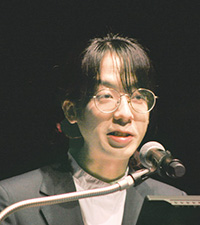
What should I say for this talk: ....... I asked Chat GPT to give it a try. Chat GPT then presented the overall flow of the talk: "I will start with the current state and future of AI technology, discuss its potential and challenges, and introduce examples of innovation," and went on to present various elements necessary for the talk. Chat GPT and other generative AI can not only generate sentences. If you give it a subject, it can also return paintings and music in a brilliant manner. The quality is astonishing. Many researchers have long predicted the realization of such AI technology. However, they did not expect it to advance so rapidly, and many may feel AI is a threat.
In fact, this is not the first time humanity has experienced such a threat. In the 1930s, when photography and film became popular and works of art were copied. The German thinker Walter Benjamin predicted that the era of art as a one-of-a-kind object that exists only in the "here and now" would come to an end. On the other hand, he argued that a new kind of art would emerge, one that would be playful and based on reproduction technology. He argued that "the definition of art will change. Indeed, pop art has since emerged in the United States, and popularized art has taken on a new role.
In 2016, the Go AI, "Alpha Go," defeated professional Go players. At the time, many world figures feared that humanity would no longer be a match for AI and that AI would doom humanity. However, the human race has not been destroyed and the Go world is still going strong. Many professional Go players are now using AI in their Go research and searching for new moves. As a result, the early game moves are almost the same for everyone. However, the variations of endgame moves have increased. In other words, the world of Go has become more fertile with the advent of AI, and players who confronted AI, rather than quitting the game because they were no match for AI, became stronger and are now leading the Go world. These examples spread the idea that the limits of human beings are not yet as great as they seem.
Fig. 1 About Chat GPT / Ranking of global companies by market capitalization

In fact, some of the technologies that have been used in our daily lives for many years can also be called AI. It is the Japanese language predictive conversion function installed in smartphones and personal computers. At the beginning of this article, I gave the example of "The capital of Japan is". If you then type "Tokyo", the predictive conversion function will give you "Tokyo" as a candidate. It is statistically estimated that it is never "Karakagami. With this technology, we can write Japanese sentences with the right words, even if we have a hazy memory of the kanji. But it used to be different. It was said that the use of Kanji was reducing productivity in Japan, and a "Kanji Abolition Movement" was developed. Electronic devices and AI technology have solved these problems, and now anyone can easily write sentences mixed with kanji and kana. Fortunately, kanji has not been abolished, and thanks to this, we can still read literary books with a sense of subtlety, such as where and how kanji is used and where hiragana is used.
Ten years ago, we often heard the phrase "software will engulf the world. At that time, many of the world's top companies in terms of market capitalization were in the financial and energy industries. Today, however, it is all about IT companies. The next decade will probably be the era of "AI taking over the world. However, finance and energy are still important and indispensable industries. Not everything old will disappear. It is not that everything old will disappear, but that the standard of value is changing ( Figure 1, right).
AI technology is rewriting human standards of value. Based on this premise, we must face the intrinsic value of human beings and quickly adopt new technologies. Innovation lies beyond that.
Implementing the 8P Strategy for Successful Startups
Professor, Graduate School of Science, Technology and Innovation, Kobe University
Kazuhiko Yamamoto, President and CEO (concurrent position), Simplogen
Kobe University's Graduate School of Science, Technology and Innovation was established in 2016 as an independent graduate school without a faculty. Aiming to be a graduate school that not only conducts academic research but also links its findings to the creation of economic and social value, the initial goal was to establish about five startup companies within five years of its establishment. As a result, seven companies have now been established, and another is scheduled to be born soon.
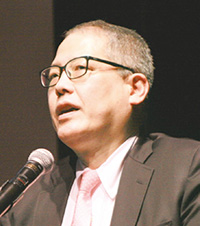
Our goal is to form a cluster of biotech companies in Kobe ( Figure 2 ). We are focusing on San Diego, where a world-class cluster has been formed in recent years. Clusters cannot be intentionally created. In the case of San Diego, the U.S., the cluster was sparked by the success of Hybritec, Inc. in the U.S., which developed a pregnancy test and other products. Kobe also hopes to form a cluster through the success of startups.
The first P is "Purpose (raison d'etre). The first P is "Purpose (raison d'être)," which is to establish a social problem to be solved and to work on it. Without Purpose, there is no point in doing business. The third is the "paper," which is to make the invention or discovery known to the world. I believe that the long-term provision of fundamental technology will lead to the creation of economic and social value.
Fig. 2 Mission

The fifth P is "people," which includes a variety of people in charge of sales, marketing, human resources, fundraising, etc. The sixth is "partnerships" with investors, collaborating companies, etc. The seventh is "products. The image of a specific product or service is extremely important for the creation of economic and social value. The eighth is "passion. It takes many years for a business to succeed. Without passion, it will not last.
Simplogen, a Kobe University startup for which I serve as CEO, also incorporates the 8Ps into its strategy. For example, the exclusive possession of the "patent" for the core technology, the OGAB method (DNA synthesis technology using Bacillus subtilis), is an important strategy. In addition, the Company aims to provide "platform-type technologies" that integrate biotechnology and digital technology. We hope that these efforts will be successful and create a bio-cluster in Kobe.
Formation of bio-cluster with diversity
Executive Officer and Vice President, The University of Tokyo
Professor Toshiya Watanabe, Center for Future Vision Research, The University of Tokyo
For start-ups in the drug discovery and biotechnology fields to grow, it is essential to build an ecosystem to nurture them. An ecosystem is a biological term that refers to a system in which living and nonliving organisms interact with each other in complex ways and thrive in a sustainable manner. For example, many organisms and non-living things exist on the coast and maintain complex relationships of predation and symbiosis. Some organisms are called keystone species, which are very few in number but whose removal would destroy the entire ecosystem.
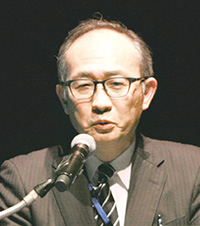
The drug discovery ecosystem is likewise made up of a diverse range of stakeholders. It requires a network of not only academia, pharmaceutical companies, and start-ups, but also government, medical institutions, and venture capitalists (VCs). We examined the relationship between startups' connections and their growth potential. As a result, we found a positive correlation between the diversity of connections and growth potential. In fact, startups started solely by university professors are generally not successful. In addition, there are places in the world where biotechnology-related universities and companies are concentrated, such as Boston in the U.S. and London in the U.K. The management teams of startups in these places are extremely diverse. A cluster called Hongo Valley is currently forming around the University of Tokyo. As of today, a total of 478 startups have been born in Hongo Valley. Of these, about one-third are biotechnology-related companies. Hongo Valley is located in the Hongo/Ochanomizu/Tokyo Station area of Tokyo, where there are many universities, hospitals, government agencies, and VCs. Its density is comparable to that of London. We would like to develop this area into a global ecosystem.
Fig. 3 Promoting the formation of a strategic point bio-community

Meanwhile, the Greater Tokyo Bio Community (GTB) was established in the Tokyo area in 2021 as an industry-academia-government network for the bio industry, and is divided into eight centers in the Tokyo metropolitan area, including the Tsukuba area and the Yokohama area. Specifically, the GTB will work on "expansion of incubation facilities," "promotion of integrated regional and global collaboration," and "development and strengthening of support functions for startups according to their stage of growth. The Japanese government aims to realize the world's most advanced bioeconomy by 30 years. The Japanese government has set a goal of realizing the world's most advanced bioeconomy by 30 years, and the GTB will play a role in this goal ( Fig. 3 ).
Session 2: "Realizing Innovation in Healthcare through Data Utilization
Urgent need to utilize data for innovation in the medical and nursing care field
Professor, School of Science and Engineering, Waseda University
Mr. Toshio Miyata, President, DEN Mii Clinic
In 2017, doctors and pharmacists collaborated to develop "Kenkonpass," a self-care application that allows patients to receive advice and information on self-care. In 2017, doctors and pharmacists collaborated to develop "Kenkonpasu," a self-care app that provides patients with advice and information on self-care. The company believes that as these digital initiatives progress, patients will be able to choose the right doctor for them from across the country, and this will lead to the growth of programmed medical devices (SaMD) in Japan.
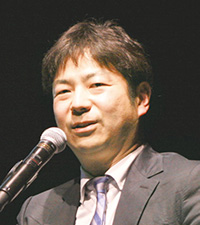
In Europe and the United States, self-medication, online medical care, and face-to-face medical care are continuously integrated and operated together with insurers. Real-world data business is also expanding significantly and quickly, but in Japan, due to various issues such as regulations, human resources, and systems, big data is not being utilized and the speed is not fast enough. It is necessary to rethink and reappraise it within the context of the entire healthcare ecosystem.
In 2015, leaders from the business community, medical organizations, and local governments came together to launch the Japan Health Council, which set a goal to work on new preventive health care using digital technology. In the future, the widespread use of the my number card will not only enable individual patients to manage their PHRs, but also expand sharing among nursing care facilities and medical institutions, which may lead to data utilization, drug development, and drug cultivation ( Figure 4 ). Japan's healthcare financial resources are limited, and various wrinkles have emerged, but more efficient efforts are expected in the future.
Fig. 4 Health medical information provided to individuals will be expanded sequentially

The drug lag (delay in new drug approval) problem, which I was involved in solving in my previous role as a medical technologist at the Ministry of Health, Labour and Welfare, has resurfaced in Japan. In order to bring about innovation, we must value high-impact research and individuality, and encourage an explosion of diversity. And to promote the use of data for drug development, it is necessary to ease entrance regulations and shift to firm exit regulations against the misuse of acquired data by making consent unnecessary in principle when acquiring health and medical data, while assuming the protection of individual rights. This would lead to more and more healthcare and medical research on data at Japanese universities and more data utilization for pharmaceutical companies, leading to a revival of Japan. The entire country needs to think carefully about this issue, including financial resources and reimbursement for medical care.
Realization of a new healthy society through integration of medical care and daily life
Mr. Tadashi Mogi, Deputy Director-General for Commerce and Service, Ministry of Economy, Trade and Industry
As the birthrate declines and the population ages, healthy life expectancy and wellbeing are important themes for the future. In advancing policy, it is necessary to develop policies that achieve the three goals of improving people's health, economic growth, and building a sustainable social security system. In particular, it is important to focus on the areas of healthcare services, nursing care, and medical devices.
Recently, various healthcare services such as smartwatches and apps have been introduced, and it will be important to create mechanisms to encourage behavioral change by "integrating the healthcare domain and daily life. An important element for this is the use of PHRs, and it is important to create a solid foundation. Various services will be developed by organically combining data from the medical side and data accumulated by individuals in their daily lives, and physicians will be able to intervene to provide more precise services and instructions.
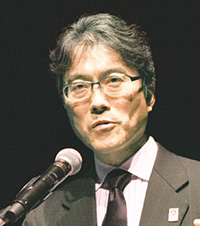
This year, the Medical DX Promotion Headquarters was established to promote such efforts throughout the government. It is working to standardize electronic medical records and build a platform for utilizing health and medical information. On the private side, the government will promote the creation of new services that the public will find valuable, ensure security, and develop evidence in cooperation with medical societies ( Figure 5 ).
Fig. 5 Issues for utilizing healthcare services safely and securely

To promote the use of PHRs, a business association will be established this year, and the industrial sector will also be energized to create use cases for PHRs, utilizing the Expo and other events. In addition, it is important to standardize data, ensure security, and establish rules, and we will promote the formulation of voluntary guidelines for the industry. In addition, through the Japan Agency for Medical Research and Development (AMED), we will support the various associations in organizing evidence and formulating guidelines and other guidelines for prevention and health.
Programmed medical devices are also attracting attention: services that contribute to more efficient medical care and earlier treatment, such as AI-based diagnostic imaging and AI that identifies patients who need immediate specialist treatment in emergency situations, and various medical devices that encourage individuals to change their behavior, such as a smoking cessation application that has received regulatory approval and an application to assist treatment of high blood pressure. A variety of medical devices have also emerged to encourage individuals to change their behavior. With the intervention of physicians, it is now possible to provide more appropriate guidance, prescribe medications, and offer usual lifestyle and dietary guidance. In the future, we will continue to increase the number of fields in which this technology can be applied by conducting thorough demonstrations. We would like to work with the Ministry of Health, Labor, and Welfare, related ministries and agencies, the medical community, industry, and all other industries to create a society in which medical care and daily life are integrated.
Support for child-rearing and regional development through promotion of medical DX
Mr. Toshihiro Maeta, President and Representative Director, MTI
MEDINET began providing the women's health information service "LunaLuna" in 2000, which has been downloaded by 19 million users, and has been focusing on health care-related services since 2012. Based on the concept of "supporting health management from pre-pregnancy age minus one year to age 100," the company has developed a number of services in addition to Luna, including the mother-child notebook application "Maternal and Child Mo" and the regular health checkup data recording and management application "CARADA.
LunaLuna is now widely used as a service to support fertility. Data recorded by users, such as the start and end dates of menstruation and basal body temperature, can be displayed on doctors' terminals at more than 1,000 obstetricians and gynecologists nationwide. The company has also worked to improve the accuracy of the conventional timing method by developing an algorithm that predicts an individual's ovulation date and likely period of pregnancy from the accumulated big data.
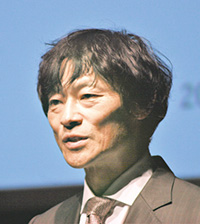
The "Maternal and Child Health Record Book" application "Maternal and Child Health Record Book" has been introduced in more than 530 municipalities nationwide as an application that provides seamless support for pregnancy, childbirth, and child rearing, and is still expanding. Convenient functions unique to the electronic MCH handbook, such as the vaccination scheduler AI, have won high praise from users and local governments.
There are many complicated procedures involved in child-rearing, such as vaccinations, infant health checkups, and applications to government agencies. For example, the "MCHMo" childhood vaccination service has reduced the burden of all vaccinations by reducing the time and effort required by users, preventing vaccination accidents, and reducing administrative tasks at medical institutions and local governments.
Fig. 6 Health screening institutions and users using CARADA

The "CARADA Health Checkup Support" application, which connects patients and health checkup institutions, allows users to make health checkup reservations and answer web-based questionnaires on the application ( Figure 6 ). After the checkup, test results can be checked at any time, and the results of blood tests are reflected in the results as soon as possible. On the side of the medical checkup organization, the system has improved efficiency by automating the communication of medical checkup results, and has increased the repeat rate through communication with users. CARADA also provides "CARADA Connect," a service that allows users to disclose their own data to necessary medical institutions, leading to fewer unnecessary retests and improved quality of medical care. We believe that this kind of PHR medical network initiative, in which users can utilize their data in cooperation with various institutions in the community, will improve the quality of local medical care and create a more comfortable living environment.
Transformation of industry itself to improve the ability to create innovation
Mr. Yasushi Okada, Chairman, Japan Pharmaceutical Manufacturers Association
The probability of success in producing a single new drug is approximately 1 in 22,000, which takes more than 10 years and requires research and development costs ranging from tens to hundreds of billions of yen. The pharmaceutical industry is an extremely risky and unique business ( Fig. 7 ).
On the other hand, to ensure the sustainability of our business, we use the cash generated by our operations to invest in intangible assets such as R&D, tangible research and production facilities, and to return profits to shareholders. 9 of the JPMA member companies have generated more than 9 new drugs each since 2010, and their sales accounted for 70% of total pharmaceutical sales in 2009. Although pharmaceutical companies are sometimes criticized for making too much money, we are working in a cycle of securing profits for future innovation, investing in research and development, and continuously creating new drugs to contribute to the health of patients and the public.
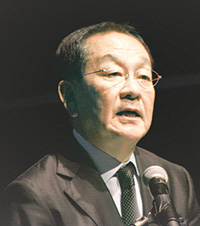
It is also making a significant contribution to the Japanese economy. The pharmaceutical industry is a manufacturing industry, but its essence is the creation of intellectual property through research and development. The amount of exports exceeds 600 billion yen in terms of technology licensing income and expenditure from overseas through substance patents and technology, second only to the automobile industry, and profits earned overseas are returned to Japan, where the intellectual property is held.
However, the domestic market for the pharmaceutical industry is the only one in the world that is shrinking. In many countries, the growth of the pharmaceutical industry exceeds GDP. We believe that sustainable growth is possible through national policies that allow for a slight increase of 1-2% in the overall pharmaceutical market, promptly replace new drugs with generics after patent expiration, and promptly reduce the prices of long-listed drugs. We should bring the Japanese market closer to global standards and revitalize the Japanese market to make it more attractive.
In order to enhance Japan's ability to create innovation, we need proactive measures from the government as well as changes in our industry itself. As an industry, we have requested support for fostering drug discovery startups and the development of an environment for the utilization of big data related to health and medical care.
A comparison of venture capital (VC) investment in the biotech field between Japan and the U.S. shows that in 2021, Japan will have invested 60 billion yen, while the U.S. will have invested 60 billion dollars. In fact, more than 100 times more money is being invested in the U.S. than in Japan. In the U.S., ample funds are invested seamlessly from initial research to commercialization, while Japan lacks funds especially for the clinical stage, making it difficult to nurture promising seeds. Against this backdrop, a supplementary budget of 300 billion yen was allocated last December to strengthen the drug discovery venture ecosystem. This shows the commitment of the nation, and we would like to respond to it.
We also look forward to government support for tax incentives for research and development activities, which are relatively scarce in Japan compared to other countries.
Fig. 7 Significant risks and huge costs involved in creating new drugs

The environment for utilizing big data related to health and medical care is one of the most important infrastructural developments for the nation today. From the perspective of what value should be provided to the public, I hope that the development of data infrastructure and legal systems will be promoted as two wheels of a cart. Last year, a very advanced initiative called the European Health Data Space (EHDS) was launched in Europe to promote data utilization in the healthcare field. This initiative shows that Europe, which is strict in its handling of personal data, is willing to actively promote the use of such data for the benefit of healthcare, drug discovery, and the health of its citizens. We believe that Japan should also take a great deal of reference from this initiative.
In order to strengthen Japan's drug discovery capabilities, it is also essential to change the business model of the pharmaceutical industry itself. Japan has been late to the game in the development of biopharmaceuticals. In the meantime, modalities, i.e., drug discovery technologies and methods, have become extremely diversified and sophisticated, and a variety of modalities have emerged, including antibody drugs, nucleic acid drugs, gene therapy, and cellular medicine. There is an urgent need to proactively incorporate cutting-edge biotechnologies and digital technologies.
In addition, the pharmaceutical industry, which mainly focuses on diagnosis and treatment of diseases, needs to evolve into a business model that supports people throughout their lives, including prediction, prevention, and prognosis. We must not sit idly by while giant IT companies are already getting into health apps, AI diagnostics, and online medical care, etc. We need to make significant progress in business models, including DX and AI, to create innovations originating in Japan and create a pharmaceutical market that attracts global investment, thereby providing the public with access to state-of-the-art medical care. We need to realize access to state-of-the-art medical care for the people of Japan. We have summarized our commitment to this end and the policies we consider necessary in the "JPMA Policy Proposal 2023. We are working to make the industry an industry that contributes to the extension of healthy life expectancy of the people and to economic growth.