


Topics JPMA Media Forum" Held -Antimicrobial Resistance (AMR) Promotion Month
In order to promote the development of new antibacterial agents against Antimicrobial Resistance (AMR), the Global Health Subcommittee of the JPMA International Affairs Committee is working daily to gain the understanding and support of many people regarding the importance of the problems caused by AMR and the urgent need for countermeasures. November is the "Month to Promote Measures against Drug Resistance (AMR)" designated by the Japanese government, and on November 8, 2022, the JPMA held the "JPMA Media Forum - For the Month to Promote Measures against Drug Resistance (AMR)" at the Nihonbashi Life Science Building (Chuo-ku, Tokyo). The event was held at the Nihonbashi Life Science Building (Chuo-ku, Tokyo) on November 8, 2022, in conjunction with the AMR Month.
 The venue
Introduction
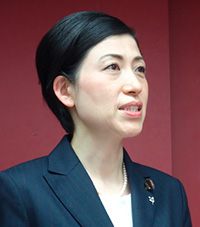
The day started with opening remarks by Ms. Akiko Honda, Parliamentary Vice-Minister of Health, Labour and Welfare and a member of the House of Councilors, followed by lectures by Mr. Tomohiro Onishi, Deputy Director of the Cabinet Secretariat, Office for the Promotion of Countermeasures against Infectious Diseases including New-type Coronavirus, Cabinet Secretariat; Mr. Kazuhiro Tateda, Professor of Toho University School of Medicine and Chairperson of the Joint Study Committee on the Promotion of Therapy and Drug Discovery for Infectious Diseases, seven academic societies; and Mr. Yui Kawano, Manager of Japan Health Policy Organization, Yusuke Ariyoshi, a member of the Global Health Subcommittee of the JPMA's International Affairs Committee, gave a lecture and participated in a panel discussion. Twenty-one media representatives from 19 companies participated at the venue and via webcast, and the forum provided an opportunity to deepen understanding of the threat of AMR and the need for research and development of new antimicrobial agents to combat the disease.
Opening Remarks
Ms. Akiko Honda, Parliamentary Secretary, Minister of Health, Labour and Welfare, Member of the House of Councillors
He introduced the MHLW's AMR awareness activities in 2022, including the distribution of posters and videos in collaboration with the popular TV animation "Hataraku Cell," and the solicitation of entries for a certain "willow" poem about drug resistance, in order to make AMR more familiar to the general public. He also pointed out that even in times when public health is in a critical situation, which many medical practitioners are experiencing due to the new coronavirus infection (COVID-19), it is necessary to make unceasing efforts toward countermeasures.
Lecture 1
Activities to Raise Awareness of Drug Resistance (AMR)
Mr. Tomohiro Onishi, Deputy Director-General, Cabinet Secretariat, Office for the Promotion of Countermeasures against Infectious Diseases including the New Type IV Coronavirus
In the Cabinet Secretariat, the Office for International Coordination of Countermeasures against Infectious Diseases has been in charge of AMR countermeasures, but in 2021, the Cabinet Secretariat reorganized the organization related to infectious disease countermeasures and integrated the Office for Countermeasures against Pandemic Influenza and the Office for the Promotion of Countermeasures against Pandemic Coronavirus Infections into the same Office, which is now in charge of AMR countermeasures. The Office for the Promotion of Countermeasures against Infectious Diseases including New Coronavirus" is now in charge of this office. In addition, as part of the government's efforts to strengthen its command post function to respond to the next infectious disease crisis, a government policy has been decided to establish the "Cabinet Office for Infectious Disease Control and Prevention (tentative name)" in FY2023, and AMR measures are being considered to be taken over by this new agency.
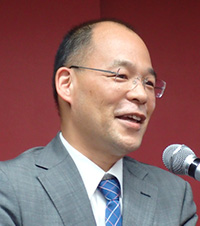
In a public opinion survey on drug resistance (AMR) conducted in 2019, about half of the public said they were familiar with drug resistance, of which 70% said that antibiotics are no longer effective against bacteria that cause infections, and 50% said that if antibiotics are not taken correctly, drug-resistant bacteria may increase in the body correctly understood that "if antibiotics are not taken correctly, drug-resistant bacteria may increase in the body" ( Figure 1 ). However, only half of the public still knows about AMR, and it was explained that further raising awareness is an important issue in the fight against AMR.
Fig. 1 Results of Public Opinion Survey on Drug Resistance (AMR) (2)

In addition, due to COVID-19, the government's public awareness campaign has been dormant for the past two years, and it is possible that AMR awareness is declining. For this reason, during the AMR Countermeasures Promotion Month in 2022 (November), a message that goes back to the basics, "What is drug resistance (AMR)? The Ministry of Health, Labour and Welfare (MHLW) and other ministries and agencies are also promoting the awareness of AMR.
In addition, the Cabinet Secretariat emphasized that the future challenge for the Cabinet Secretariat is how to strengthen the spread of AMR awareness activities from FY2023 onward, including the "National Conference on Drug Resistance (AMR) Measures" and other suspended events ( Figures 2 and 3 ).
 Awareness-raising poster
Fig. 2 Drug Resistance (AMR) Month (2)

Fig. 3 Drug Resistance (AMR) Month (3)

Lecture 2
Efforts as an academic society
Professor, Toho University Chairperson , Joint Study Committee for the Promotion of Infectious Disease Therapy and Drug Discovery, Seven Academic Societies
AMR spreads without being known because healthy people are not infected. Its spread is also known as a silent pandemic, and can occur both as a community-acquired and nosocomial infection. In developing countries, antimicrobial agents can be purchased without a prescription, which facilitates the spread of resistant strains.
On the other hand, it is also true that some lives are saved by the availability of antimicrobials, and it was pointed out that resistant bacteria is not only a medical problem, but also a problem for society as a whole, including the economy and poverty, which is a difficulty when tackling AMR issues.
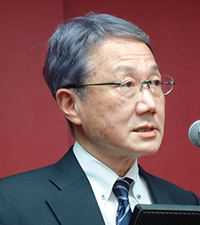
Despite the fact that Japanese pharmaceutical companies once produced many antimicrobial agents that became the global standard, they have been unable to continue investing in the development of new antimicrobial agents and have withdrawn from the field of antimicrobial agents. As a reason for this, he explained that compared to drugs for chronic diseases, the field of antimicrobials is not a viable business in terms of duration of administration and proper use ( Figure 4 ).
Fig. 4 Development of Infectious Drugs Cannot Continue...

He introduced the Drug Discovery Promotion Study Committee and the Antimicrobial Drug Industry-Academia-Government Liaison Committee of the Japan Agency for Medical Research and Development (AMED) as Japanese efforts to resolve this stagnation in R&D. He also introduced a joint meeting of seven Japanese academic societies to discuss the development of new antimicrobial agents. He also introduced the ongoing joint efforts of seven Japanese academic societies to disseminate recommendations on AMR, and the need for pull-type incentives and other systems to enable continued research and development of therapeutic drugs, vaccines, and testing methods in July 2022 ( Fig. 5 ).
Fig. 5 Joint Study Committee on Promoting Infectious Disease Treatment and Drug Discovery among Seven Societies Recommendations

Finally, he expressed his hope that the G7 Hiroshima Summit in 2023 will be a good opportunity for Japan to lead the discussion on pull-type incentives that began at the Ise-Shima Summit in 2016, including from the perspective of international contribution, drug discovery promotion, and diagnostics development, and to build momentum for the Summit.
Lecture 3
AMR Alliance Japan
Dr. Yui Kono, Manager, Japan Health Policy Organization (JHPO)
In this lecture, he first introduced the Japan Health Policy Institute (HGPI), a non-profit organization, which has been focusing on AMR since the G7 Ise-Shima Summit in 2016 and has been recognized as a platform to discuss AMR issues from a neutral standpoint in response to growing social demands in Japan and abroad. In November 2018, the AMR Alliance Japan was launched as a platform to discuss AMR issues from a neutral standpoint ( Figure 6 ).
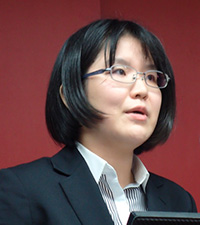
Fig. 6 AMR Alliance Japan

The symposium was followed by a wide range of AMR-related symposiums and roundtables, a proposal for the introduction of pull-type incentives as a measure against AMR in 2021, policy proposals for the G7 Hiroshima Summit in 2023, and other activities to raise awareness through gathering narratives through interviews with patients, collaboration with citizens, messaging surveys, etc. The presentation introduced a wide range of activities of the AMR Alliance Japan, such as the AMR Alliance Japan's activities in the field of antimicrobial resistance (AMR) and messaging surveys.
He explained that antimicrobial agents are public goods of society and that everyone needs to work together to prevent the occurrence and spread of drug resistance, and that the power of the media is also necessary to spread awareness that antimicrobial agents are used in a wide range of fields, including anticancer therapy, in addition to infectious diseases ( Figure 7 ).
Fig. 7 To the Media

Lecture 4
Efforts by the Japan Pharmaceutical Manufacturers Association (JPMA) against drug resistance (AMR)
Yusuke Ariyoshi, Leader, Infectious Diseases Group, Global Health Subcommittee, International Affairs Committee, JPMA
In this lecture, he introduced the current status of AMR, the JPMA's efforts in AMR, and the recommendations made by the JPMA and the International Federation of Pharmaceutical Manufacturers and Associations (IFPMA) to the G7 Hiroshima Summit of the pharmaceutical industry. It is estimated that 10 million people worldwide will die from AMR in 2050 if no action is taken now. Despite the fact that many countries have established and implemented action plans to combat AMR, unfortunately, the progression of the disease has not been curbed, with approximately 1.27 million people dying from AMR in 2019. In Japan, it was introduced that about 8,000 people were estimated to have died in 2017 from bacteremia caused by methicillin-resistant Staphylococcus aureus (MRSA) and fluoroquinolone-resistant E. coli, and that AMR is a problem in many medical departments.
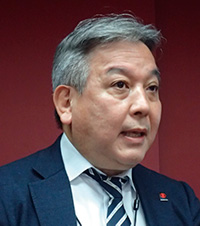
On the other hand, he introduced the JPMA's "Survey on Public Awareness of the Development of New Antimicrobial Agents to Combat Drug Resistance," which showed that the awareness of AMR is low.
He then introduced JPMA's AMR efforts ( Fig. 8 ). Currently, industry, academia, and government are working together on AMR countermeasures, with the two key concepts being "efforts for proper use to prevent the increase of resistant bacteria" and "the need to develop drugs that can deal with new resistant bacteria.
Fig. 8 JPMA's Approach to AMR

JPMA has continued awareness-raising activities through posters, flyers, videos, events and websites since 2017, and in 2021, in light of the importance of providing information to the media, it was introduced that a media forum will be held and an awareness survey has been launched to identify issues and changes in this area.
The pharmaceutical industry's recommendations for the G7 Hiroshima Summit consist of achieving sustainable UHC (Universal Health Coverage)*1, preparing for the next pandemic, and addressing AMR. In particular, for addressing AMR, the importance of promoting research and development, including pull-type incentives, improving access, including in low- and middle-income countries, and surveillance efforts was introduced ( Figure 9 ).
-
1UHC: All people should have access to basic health services when they need them throughout their lives at a cost they can afford.
Fig. 9 Summary

Closing Remarks
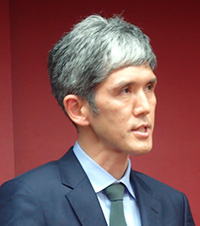
Mr. Tatsuya Ito, Chairperson, International Affairs Committee, JPMA
He reiterated the importance of increasing public understanding of AMR, the proper use of antimicrobial agents to prevent the development of drug-resistant bacteria, and the preparation of antimicrobial agents to fight resistant bacteria in the event of an outbreak.
The G7 Summit will be held in Hiroshima in 2023, and Japan will hold the G7 Summit in Hiroshima, Japan. The Forum closed with the statement that Japan's leadership is expected in the global fight against AMR.
Concluding Remarks
It is important to raise public awareness of AMR as an important global health issue, and the development of antimicrobial agents against AMR is an issue that should be addressed through collaboration between industry, academia, and government. JPMA will continue to promote various activities to solve the problem of AMR while proactively adopting new knowledge.
( Takeshi Watanabe, Kyoko Nakano, Shinji Tsubakihara, International Affairs Committee, Global Health Subcommittee)