


Topics Special Session at the 9th Nikkei-FT Infectious Diseases Conference Toward the Creation of a Drug Discovery Ecosystem in the Field of Infectious Diseases - Focusing on Collaboration among Industry, Government, and Academia
On November 16, 2022, a special JPMA session was held online at the 9th Nikkei-FT Infectious Diseases Conference. The theme of the session was "Toward Building a Drug Discovery Ecosystem in the Field of Infectious Diseases: Focusing on Collaboration among Industry, Government, and Academia," and participants discussed issues and strategies necessary to make the drug discovery ecosystem in the field of infectious diseases sustainable from the perspective of industry, government, and academia. The following is a recap of the session.
 The venue
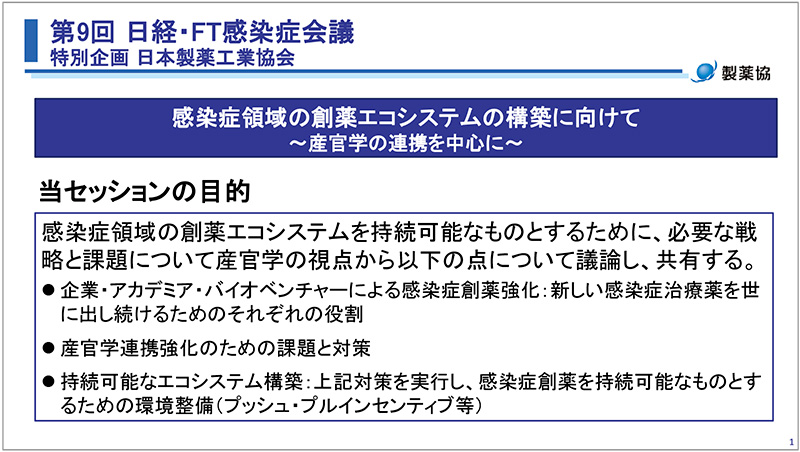
The purpose of this session ( Figure 1 ) is to discuss the following three points.
(1) The role of industry, government, and academia in continuing to create new infectious disease therapeutics
(2) Challenges and measures to strengthen collaboration among industry, government, and academia
(3) Establishment of a sustainable environment for drug discovery for infectious diseases
In the recent pandemic of novel coronavirus infection (COVID-19), research and development of vaccines and therapeutics advanced at an exceptional pace. Although the drugs were put to practical use in a short period of time, it would be desirable for research and development to continue even in times of peace, and for new drugs to be constantly being developed in the field of infectious diseases.
However, it is difficult to attract funds for research and development in the field of infectious diseases. From the investor's perspective, the reality is that although they are aware of the high social significance, they are unable to invest aggressively because of the difficulty in reasonably anticipating investment returns due to the low economic predictability. Furthermore, large institutional investors invest primarily in companies that are publicly traded, with few opportunities to invest in academia or unlisted biotech ventures.
 Moderator: Sumitomo Mitsui Trust
Asset Management Co.
Stewardship Promotion Department
Senior Stewardship Officer
Senior Stewardship Officer, Stewardship Promotion Department, Sumitomo Mitsui Trust Asset Management Co.
We have been wondering if a baton relay could be formed whereby angel investors and venture capitalists (VC) support the seeds of new drugs created by academia and bio-ventures, and institutional investors invest in listed bio-ventures and pharmaceutical companies that have partnered with or acquired these companies. We would like to hear the opinions of people representing industry, government, and academia from this perspective.
Figure 1 Purpose of this session
Lecture 1
National Initiatives to Strengthen Infectious Disease Drug Discovery
Mr. Kazunari Asanuma, Deputy Director-General for Crisis Management and Medical Technology, Minister's Secretariat, Ministry of Health, Labour and Welfare
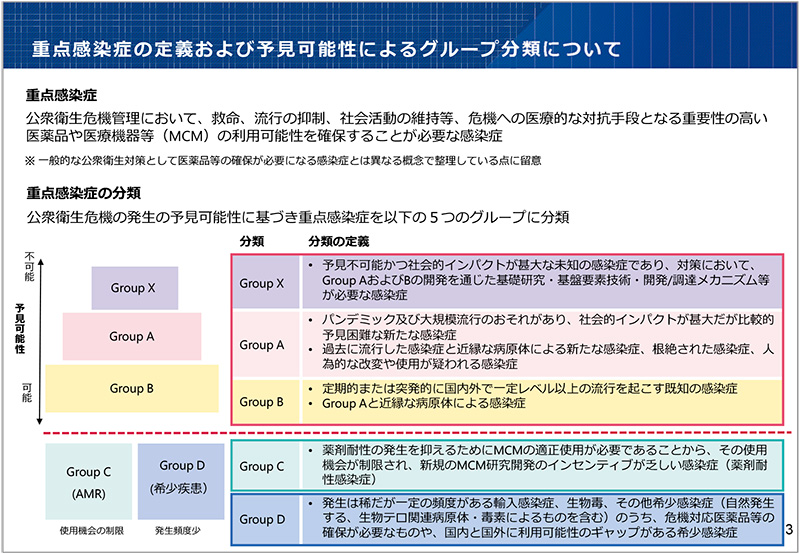
This section focuses on a tentative list of priority infectious diseases for securing Medical Countermeasures (MCM) for infectious disease crisis preparedness for public health crises. Priority infectious diseases refer to infectious diseases for which it is necessary to ensure the availability of MCMs, which are medical countermeasures against crises such as saving lives, controlling epidemics, and maintaining social activities, in public health crisis management, and are organized under a different concept from infectious diseases for which securing medicines, etc. is necessary as a general public health measure. At a joint meeting of the Health Science Council (Health Risk Management Subcommittee, Immunization and Vaccine Subcommittee R&D and Production/Distribution Subcommittee, and Infectious Diseases Subcommittee) in March 2022, the concept of priority infectious diseases and a draft tentative list classifying five groups of priority infectious diseases were approved ( Figure 2 ).
Figure 2 Definition and Group Classification of Priority Infectious Diseases
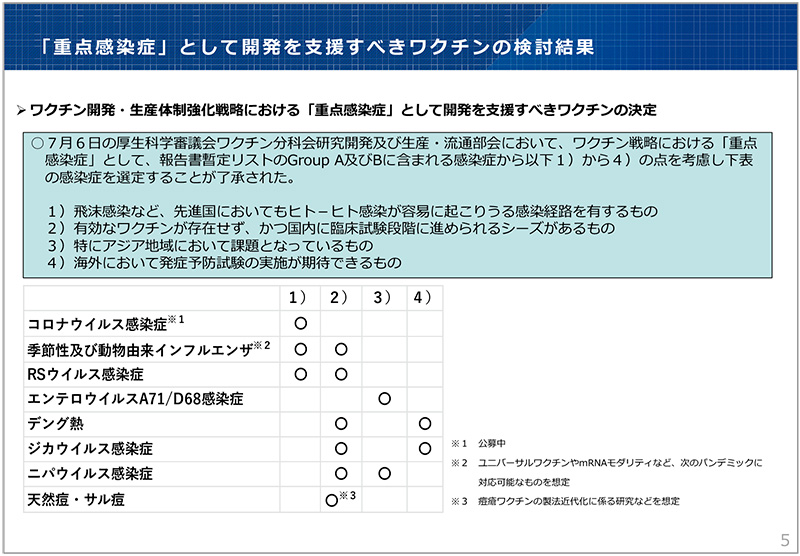
In determining the applicability of this priority infectious disease, we need to consider the public health impact and strategic perspective, and the strategic perspective is important in securing MCM. That is, if an existing MCM does not exist, the emphasis should be on development, and if it does exist, the emphasis should be on securing it and its later availability. For example, in July 2022, the Health and Welfare Science Council (Subcommittee on Research and Development and Production and Distribution, Subcommittee on Immunization and Vaccines) selected eight infectious diseases from Groups A and B on the tentative list as priority infectious diseases in the vaccine strategy, and in collaboration with the Advanced Research and Development Strategy of the National Institute for Medical Research and Development (AMED), Japan Center (SCARDA) of the Japan Agency for Medical Research and Development (AMED) to strengthen research and development ( Figure 3 ).
Figure 3 Results of a study on vaccines that should be supported for development as "priority infectious diseases"
The priority infectious diseases are expected to become an important index for securing MCM in future infectious disease countermeasures, and we will work to support R&D for drug discovery and stockpiling of medicines for these infectious diseases.
Lecture 2
Role of clinical facilities and challenges in building a drug discovery ecosystem in the infectious disease area
Dr. Takao Omagari, Director, Center for Global Infectious Diseases, National Center for Global Health and Medicine
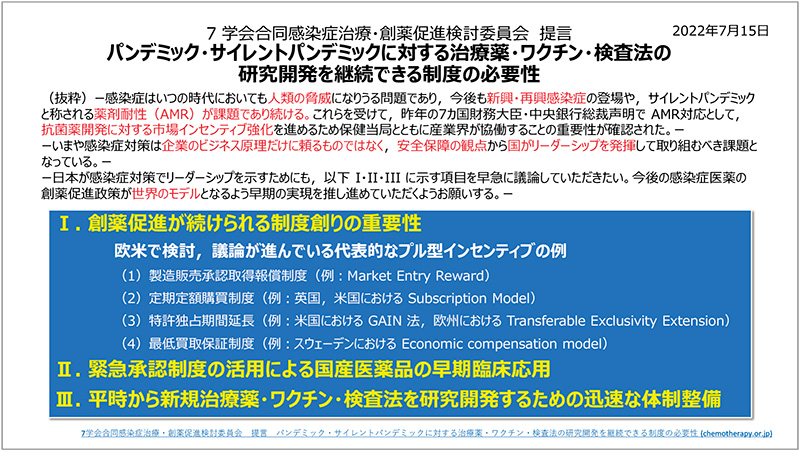
On July 15, 2022, the Joint Study Committee for the Promotion of Infectious Disease Therapy and Drug Discovery, a joint meeting of seven academic societies, recommended the need for a system that allows continued research and development of therapeutic drugs, vaccines, and testing methods against pandemics and silent pandemics. The key points are (1) the importance of creating a system that allows drug discovery promotion to continue (introduction of pull-type incentives), (2) early clinical application of domestically produced drugs through the use of an emergency approval system, and (3) rapid establishment of a system to research and develop new therapeutics, vaccines, and testing methods from normal times ( Figure 4 ).
Figure 4 Recommendations of the Joint 7-Society Review Committee on Promoting Infectious Disease Therapy and Drug Discovery
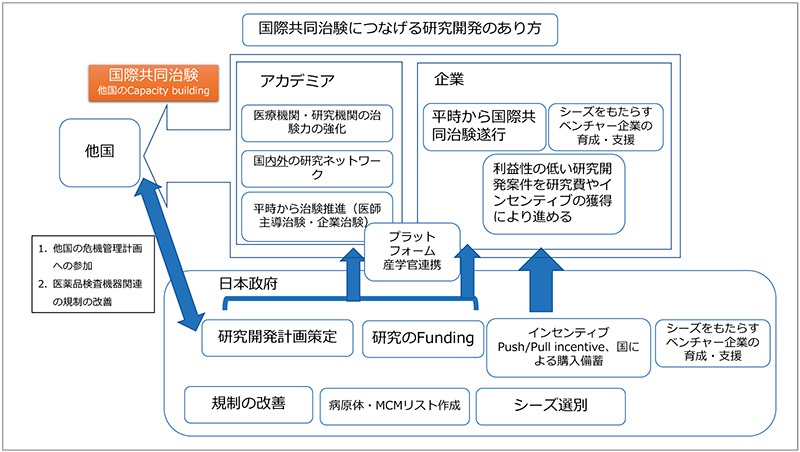
Smooth and prompt collaboration among industry, government, and academia is essential for these efforts. The role of academia, then, is to strengthen research and clinical trial capabilities at medical institutions and research organizations. It is necessary to provide human and equipment support to medical institutions where emerging infectious diseases are identified (designated medical institutions for infectious diseases). The United Kingdom has been conducting a randomized clinical trial "Recovery Trial" of a COVID-19 therapeutic agent using city medical institutions under the National Health Service (NHS), and this is something that should be emulated.
In addition, while connecting research institutions domestically and internationally as a clinical trial network, it is necessary to prepare an "engine" that can respond quickly in case of emergency, and physician-led clinical trials, corporate clinical trials, various forms of epidemiological research, and specific clinical research should be promoted from ordinary times.
We believe that medical and research institutions such as ours can respond to the R&D plans for drugs and diagnostics established in the discussion of priority infectious diseases by steadily promoting clinical trials and clinical studies from normal times, thereby increasing their turnover in case of emergency ( Fig. 5 ).
Figure 5 How R&D should lead to international joint clinical trials
Lecture 3
Positioning of Infectious Drug Discovery Ventures from a Venture Capitalist Perspective and Importance of Exit Strategies
Ms. Kyoko Matsumoto, Senior Associate, Remiges Ventures, Inc.
The amount of investment in venture companies in Japan is increasing year by year. Focusing on university-launched ventures, the number of drug discovery ventures in the fields of biotechnology, healthcare, and medical devices is on the rise. As a means for drug discovery ventures to raise funds, in addition to investment from VCs, there are support projects by AMED, and in 2022, AMED is launching a new project aimed at strengthening the drug discovery venture ecosystem.
The project targets ventures that have or have been promised investment from VCs pre-approved by AMED, and if selected for the project, the venture will receive investment and hands-on support from the approved VCs, as well as support from AMED that is double the amount of the approved VC's investment. September 2022), the first call was open to ventures with technologies that can be applied or converted to infectious diseases and infections.
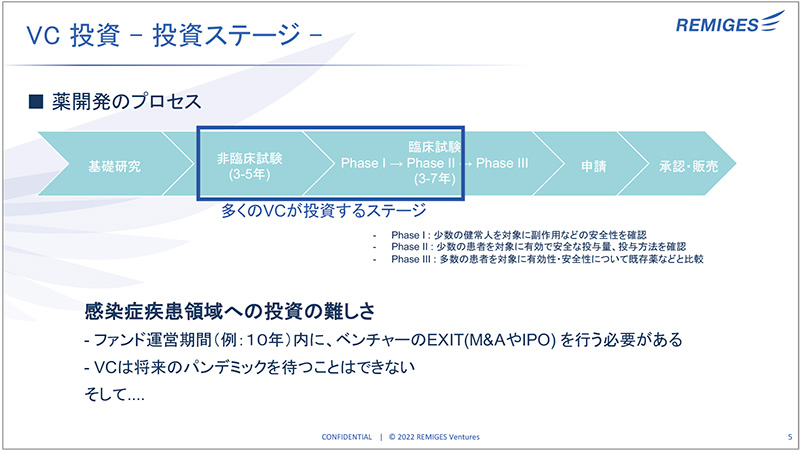
The infectious disease field is unattractive to VC firms, as they usually evaluate and invest in a project over a period of approximately 10 years, eventually leading to an exit (M&A or Initial Public Offering, or IPO), but it is difficult for VC firms to determine market needs and the timing at which they wish to make an exit. However, if there is no market need or acquisition need for the pharmaceutical company at the time the VC wishes to make the EXIT, the EXIT cannot be achieved. Therefore, in venture investment, it is difficult to invest in projects that wait for a pandemic that may occur at any time ( Fig. 6 ).
Figure 6 Investment in the infectious disease area is difficult
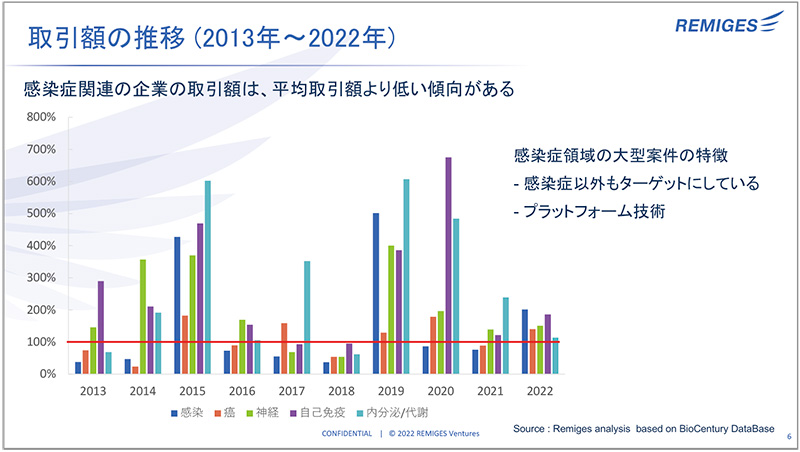
However, there are cases of high value transactions in the field of infectious diseases, and these tend to have pipelines not only in the field of infectious diseases but also in other diseases, or have drug discovery platform technologies that can be applied to diseases other than infectious diseases ( Fig. 7 ). We have also invested in ventures in the infectious disease field that have pipelines and technologies that can be applied to other diseases.
Figure 7 In each area Transactions
As for acquisitions by pharmaceutical companies as EXIT in venture investment, we believe that it is absolutely necessary to create a system that makes this area an attractive business for the companies. In addition, if we are to continue to launch drug discovery ventures in the future, it will be necessary to create an environment that will enable the continuous creation of drug discovery seeds from academia and other research institutions, which will serve as the source of these seeds. In addition, drug development is nowadays conducted on a global scale, and it is necessary to provide support and secure human resources that can advance drug discovery seeds to the development and commercialization stage from a global perspective.
In 2021, we have established RDiscovery, an incubator, and have begun collaborating with universities and companies that can become stakeholders in the drug discovery ecosystem. We hope to continue discussions with you to strengthen the drug discovery venture ecosystem in Japan in the future.
Lecture 4
Pharmaceutical Industry's Efforts to Promote Drug Discovery in Infectious Diseases and Expectations for Industry-Government-Academia Collaboration
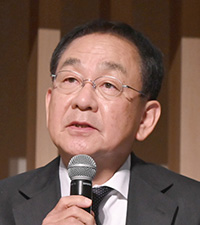
Mr. Yasushi Okada, Chairman, JPMA
The recent global pandemic of the new coronavirus revealed a lack of preparedness for infectious diseases in Japan from various perspectives, and as a member of the pharmaceutical industry, I feel ashamed to say that I am not prepared for this. The pharmaceutical industry in Japan has been working on the development of vaccines and treatments for infectious diseases. I would like to report that although the domestic pharmaceutical industry has lagged behind in the development of vaccines and therapeutics, the development has made steady progress with the full commitment and support of the government.
In addition to the implementation of the government-led strategy to strengthen the vaccine development and production system as a countermeasure against future pandemics, measures to strengthen the national crisis management system are underway, including the establishment of the Cabinet Office for Infectious Disease Control and Prevention, the Infectious Disease Control Department of the MHLW, and the Japanese Centers for Disease Control (CDC), which will serve as a command post. The government is taking steps to strengthen its crisis management system. However, it is expected to take some time before the system is firmly operational in a contingency, and it is also necessary to clarify each responsible organization, its governance and authority, and the division of roles. It is precisely during peacetime, when the infectious disease crisis is fading, that it is important to accelerate preparations for the next pandemic that is sure to come.
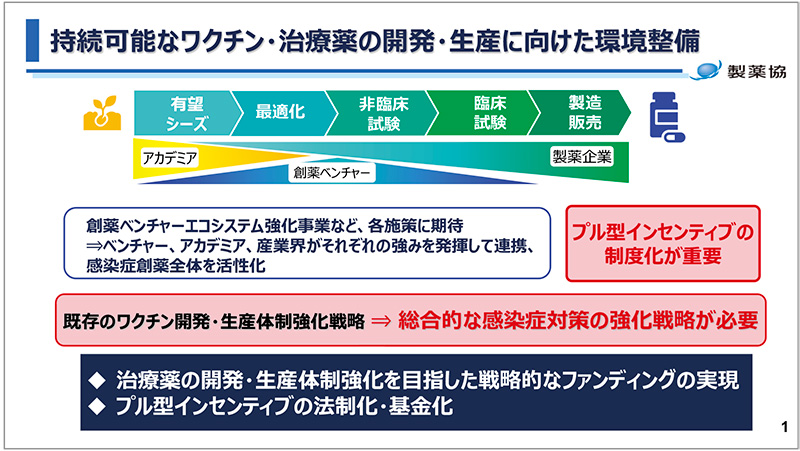
We are currently receiving a great deal of support for measures to promote the development of vaccines and therapeutics, but in order to prepare for future emergencies, we would like to request the establishment of a comprehensive and strategic support system for infectious disease countermeasures, rather than a separate system for vaccines and therapeutics. Infectious diseases include a wide variety of pathogens, and it is impossible to know when and where they will spread. In other words, please understand that this is a completely different area of business from the creation of ordinary pharmaceuticals in the pharmaceutical industry. Therefore, it is very important that pull-type incentives are institutionalized for infectious diseases from the beginning of development, so that a return on investment can be expected regardless of the type of infectious disease or the prevalence of the disease, and that such national support is not for a single year but is continuous. In light of this, we would like to request that you consider legislating strategic funding and pull-type incentives, as well as funding ( Fig. 8 ).
Fig. 8 Creating an environment for sustainable development and production of vaccines and therapeutics
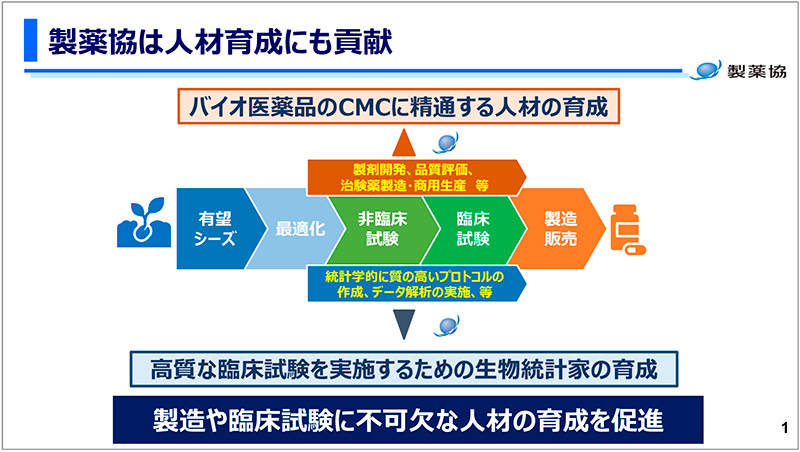
In addition, in order to establish a value chain for drug discovery in the field of infectious diseases, not only funding and facilities, but also human resources to drive the drug discovery ecosystem are extremely important. JPMA will take this into account and focus more on human resource development for the value chain to function ( Fig. 9 ).
Fig. 9 Human resource development
The JPMA is currently compiling proposals for the G7 health agenda to be held in 2023, and issues such as incentives and capacity building are common to future discussions as international issues. It is hoped that a meeting such as this one, where industry, government, and academia can come together, will help to accelerate the preparation for and response to future pandemics in the same spirit.
Panel Discussion
Mr. Takaguchi: In order to continuously develop and launch seeds for infectious disease drugs originating from bio-ventures, it is necessary to further enhance and circulate the drug discovery ecosystem in industry, government, and academia. We would like to discuss what needs to be done and what needs to be improved from the standpoints of industry, government, and academia.
Dr. Omagari: It is important how quickly the ball can be passed from clinical practice to R&D. Until around 2015, the main focus of clinical practice was to contain infectious diseases. Therefore, in order to enhance the drug discovery ecosystem in the infectious disease field, it is important to have a mechanism to utilize patient information and specimens obtained from clinical sites in research and development to speed up drug discovery. The Ministry of Health, Labor, and Welfare (MHLW) has created a repository of patient and specimen information, and is developing an environment that will ultimately allow not only academia but also companies to quickly utilize this information, which must function effectively.
Dr. Matsumoto: VCs contribute to the process of increasing the added value of ventures through investment. We also invest in ventures targeting the infectious disease field and provide hands-on support, planning from the development stage, but it is difficult to see exit strategies in the infectious disease field. It is important to consider exit strategies for the developed products we handle outside of the infectious disease field, and how to cover the economic aspects of the development. In order to improve the economic predictability of the infectious disease field, it is important to establish a system that is attractive from a business standpoint to pharmaceutical companies that will be the recipient of the exits.
Mr. Asanuma: Since drug development, including vaccines, in the field of infectious diseases cannot be handled based on private-sector market principles, a policy response is necessary. When the Tuberculosis and Infectious Diseases Division of the Health Bureau prepared the "Action Plan for Drug Resistance (AMR) Measures," new antimicrobial agents were no longer being created on a 10-year basis. The reasons for this include the difficulty in seeing economic predictability in the field of infectious diseases and the fact that seeds themselves are becoming harder to find. Therefore, it is necessary to promote the elucidation of pathogens at the DNA and RNA level based on whole genome data libraries, the use of AI, and support for other drug discovery methods that are different from those used until now. At the same time, stockpiling (stockpiling supplies in preparation for future tight supply and demand) is also important. We would like to make use of this in future policies, including the emergency approval system and support for manufacturing lines, which we also experienced in this COVID-19 measure.
Chairman Okada: Japan has fallen far behind in vaccine development for COVID-19, and there are fears that Japan's research and development capabilities in the area of infectious diseases are declining. In reality, however, it is not just in the area of infectious diseases, but Japan's drug discovery capabilities themselves that are declining, and there is an urgent need to revive and build an innovation ecosystem in Japan. The key to building a drug discovery ecosystem is to strengthen venture development, as most of the seeds for innovative new drugs are currently generated from academia and venture companies. In the supplementary budget approved by the Japanese government on November 8, 2022, the Cabinet set aside 300 billion yen for a project to strengthen the drug discovery venture ecosystem. This is a commitment by the Japanese government not only to infectious diseases but also to drug discovery in general, to which the pharmaceutical industry must firmly respond. One of the issues is the lack of human resources to connect the various value chains in drug discovery in the life science venture environment, and the JPMA intends to strengthen its support for solving this problem.
Mr. Takaguchi: I have high expectations that drug discovery will become more efficient when ventures with seeds and pharmaceutical companies with a variety of knowledge join forces. Corporate value includes not only economic value but also social value. Although there are various issues in the field of infectious diseases, if the importance of this field continues to be questioned and spreads throughout society, corporate value will increase from the aspect of social value as well, and this should lead to the stimulation of investment funds.
Finally, I would like to emphasize that the continuous development and launch of new drugs in the field of infectious diseases requires industry, government, and academia to work together under the same recognition and to strengthen drug discovery for infectious diseases by companies, academia, and bio-ventures, thereby creating a sustainable drug discovery ecosystem.
(International Affairs Committee, Nikkei-FT Infectious Diseases Conference Task Force)