


Topics JPMA Media Forum" Held ~The current state of drug resistance (AMR) and the need for new antimicrobial agents to address this challenge
In order to promote the development of new antimicrobial agents that are effective against Antimicrobial Resistance (AMR), the Global Health Subcommittee of the JPMA International Affairs Committee has been working to promote public understanding of the various issues and measures related to AMR. On April 19, 2022, the JPMA Media Forum was held at the Nihonbashi Life Science Hub (Chuo-ku, Tokyo) under the theme of "The Current Status of Drug Resistance (AMR) and the Need for New Antimicrobial Agents to Address this Problem. The event was held in a hybrid format of on-site and online, and was attended by 24 journalists from 18 companies.
 The venue
The forum featured presentations by Takao Omagari, a specialist in infectious diseases at the National Center for Global Health and Medicine, and Keiji Uuchinaka, a specialist in hematologic malignancies and infectious diseases at the National Cancer Center Hospital East, as well as by JPMA's International Affairs Committee members Kyoko Nakano, who summarized the results of a survey of physicians on AMR, and Akira YUASA, a member of the Committee, made a presentation on the status of antimicrobial drug development in Europe and the U.S.。
After the presentations, a Q&A session was followed by a lively Q&A session. The forum provided an opportunity for the media to deepen their understanding of the threat of AMR and the need for research and development of new antimicrobial agents to counter this threat.
Lecture 1
Analysis of the current status of drug resistance (AMR)
Dr. Takao Omagari, Center for Global Infectious Diseases, National Center for Global Health and Medicine
In this lecture, the latest data on the trend of AMR in the world and Japan were introduced. In particular, an article in the renowned medical journal Lancet published in 2022 indicated that 1.27 million people worldwide had died from AMR in 2019, pointing out that AMR, also called the silent pandemic, is steadily spreading ( Figure 1 ).
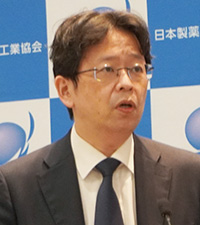
Figure 1: 1.27 million deaths reported worldwide in 2019

Five years have passed since Japan's Action Plan to Combat Drug Resistance (AMR) was issued. While the use of antimicrobial agents has decreased over the years and certain results have been recognized, the situation of fluoroquinolone resistance and resistance to third-generation cephalosporins, such as E. coli and methicillin-resistant Staphylococcus aureus, has not been improved.
It was pointed out that solving the AMR problem requires a multifaceted approach, including reducing unnecessary use of antimicrobial agents, antimicrobial agents with novel mechanisms of action, prevention through vaccination, and generally effective means of preventing infection (e.g., wearing masks) ( Figure 2 ).
Fig. 2 Response to fluoroquinolone resistance in E. coli and methicillin resistance in Staphylococcus aureus

The recent spread of COVID-19 infection has shaken the very nature of medical care, and it has been pointed out that AMR is a problem that affects medical care as well, with a lack of effective measures to deal with it. Through the lecture, I was reminded that the AMR problem is an issue for society as a whole, and that efforts to increase public awareness and understanding of the issue are essential.
Lecture 2
Cancer treatment seriously affected by drug resistance (AMR) and its countermeasures
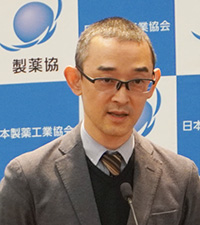
Department of Infectious Diseases, National Cancer Center Hospital East, and Department of Hematopoietic Stem Cell Transplantation, National Cancer Center Hospital Central
Cancer is a familiar disease that affects one in two Japanese people during their lifetime, and its treatment has made remarkable progress in recent years. On the other hand, many cancer patients have problems with infections during treatment, and it was introduced that antimicrobial agents for the prevention and treatment of bacterial infections are indispensable in cancer care.
It has been pointed out that cancer patients are at high risk of serious infections due to the cancer itself and the weakened immune system caused by anticancer drug treatment, etc. Infections caused by AMR lead to failure of antimicrobial therapy and increase deaths due to infection. Furthermore, it has been shown to cause a variety of secondary problems such as discontinuation or postponement of cancer treatment and increased medical costs ( Figure 3 ).
Fig. 3 Cancer patients and infections

In addition, prophylactic administration of antimicrobial agents has been recommended in the past for safer anticancer therapy, but recently it has been reported that the effectiveness of such prophylactic administration has decreased due to AMR. This has forced some patients to stop prophylactic administration of antimicrobial agents, and in Europe, guidance has been given to refrain from uniform prophylactic administration ( Fig. 4 ).
Fig. 4 Antimicrobial prophylaxis recommendations

Antimicrobial agents are indispensable in modern medical care, as typified by cancer treatment. This lecture shared the current situation in which the impact of AMR on cancer treatment is at an alarming stage and the safety of cancer treatment is threatened.
Lecture 3
Results of a survey of physicians regarding drug resistance (AMR)
Ms. Kyoko Nakano, JPMA International Affairs Committee
In order to ascertain the impact of AMR in daily medical practice and the actual impact caused by the lack of effective antimicrobial agents, JPMA conducted a survey of physicians. The survey reconfirmed that antimicrobial agents are used in a variety of situations, and also revealed that not only infectious disease specialists but also physicians in many other medical departments face the AMR problem, and that the effects of AMR, such as prolonged treatment and hospital stay, affect not only the patient in question but also other patients in various ways (Fig. 5). The impact of AMR on not only the patients in question but also on other patients, such as prolongation of treatment and hospital stay ( Fig. 5 ).
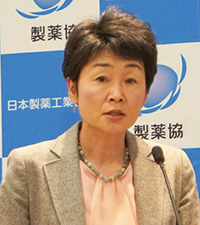
Fig. 5 AMR has various impacts

By disseminating this information to the public in an appropriate manner, we hope that the issue of AMR and the need for antimicrobial agents will be recognized by the public as a matter of national concern, and that momentum will be generated to support efforts by industry, academia, and government to combat AMR.
Lecture 4
Status and Issues of Antimicrobial Drug Development in Japan, Europe and the United States
Akira Yuasa, JPMA International Affairs Committee Member
In this presentation, it was shown that the number of new antibacterial agents approved in Japan has been slowing down and that the number of antibacterial agents currently under development in Japan is less than that in Europe and the United States. It was also pointed out that there are two types of drug lags between Japan and the West: drugs approved in other countries but not yet approved in Japan, and drugs approved in Japan but taking longer to be approved than in other countries ( Fig. 6 ).
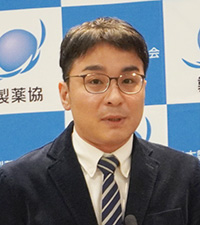
Fig. 6 Development status of new antibacterial agents in Japan and the US and 51 products with no approved development history in Japan in the US and Europe

The issue of low predictability in the antimicrobial drug business was raised as a reason for the difficulty in developing new antimicrobial agents, and "pull-type incentives" were introduced as a way to financially support the development of antimicrobial agents that have low profitability. In Japan, a proposal on the need for pull-type incentives has been published, and it is hoped that the discussion will further progress. He also stated that the costs associated with the development of new antimicrobial agents and the financial resources needed for economic incentives "require a viewpoint that considers them not as a cost but as an investment in national security.
Concluding Remarks
The seminar promoted public understanding of the various problems associated with AMR, including the current status of AMR in the world and Japan, the fact that AMR threatens antimicrobial agents, which are the foundation of modern healthcare, and the fact that the creation of new antimicrobial agents is necessary as a means of solving the problem, but involves the difficulty of drug discovery and the issue of predictability of business. We hope that the AMR will promote public understanding of the various problems associated with AMR, such as the need to create new antimicrobial agents, the difficulty of drug discovery, and the challenges of business predictability.
AMR is an issue that should be addressed through collaboration between industry, academia, and government, and JPMA will continue to promote various activities to resolve AMR issues, while proactively incorporating new knowledge.
( Takeshi Watanabe, International Affairs Committee, Global Health Subcommittee)