


Top News The 33rd JPMA Policy Seminar Toward the Creation of Innovative New Drugs from Japan: Building a Healthcare Ecosystem for Continuous Innovation
The spread of new coronavirus infection (COVID-19) has posed significant challenges to Japan's pharmaceutical industry, including the need to enhance the country's ability to create new drugs and the creation of an innovation environment that will serve as the basis for this. The seminar discussed themes necessary for Japan to continue to be a world-class drug creator, including the development of a drug discovery ecosystem and life science cluster, fostering venture companies and start-ups, strengthening industry-academia-government collaboration, and global mindset. The following is a transcript of the seminar.
Accelerating the Healthcare Ecosystem through Industry-Academia-Government Collaboration for a Future of New Drugs from Japan
Part 1: What is needed to build and develop the healthcare ecosystem?
Special Lectures
Revival of pharmaceutical powerhouse Economic security development
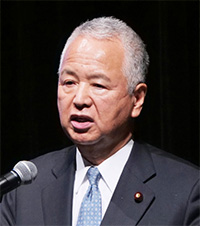
Mr. Akira Amari, Member of the House of Representatives, Chairman of the Liberal Democratic Party's Task Force on Economic Security
Maintaining national security and protecting the lives and property of the people. Security is often thought of as a military or diplomatic issue, but in recent years, it has expanded into the economic field. For example, a country with a vast market may make its partners dependent on it through trade, and then interfere in its internal affairs and guide its policies.
On the other hand, traditional security measures are also changing. Threats include cyber-attacks, inducing public opinion through social networking sites (SNS), and even encouraging the loss of will to fight by spreading one's own culture to the other country.
In light of this situation, the Japanese government has made the enactment of the "Economic Security Promotion Act" a top priority and aims to pass it during the current ordinary session of the Diet. The bill consists of four pillars.
The first is "strengthening supply chains. During the recent battle against the new coronavirus, the weak supply system for masks, medical gowns, medical gloves, and other supplies was pointed out first. Critical supplies related to security include pharmaceuticals, the supply of which could affect the lives of citizens, as well as semiconductors and rare earth metals. The bill aims to establish a mechanism for the government to select these items, identify vulnerabilities in the supply chain, and further overcome them.
The second is to "ensure the safety of core infrastructure. The government will examine core infrastructure in 14 industries in six fields, including telecommunications and finance. The government will identify any problems related to security. For example, whether or not the suppliers of digital equipment used in the infrastructure are reliable companies. The third is to "promote research and development of key technologies.
The third pillar is "promotion of research and development of key technologies. Contrary to the first and second pillars, Japan must become an indispensable presence in the world through technology, which will serve as a deterrent in terms of economic security. To promote R&D, it is essential to select key technologies. One idea is to establish a graduate school of natural sciences at the National Graduate Institute for Policy Studies (GRIPS) as a think tank for this purpose.
Drug discovery is an important technology that Japan possesses. The United States, parts of Europe, and Japan are the only three countries in the world where drug discovery is possible. However, Japan has lagged behind in the development of vaccines for new coronavirus infections. Having domestic vaccine development and production capabilities is extremely important from the perspective of economic security as well as maintaining the health of the people. On the other hand, vaccines are not always produced. A system should be established whereby the production line is used for biopharmaceuticals during normal times and switched to a vaccine production line in times of emergency. We often hear the public's desire for domestically produced vaccines and medicines. This is proof that Japanese products are the most reliable. The public and private sectors should work together to improve the environment so that Japan can become a drug-discovery superpower both in name and in reality.
Fourth is the introduction of a "patent non-disclosure system. With the ongoing integration of the military and civilian sectors, it is difficult to distinguish between civilian and military use of science and technology. On the other hand, the current patent system is based on the principle of openness. There is a possibility that Japan's advanced technologies that are made public could be diverted to military use by other countries, posing a threat to Japan. Therefore, the government has introduced a patent non-disclosure system for technologies that it deems important for national security. However, the application of this system should be kept to a minimum so as not to create undue restrictions on private-sector R&D and innovation capabilities.
In fact, these four pillars are already in place in many countries. What sets Japan apart from other countries is that it has redefined the concept of economic security and systematized it into law.
Challenges remain. The Specified Secret Protection Law, which went into effect in 2002, established a system similar to the SC system for public officials. The idea is to extend this system to the private sector. For the safety of the nation and its people, we will continue to appeal for your understanding and cooperation.
 Scene of the lecture
Lecture (1)
Start-up development Diversified support
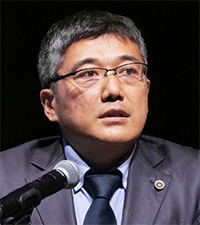
Mr. Hisashi Yoshizawa, Attorney at Law, Director, GRiT Partners Law Office / Expert on Biotechnology Strategy, Cabinet Office
The environment surrounding drug discovery is changing dramatically. In the 20th century, when the development of small molecule drugs was the main focus, the division of roles between academia and pharmaceutical companies was clear, and research and development was simple, progressing from basic to applied and then to industrial implementation. Today, however, with the emergence of diverse modalities such as biopharmaceuticals, regenerative medicine, and gene therapy, drug discovery requires a complex system of collaboration among institutions and experts in multiple fields.
For example, the development of biopharmaceuticals involves not only academia and pharmaceutical companies, but also bio-ventures, venture capital (VC), contract research organizations (CROs), contract manufacturing organizations (CMOs), contract development organizations (CDMOs), etc. CROs conduct clinical trials at the request of pharmaceutical companies. However, the skills required for each stage of development are different, and cooperation is becoming increasingly complex. In addition, the utilization of vast amounts of data is indispensable for drug discovery with an eye toward personalized medicine, and the power of many experts is also essential for building a research infrastructure for the acquisition, generation, storage, and management of such data.
In light of these challenges, the Life Science Incubation Council is preparing to support start-up companies in the field of drug discovery. Its mission is to "create a platform to create life science businesses that can compete in the international market. It also aims to "build a comprehensive circle of support and create life science businesses with a total market capitalization of 1 trillion yen by 2030" ( Figure 1 ).
Fig. 1 Implementation of biotech strategies in the biotech community and collaboration among various players

There are six major specific functions. The first is the "realization of multi-layered collaboration and exchange. The first is to "realize multi-layered collaboration and exchange" by appropriately linking domestic and international research institutions, universities, entrepreneurs, incubators, professional organizations, pharmaceutical companies, CMOs, CDMOs, CROs, VCs, corporate venture capitalists (CVC), etc. The second is to "implement policy recommendations" (Figure 1). The second is "implementation of policy recommendations. The second is "policy advocacy," which encourages the development of the pharmaceutical industry by providing recommendations to the government. The third is to "disseminate information that contributes to the development of the industry," creating a forum to communicate and share information on the movements of pharmaceutical companies and their respective papers.
The fourth is "establishment of a step-by-step support system for commercialization. The goal is to create a truly functioning community for the realization of drug discovery. Fifth is "a place to disclose needs and seeds. The drug discovery business is based on the premise that patents must be obtained. However, if the technology becomes public knowledge, patent applications cannot be filed. Therefore, a closed-door forum for matching seeds and needs will be established to accelerate business creation. The sixth objective, "collaboration with international organizations and clusters in other countries," has two goals: to lower the barriers to entry into the global market through collaboration with clusters in Europe and the United States, and to improve the domestic support system.
Many universities, research institutes, VCs, law firms, patent attorney firms, and other organizations in Japan and abroad have now announced their participation in the council. Through its activities, the council hopes to build a world-class life science infrastructure in Japan.
Lecture (2)
Establishment of a global drug discovery ecosystem Development of a global drug discovery ecosystem
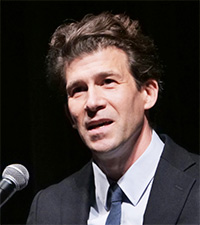
Mr. BT Slingsby, Founder & Managing Partner, Catalys Pacific
I am an American physician who founded and manages Catalyst Pacific, an independent VC firm specializing in the life science field, with the goal of bringing much-needed new drugs to patients in Japan and around the world.
Currently, Japan's drug discovery ecosystem is centered on four centers in Tokyo, Fujisawa, Kawasaki, and Kobe. The common thread is the mindset of "completing everything in Japan," from basic research to clinical trials and drug manufacturing. In contrast, the U.S. and Europe have a global ecosystem that is not limited to the biotech hubs of each country.
For example, in Boston, the United States, a world-renowned biotech hub, drug discovery seeds and technologies are sought from academia such as Harvard University, while entrepreneurs and researchers are recruited from around the world, and research and development are conducted and funded on a global scale.
The globalization of the drug discovery ecosystem benefits companies and investors, as well as physicians and patients. Drugs developed through international clinical trials can easily enter markets in different countries. If a company can target not only a single country's market but also multiple markets at once, the scale of sales will naturally increase. The global drug discovery ecosystem also has advantages in terms of improving development quality, optimizing research, development, and manufacturing costs, and attracting funds on a global scale ( Figure 2 ).
Fig. 2 What is the global mindset?

U.S. biotech companies based on the global ecosystem are achieving significant results. In the past decade, more than half of all new drugs approved in the U.S. have been compounds developed by these biotech companies. The amount of funding from U.S. healthcare VCs has also increased nearly eight-fold over the past decade. In light of these developments, Japan is facing the need to redefine the concept of the drug discovery ecosystem. By moving away from the traditional local ecosystem and leveraging the existing global ecosystem, Japanese innovation could be further accelerated.
Catalyst Pacific is executing an outbound strategy of establishing and investing in biotech in the US using Japanese drug discovery seeds and technologies, and an inbound strategy of establishing and investing in biotech in Japan using US drug discovery seeds and technologies. In both strategies, funding is provided on a global scale. By leveraging the global drug discovery ecosystem in this way, I believe that the company will be able to deliver needed new drugs to patients in Japan and around the world more quickly.
Lecture (3)
Pursue social impact and profit at the same time
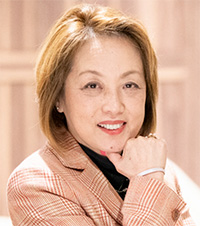
Ms. Yuko Kuno, Serial Entrepreneur, Director & Co-Founder, Phoenixi
Innovation and invention are often confused. These concepts are often confused. In a nutshell, an invention becomes an innovation when society changes.
The two are born in different environments. Inventions are born from "risk-taker ecosystems. This is an ecosystem with elements such as "a high degree of individual freedom" and "clear responsibilities and authority. Invention is not a multi-person activity; it is the domain of the individual. It is important to have an environment where one person can "jump" to a new dimension. In fact, one person can jump, but not if many people gather and learn a lot. We have had many such experiences.
Innovation, on the other hand, comes from a "risk-sharing ecosystem. This is an environment of trial and error among many people. In order to achieve this, it is important to have elements such as "each participant makes his/her own decisions" and "everyone understands the goal and why it is there" ( Figure 3 ).
Fig. 3 The Future of Health Care (4-Dimensional Considerations are Important)

The "Halcyon Incubator," a social incubator founded in Washington, D.C., U.S.A., has adopted these ideas and created an environment with the following in mind: securing a place to think alone, living in an unusual space, and stimulating a sense of self-efficacy. 2019, a Japanese version of this concept, "Phoenixi/ toberu" was launched in Kyoto. In Japan, many talented people are buried in large corporations. So, Fenixi has made it possible for businesspeople to participate.
The entrepreneurs around me are aiming for a profit-and-impact type of business. Along with profits, they pursue the creation of impact on social issues. Rather than using profits generated to address social issues, as has been the case in the past, they seek to create businesses where the services and products they provide are themselves linked to solving social issues.
In 2004, the company launched "We Capital," a fund for women by women in the United States. The motivation for the launch of this VC was the fact that only 5% of the investments made by Silicon Valley VCs go to companies founded by women. Today, the fund has produced three so-called unicorn companies with enterprise values of $1 billion or more.
Drug discovery is not the only thing to be considered in this era. Drug discovery must also contribute to the self-realization and happiness of individuals, the prosperity and fairness of society, and the sustainability of the global environment. What is required of pharmaceutical companies in the future is to simultaneously achieve "profit," "resolution of social issues," and "global environmental conservation" through these efforts.
Part 2: What are the key points of the life science cluster format?
■Session
Provide an open, fair, and rational "place
Haruhiko Morita, President & CEO, Modaris
We are using gene regulation technology to create medicines for genetic diseases. For example, we are developing innovative drugs that turn off the gene switch for diseases caused by too many genes, and turn on the gene switch for diseases caused by not enough genes.
Why, then, would a company headquartered in Tokyo choose Boston, U.S.A., as its research base? First of all, Boston is rich in human, material, and financial resources as a center for the life science field. We have a perfect level of resources, including Harvard and MIT graduates, excellent human resources from all over the world, one of the largest concentration of laboratories in the U.S., and a large amount of grants and venture capital (VC) investment.
In addition, Boston is attractive as a "place" to work. Through the common language of English, it is possible to engage in fair discussions with anyone without being bound by hierarchical relationships. The environment is clear and rational, with open opportunities for people regardless of nationality, race, gender, or religion, and there is no moving of the goal posts in projects.
In addition, the ability to pursue "causes and interests" to one's heart's content is a major attraction. Scientists are creatures who seek to be at the top of their game by pursuing what they believe in to the bitter end. They do not feel the need to be second best in terms of papers, patents, etc., and they want to do what is overwhelmingly the most interesting thing in the world. People who want to try crazy, unlikely, but exciting things are drawn to Boston by this atmosphere. Genome editing and mRNA vaccines are the result of pursuing such excitement. In this context, it does not make much sense to insist on "from Japan" or "made in Japan" ( Fig. 4 ).
Fig. 4 Universities Should Be More Gosso Profitable by Eliminating Patent and COI Issues

The first challenge for Japanese ventures is the lack of university hand-holding. Japanese universities have a kind of omnipotence and a sense that they can do anything, even things like product development. However, university research is about expanding the domain, whereas development is about narrowing the domain, which is a different mindset to begin with. Once the university has advanced its research, it is important to pass the baton smoothly to the company's area of expertise. I am also concerned that the way ventures are nurtured may be too important. Ventures are like weeds, and once the environment has been prepared to a certain extent, it is just right to leave them alone to grow or wither.
■Session
Create a culture that tolerates failure and keeps going
Noriichi Kubota, President & CEO, KSP / Founder, PeptiDream
I would like to make some points and recommendations regarding the Japanese venture ecosystem from my experience as a venture manager and from my current position as an incubator.
There are three issues. Ventures are often born from joint research between universities and other research institutions and large companies, but the first problem tends to arise in the handling of intellectual property created from such joint research. Generally, patents are jointly applied for by both parties, but the use of the license requires the consent of all co-owners, making it impossible for universities and other research institutions to launch ventures on their own. In Japan, statistics show that approximately 60% of the intellectual property from such joint research is still being cached. It is necessary to allow universities and other institutions to file independent applications so as not to hinder the launch of ventures. On the other hand, if companies are given the right to negotiate preferential business deals with venture companies, intellectual property will start to flow smoothly.
Secondly, when it comes time to launch a venture and obtain investment from angels and venture capitalists, the absolute number of managers who are skilled in such matters is small. In particular, there is a shortage of managers for technology-related ventures. In such cases, I would like to propose the use of people who have experience in venture management, especially managers who have failed in the past. In Japan, it is said that there is a lack of a culture that tolerates failure, but I think it is time to pay attention to the adage that "there is much to be gained from failure, but little to be gained from success.
The third problem is the lack of a sense of speed when collaborating with large companies. For a venture company, speed is of the essence, and if it cannot make instantaneous business decisions, its growth will be stunted. The decision-making system should be simplified and consolidated into a single system, eliminating systems that are bound by past traditions, such as the circular approval process that is common in large corporations, which disperses responsibility ( Fig. 5 ).
Fig. 5

We must "leave Bida to our grandchildren for the future of this country. This is our slogan as an incubator. To this end, we must nurture the seeds of Japan's key industries 10 to 20 years from now, and venture companies will play a role in this process. In the U.S., for example, deep techs such as nanoparticle pills and electric health records, which will change society drastically, are already in motion in conjunction with the major pharmaceutical industry. Japan's pharmaceutical industry should also leverage the power of venture companies to accelerate the combination of life science and deep tech and nurture it as a new core industry.
Lecture (4)
Leading to success Bridging the gap through academia
Dr. Tomoyoshi Koyanagi, Professor, University of Tsukuba, Tsukuba, Japan / Director, TR Promotion and Education Center, Tsukuba Clinical Medical Research and Development Organization
What changes have occurred in the development environment of the pharmaceutical industry over the past 30 years or so? As the cost of drug discovery has increased dramatically, an ecosystem has been established in which the early stages of drug discovery, from exploratory research to preclinical studies, are left to universities and ventures, and companies focus on clinical trials. In Europe and the U.S., a market was formed through such technology transfer, and competitiveness in the global market was formed, but in Japan, venture companies rarely had such power. So what was missing?
Professor Mosie Rosen of Stanford University in the U.S. got the idea for a cure for myocardial infarction from her research on an enzyme in the body. She showed her idea, which she wrote in the back of a notebook, to all kinds of people and eventually raised about 3 billion yen from VC firms. What she learned in the process was the importance of clearly stating the goal, i.e., what benefits the research results would have for patients. Herein lies the problem with fundraising. The ideas that university researchers have in mind are ultimately turned into drugs by pharmaceutical companies. The question is how to smoothly bridge the gap between the two, what kind of data will be taken in the process in between, and what kind of economic structure will be used for development ( Figure 6 ).
Fig. 6 Perspectives Needed in the Pharmaceutical Industry

This study has been made into a training program at Stanford University and is used by more than 70 research institutes around the world. In Japan, the University of Tsukuba has implemented this program to educate researchers on various aspects such as clinical development, pharmaceutical regulations, intellectual property, and investment, and some cases have entered clinical trials within four years of implementation.
What was lacking in Japanese start-ups and venture companies was a plan that envisioned the final product at the start of the program. Venture companies were not able to incorporate into their business plans the details of how to commercialize the seeds born from their research and how to deliver them to patients. Similarly, Japanese venture companies lacked the attitude to create products with a clear image of what would sell in the global market from the beginning.
In the future, the style of drug discovery will change drastically. The key will be how to make the most of the vast amount of data available, and IT giants such as Google and Amazon may become competitors. At that time, the progress of digital transformation (DX) in the pharmaceutical industry will be of great significance. Academia has a wealth of real-world data, including not only research results but also disease and clinical information, and it will be important to promote DX and build a strong infrastructure for information distribution with academia in order to promote collaboration in the future.
Lecture (5)
Promote strategies to strengthen drug discovery venture development
Mr. Kozo Saeki, Director, Biological Chemical Industry Division, Commerce and Service Group, Ministry of Economy, Trade and Industry
The fact that Japan had to rely on imports for all of its major vaccines during the coronary disaster symbolized the situation in which Japanese drug discovery was placed. Pfizer's mRNA vaccine was developed by a German venture called Biontec, while the U.S. company Modela is also a venture, and the new mRNA technology itself came out of a venture. Today, about 80% of the world's drug development comes from venture companies, which shows Japan's lag in fostering venture companies and strengthening the venture ecosystem in drug discovery.
On the other hand, drug discovery ventures face unique challenges. First, it generally takes more than 10 years from initial exploration to regulatory approval. Even in the early stages of clinical trials, it takes billions of yen in funding. In addition, the final success rate is quite low, about one in tens of thousands, because the drug candidates are selected before the clinical trial stage and also from the viewpoint of efficacy and safety during the clinical trial stage.
This is why the government has launched the Drug Discovery Venture Ecosystem Enhancement Project. First, VCs with a thorough understanding of the characteristics of drug discovery, such as the ability to coordinate a diverse range of human resources, including those specializing in management, pharmaceutical processes, and intellectual property strategy, and with a high level of hands-on (growth support) ability to foster ventures, are certified. Drug discovery VCs, which require both time and funds to produce results, must have capable human resources. If a certified VC invests 1 billion yen, the government can provide up to 2 billion yen in subsidies, for a total leverage of 3 billion yen. In this way, the financing of drug discovery ventures will be supported ( Fig. 7 ).
Fig. 7 Toward Raising the Bar in the Drug Discovery Venture Ecosystem

In terms of infrastructure, the situation for drug discovery ventures is also difficult. For example, there are not enough facilities in Japan to produce small lots of investigational drugs. We would like to support the establishment of such manufacturing bases for investigational drugs and contract drug manufacturing organizations (CDMOs) in Japan, which tend to be biased toward Europe and the United States.
The blood that turns the ecosystem around is the return on investment. A solid return on investment is a prerequisite for investment, and it is also a prerequisite for securing human resources and developing infrastructure. In order to increase the return on investment, businesses must not only focus on the domestic market, but must also secure overseas growth markets.
It is necessary to think about overseas expansion from the very beginning. In this project, VCs with the ability to support global expansion will be certified, and the cost of clinical trials overseas will also be subsidized. In addition, we would like to build an ecosystem by strengthening ties with pharmaceutical companies on the way out.
Lecture (6)
Creating an Environment for Innovation that Connects with the World
Mr. Yasushi Okada, Chairman, Japan Pharmaceutical Manufacturers Association
Japanese pharmaceutical companies have fallen far behind in the development of vaccines for new coronavirus infections, and many have voiced concerns about Japan's ability to create innovation.
Japanese pharmaceutical companies have created a number of groundbreaking new drugs, and there is no doubt that Japan is still one of the world's leading countries in the creation of new drugs. However, the conditions and business models surrounding the pharmaceutical industry are changing drastically, as are the various changes in the world environment. Until now, the pharmaceutical industry has been vertically integrated. In other words, the entire value chain, from upstream research and development to downstream manufacturing and sales, has been self-sufficient, but the industry has now shifted to a horizontal division of labor. Each stage of the value chain has become more sophisticated and complex, and instead of owning everything in-house, it has become essential to collaborate with companies that possess strengths at each stage that the company does not have.

In particular, in drug discovery research, where zero to one is created, many of the seeds for drug discovery in recent years have originated from research conducted by venture companies and academia. In order for the pharmaceutical industry to create innovation, it is essential to build an ecosystem that connects with venture companies and academia.
Modalities, or drug discovery technologies and methods, are becoming more diverse and sophisticated. Dramatic technological advances have enabled the emergence of various modalities such as cell medicine, gene therapy, and nucleic acid medicine, in addition to conventional small molecule drugs, and the development of drugs for rare or intractable diseases that could not be approached before. Many of these new modalities originated from venture companies and academia ( Fig. 8 ).
On the other hand, Japan's ability to create innovation is declining in international comparison. In the ranking of the number of cited papers, one of the indicators, Japan has dropped from 5th to 10th place in the world over the past 20 years. In terms of overseas study, which is necessary for the creation of innovative human resources and internationalization, the number of students from China, India, and South Korea has increased significantly in the United States, while the number of Japanese students has decreased. In addition, compared to the rest of the world, the number of people planning to start a business in Japan is absolutely low.
Fig. 8 Changing Environment for Creating Health Care Innovation

Funds to support innovation are also important. In particular, drug discovery faces high hurdles: a timeframe of around 15 years, investment of tens to over 100 billion yen, and a success rate of about 1 in 25,000. However, in Japan, the ratio of venture capital investment to GDP is far lower than in Europe and the U.S., and funding is insufficient, especially in the early stages of clinical trials. Even if there are promising seeds, there is a lack of funding. In order to break out of this situation, everything possible from a long-term perspective should be initiated, including strengthening the ecosystem, fostering innovative human resources, and creating a culture that does not fear failure.
First, it will be necessary to promote the matching of venture companies and academia with promising seeds with companies that have the capacity to conduct clinical trials and manufacture APIs necessary for the practical application of the seeds. To this end, industry must communicate its needs to venture companies and academia, and dialogue is extremely important. One solution would be for academia and industry to work together as a consortium to discover and refine promising seeds from the early stages of research.
Next, let's look at human resource development. We are entering an era in which investors around the world are flocking to talented individuals who have made outstanding achievements and have strong human networks, and these individuals are attracting enormous funds. In order to develop such human resources, it is necessary to support young researchers on a national level to enhance Japan's research capabilities, and to change the educational system to one that produces a steady stream of ambitious human resources with a strong entrepreneurial spirit. I have high expectations for the 10 trillion yen university fund, one of the pillars of the government's new capitalist growth strategy.
And in order to revitalize venture entrepreneurship, it is essential that venture businesses become a coveted profession for students, and it is important to create successful examples of such ventures. As a pharmaceutical company, we would like to be actively involved from the early stage in creating successful examples by utilizing the 50 billion yen supplementary budget for the project to strengthen the drug discovery venture ecosystem that was implemented at the end of last year, and we will do our utmost to support the creation of innovation from an ecosystem that is connected to the rest of the world.