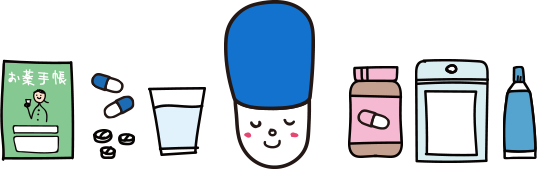












Why do you think there are so many different kinds of drugs and in so many different forms? Let's solve this riddle together!

Pharmaceuticals come in a variety of forms and types, but can be broadly classified into the following three types according to usage.
- What are internal medicines?
- Topical drugs: drugs that are applied by wetting or applying
- Injectable drugs: drugs that are injected into the body with a syringe
The reason there are so many different forms and types of drugs is that they can be used in a variety of situations, taking into consideration their ease of use in accordance with the disease and symptoms.
In order to maximize the effects of a drug, it is processed into a variety of forms, taking into consideration its ease of use and ease of administration.


Internal drugs are drugs to be taken by mouth.
They are available in tablets, capsules, powders, dry syrups, liquids, syrups, etc. Each type differs in the time it takes to dissolve in the stomach, the time it takes for the drug to start working, and the time the drug's effects last.


Topical drugs are those that are applied directly to the diseased part of the body.
Topical drugs include antiseptics for disinfecting wounds, eye drops, nasal drops, socks for treating sprains, lower back pain, stiff shoulders, etc., soft cloths for applying to the skin, and suppositories that are inserted through the buttocks.
Wash your hands thoroughly before using any of these medicines. If bacteria get on the medicine, it may make the wound worse.


Injectable drugs are liquid drugs that are injected under the skin or into blood vessels by inserting a needle into the arm, shoulder, or other parts of the body.
Because they can be injected directly into the body, they work more quickly and require a smaller amount of medication than drugs for internal use.
However, since the drug enters the bloodstream directly, it is prone to side effects and can be easily infected by bacteria, so great care must be taken when administering injections.