


















We conducted street interviews with passersby. We asked them about the new drugs they’re hoping for!
 A medication with no side effects
 to treat irregular menstrual cycles

: A medicine that relieves tension
 A medicine that
 eliminates likes and dislikes!!

: A pill that improves your eyesight

—a pill that keeps you from gaining weight no matter how much you eat
 Medicine that improves your eyesight
  A pill that improves
 your presentation skills
 Medicine that stops
 that itchy nose!


From drug discovery utilizing digital technology to creating a more livable society through the use of big data,
we highlight the current state of new drug development—which is constantly evolving!


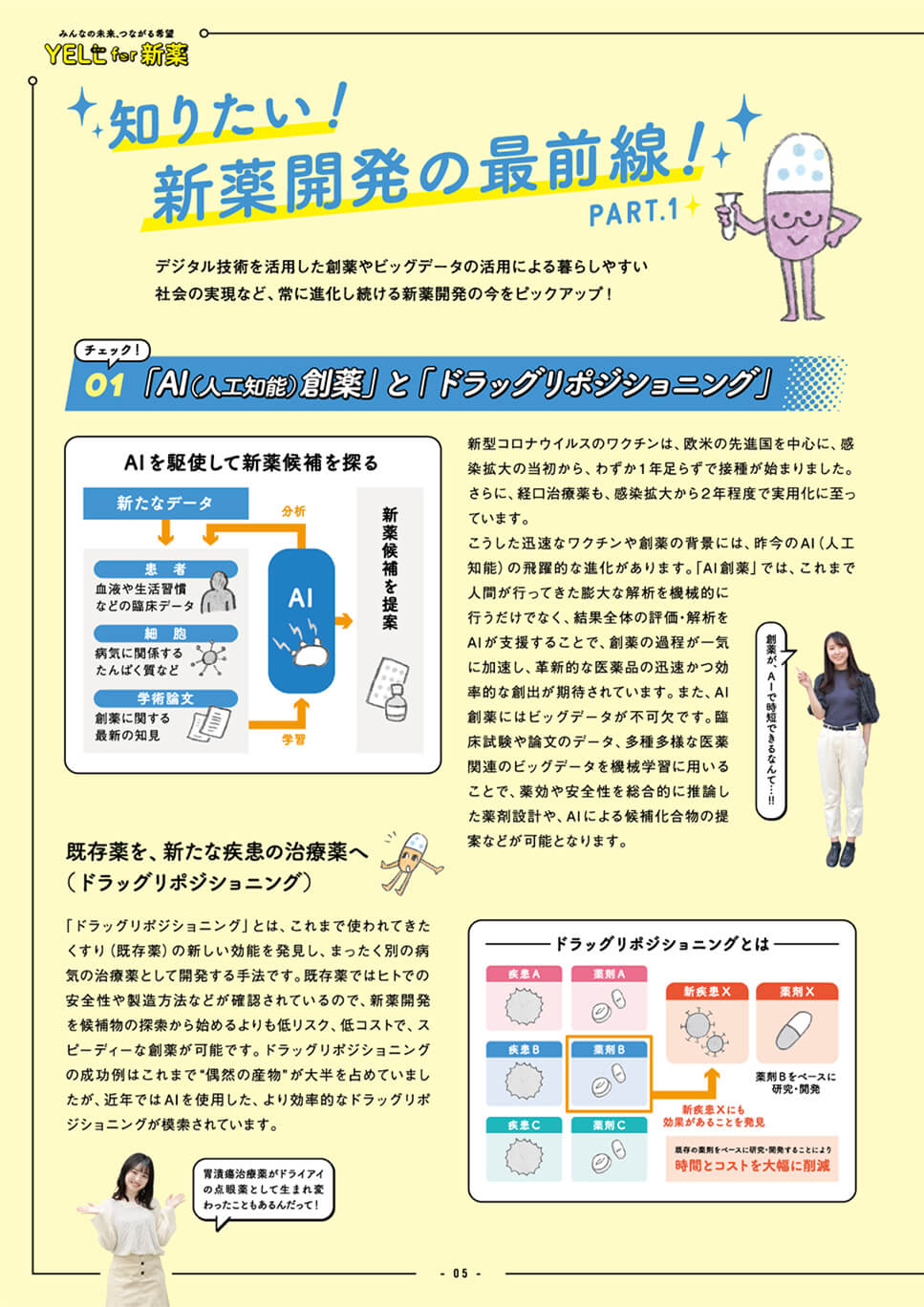
Vaccinations against the novel coronavirus began in less than a year after the outbreak started, primarily in developed countries in Europe and the United States. Furthermore, oral treatments have also been brought to market in about two years since the outbreak began.
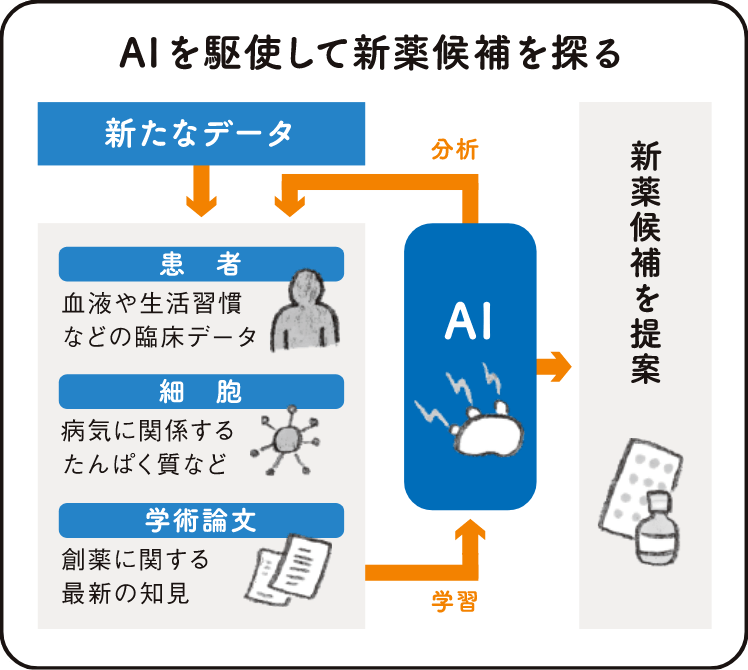
Behind this rapid development of vaccines and new drugs lies the dramatic advancement of AI (Artificial Intelligence) in recent years.“AI-driven drug discovery” not only automates the vast amount of analysis previously performed by humans but also enables AI to support the evaluation and analysis of the overall results. This is expected to dramatically accelerate the drug discovery process and lead to the rapid and efficient creation of innovative pharmaceuticals. Furthermore, big data is indispensable for AI-driven drug discovery.By applying machine learning to data from clinical trials, scientific papers, and a wide variety of pharmaceutical-related big data, it becomes possible to design drugs based on comprehensive inferences regarding efficacy and safety, as well as to have AI propose candidate compounds.
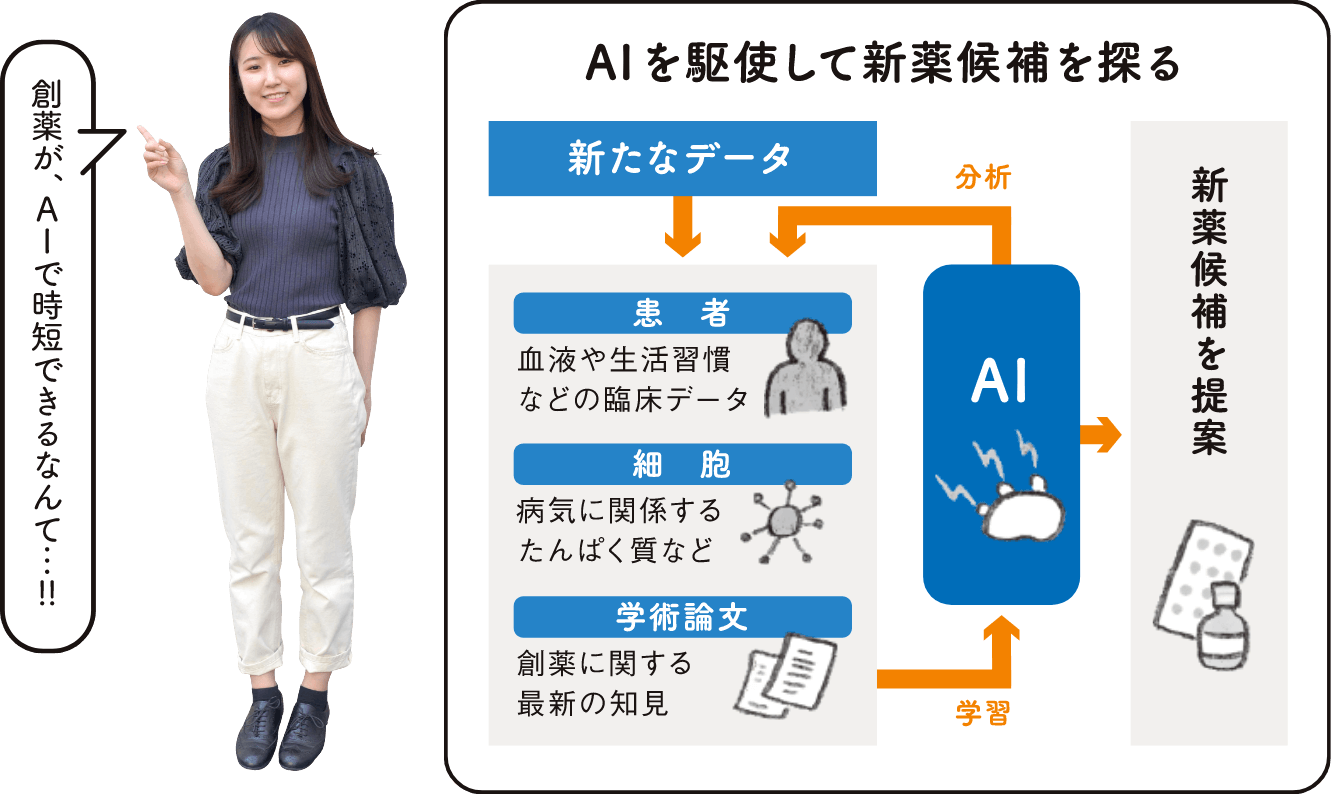
Vaccinations against the novel coronavirus began in less than a year from the onset of the pandemic, primarily in developed countries in Europe and the United States. Furthermore, oral treatments have also reached practical application in about two years since the spread of the infection. Behind this rapid development of vaccines and new drugs lies the recent dramatic evolution of AI (artificial intelligence).“AI-driven drug discovery” not only automates the vast amount of analysis previously performed by humans but also enables AI to support the evaluation and analysis of the overall results. This is expected to dramatically accelerate the drug discovery process and lead to the rapid and efficient creation of innovative pharmaceuticals.

Furthermore, big data is indispensable for AI-driven drug discovery. By utilizing data from clinical trials, scientific papers, and a wide variety of other pharmaceutical-related big data in machine learning, it becomes possible to design drugs based on comprehensive inferences regarding efficacy and safety, as well as to have AI propose candidate compounds.
Repurposing Existing Drugs to Treat New Diseases:
(Drug Repositioning)
“Drug repositioning” is a method of discovering new therapeutic uses for drugs that have already been in use (existing drugs) and developing them as treatments for entirely different diseases. Since the safety and manufacturing methods of existing drugs have already been verified in humans, this approach enables faster drug development at lower risk and lower cost compared to starting from scratch with the search for new drug candidates.While most successful examples of drug repositioning to date have been “accidental discoveries,” in recent years, researchers have been exploring more efficient drug repositioning methods using AI.


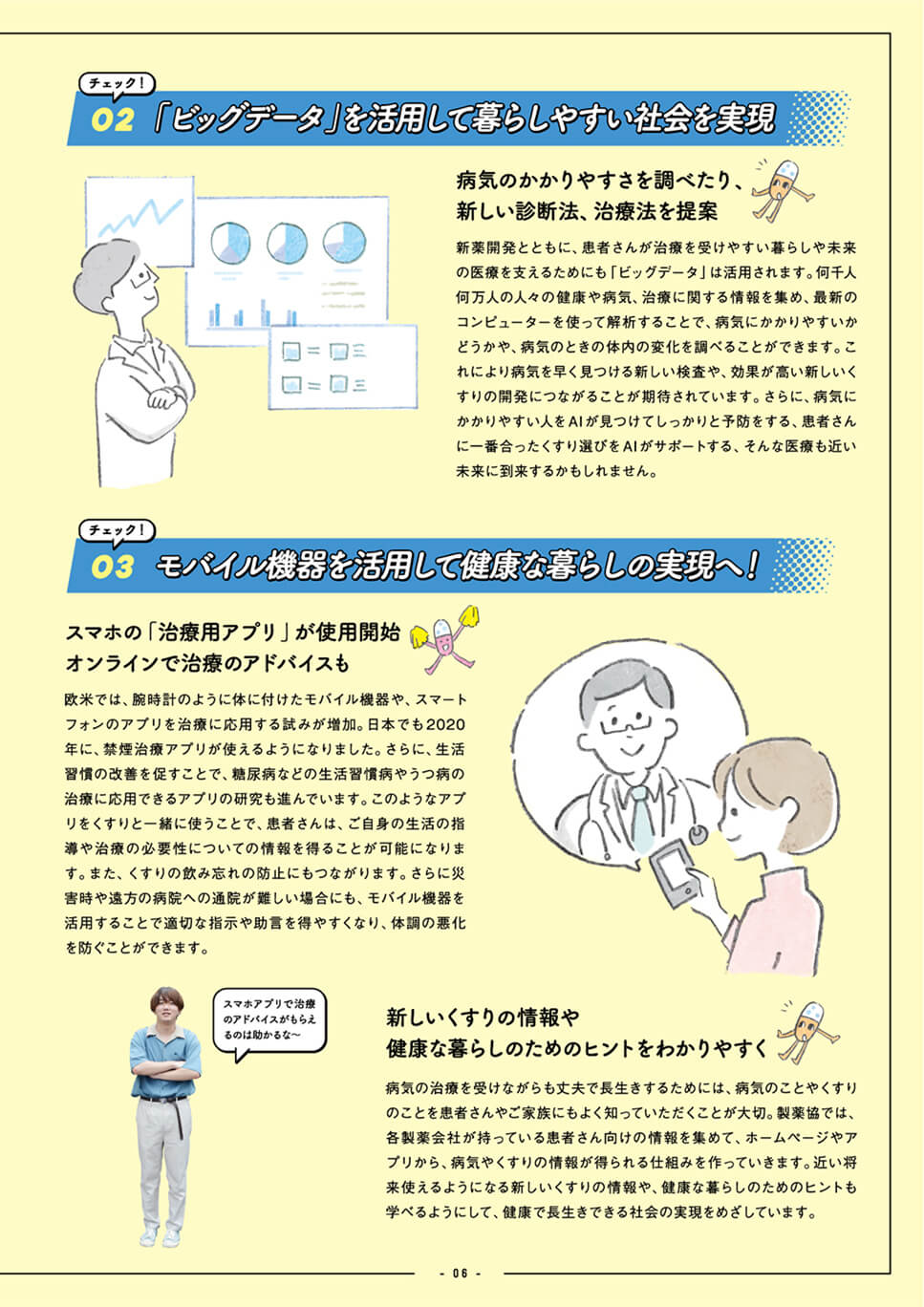
Assessing susceptibility to disease and proposing new diagnostic and treatment methods
Alongside new drug development, “big data” is also being utilized to support a lifestyle where patients can more easily access treatment and to underpin the future of healthcare. By collecting information on the health, illnesses, and treatments of thousands or even tens of thousands of people and analyzing it using state-of-the-art computers, it is possible to determine a person’s susceptibility to disease and to investigate changes within the body when a disease is present.This is expected to lead to the development of new tests for early disease detection and highly effective new drugs. Furthermore, a future may soon arrive where AI identifies people at high risk of disease to enable effective prevention, and where AI assists in selecting the medication best suited to each patient.


“Therapeutic apps” for smartphones are now available
Online treatment advice is also available
In Europe and the United States, there is a growing trend toward applying mobile devices worn on the body—such as wristwatches—and smartphone apps to medical treatment. In Japan, too, a smoking cessation app became available in 2020. Furthermore, research is progressing on apps that can be applied to the treatment of lifestyle-related diseases, such as diabetes, and depression by encouraging improvements in lifestyle habits.By using these apps in conjunction with medication, patients can obtain information about lifestyle guidance and the necessity of their treatment. It also helps prevent missed doses. Furthermore, during disasters or when it is difficult to visit a distant hospital, utilizing mobile devices makes it easier to receive appropriate instructions and advice, thereby preventing a deterioration in health.

Information on new medications and
tips for a healthy lifestyle, presented in an easy-to-understand way
To lead a healthy, long life while undergoing treatment for an illness, it is important for patients and their families to have a thorough understanding of the disease and the medications involved.The JPMA is compiling patient-oriented information from various pharmaceutical companies to create a system where people can access information about diseases and medications via our website and apps. We aim to realize a society where people can live long, healthy lives by providing information on new medications that will become available in the near future, as well as tips for healthy living.


We conducted street interviews with passersby. We asked them about the new drugs they’re hoping for!

A pill that helps you never forget what you’ve seen
 Pills that help you remember people’s names and faces
  A pill that lets you
 remember people’s names
even as you get older
 A pill that makes your pores
 extremely small
 A pill that helps you
 notice other people’s physical condition and changes
 A medicine that, during pregnancy,
 helps your mind become
calm and peaceful
 Medicine that calms
 a child’s tantrums

Medicine for preventing rheumatism


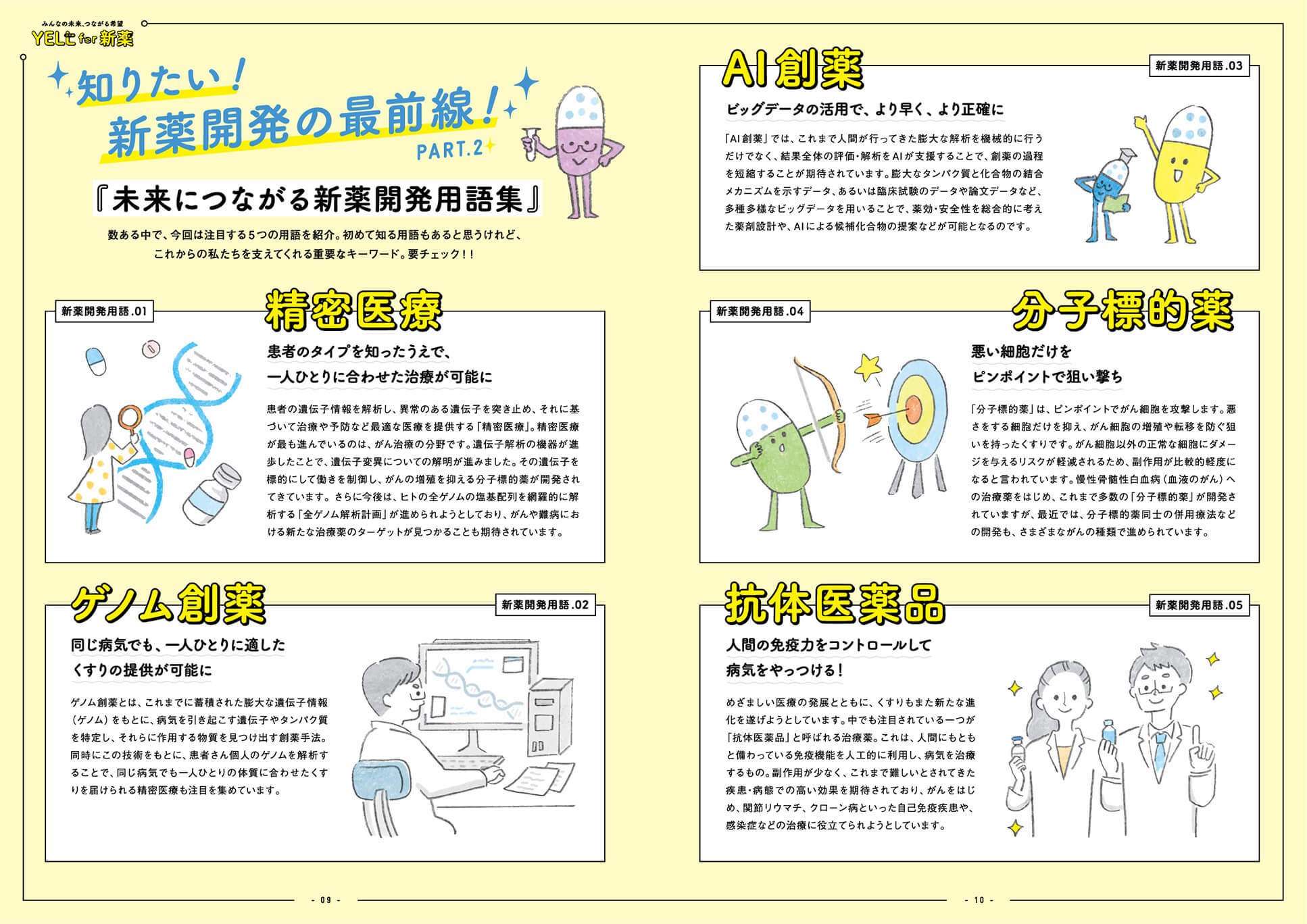
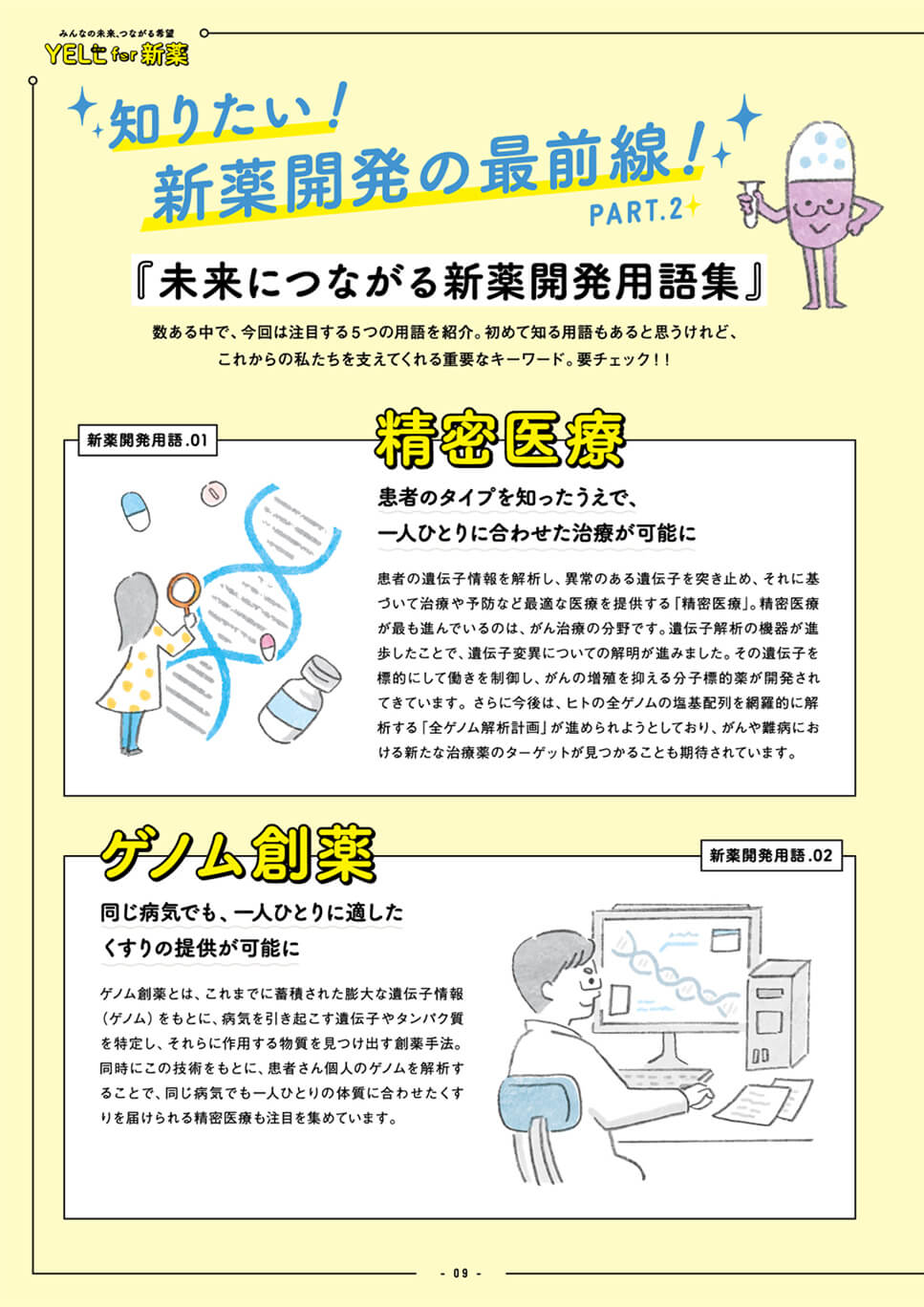
From the many terms out there, we’re introducing five to watch this time.
You might come across some terms you’ve never heard before, but these are important keywords that will support our future.
Be sure to check them out!!
-

By understanding a patient’s specific profile, it becomes possible to provide personalized treatment
-

Even for the same disease, it becomes possible to provide medications tailored to each individual
-

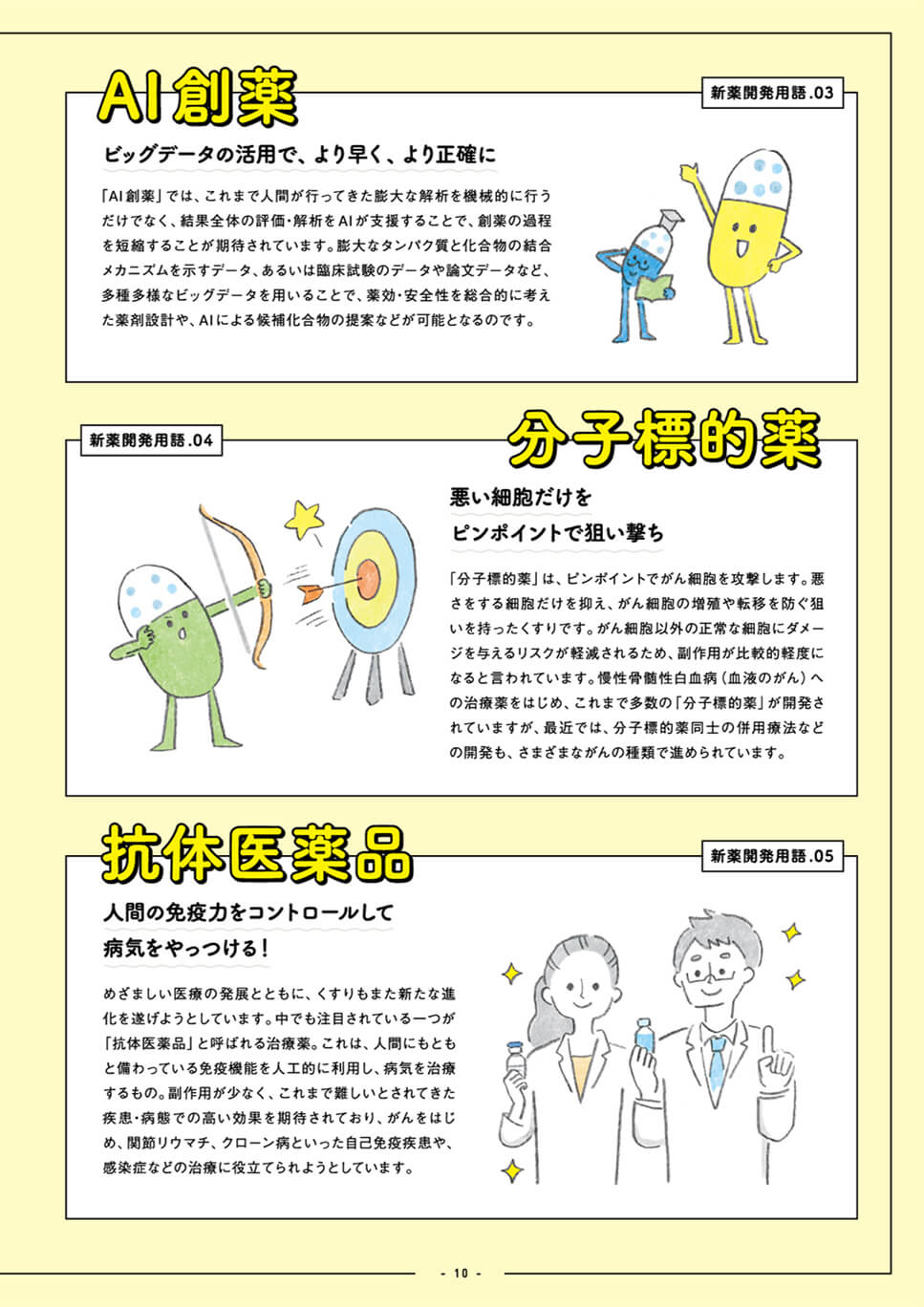
By leveraging big data, we can achieve faster and more accurate results
-

Pinpoint targeting of only the diseased cells
-

Controlling the human immune system to defeat disease!

























![Click here to download “YELL for New Drugs” [PDF Version]!](assets/images/btn_yell03.png)